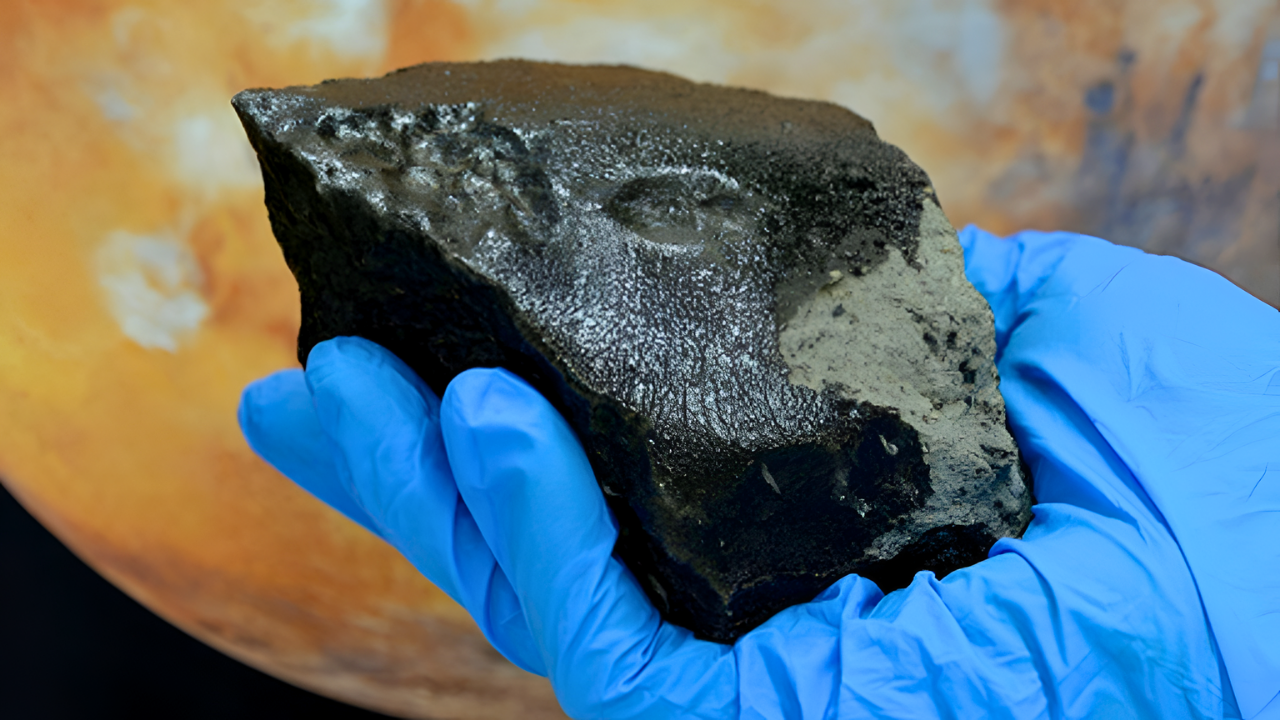
For generations, the question of whether life exists beyond Earth has captivated humanity. On Mars, faint traces in ancient rocks and vanished waterways now offer the strongest hints yet that microbial life may have once stirred there, pushing scientists closer to a historic revelation.
Perseverance’s Persistent Hunt
NASA’s Perseverance rover, which touched down in Jezero Crater in February 2021, has spent four years drilling into Martian rocks and gathering 27 core samples. These specimens, analyzed by onboard tools, are probed for chemical hints of ancient biology. Jezero’s selection as a landing site stemmed from its past as a river delta, where flowing water billions of years ago could have fostered life. Layered sediments along its northern cliffs preserve potential fossils or traces, shielded from harsh radiation.
Instruments like PIXL, which maps elemental makeup, and SHERLOC, which scans for organics and chemicals, provide high-resolution data. By mid-2024, the rover had mapped geology, drilled key sites, and hunted minerals linked to life processes, with protocols refined to avoid false signals.
Unveiling Cheyava Falls

In July 2024, Perseverance cored a rock dubbed “Sapphire Canyon” from “Cheyava Falls” in the Neretva Vallis riverbed within Jezero. This sample showed leopard-spotted patterns of vivianite—a hydrated iron phosphate—and greigite—an iron sulfide—plus organic carbon. After a year of peer review, NASA announced on September 10, 2025, that these features mark the most compelling evidence to date for potential ancient microbial life.
The rock dates to 2 to 3.5 billion years ago, when Mars had liquid water, a denser atmosphere, and protective magnetic fields—conditions matching Earth’s early life emergence. On Earth, such minerals form where anaerobic bacteria process iron under specific chemistry, creating reaction boundaries like the spots observed. While abiotic processes remain possible, they appear less probable here.
Global Echoes and Caution
News of the find spread rapidly, drawing coverage from outlets worldwide and sparking public debate on life’s cosmic prevalence. Yet skepticism persists: some experts note abiotic alternatives, like hydrothermal activity or radiation chemistry, could explain the patterns. Astrobiologists stress these signs are compelling but not definitive, urging more evidence. Published in Nature after rigorous scrutiny, the study uses cautious terms like “potential biosignature,” reflecting science’s demand for proof.
This comes amid surging Mars efforts—China’s Zhurong rover, Europe’s forthcoming Rosalind Franklin, and SpaceX transport advances. International protocols for sample safety and planetary protection gain urgency under treaties like the Outer Space Treaty.
Path to Confirmation

Perseverance’s tools, though advanced, fall short of conclusive analysis. Full verification requires Earth labs to test isotopes, organics, and microfossils via destructive methods. NASA’s Mars Sample Return mission targets retrieval in the early 2030s, a multibillion-dollar push now vital.
The agency has shifted rhetoric from mere habitability to biosignatures, signaling confidence built over decades. Perseverance presses on, eyeing nearby promising rocks, while global teams plan joint studies.
As missions align and samples near return, the Cheyava Falls evidence—whether anomaly or breakthrough—will test humanity’s grasp of life’s origins. Confirmation could redefine our cosmic solitude; refutation would sharpen the hunt. Either way, Mars now anchors a unified scientific drive, blending rivalry with collaboration toward enduring answers.
Sources:
NASA: NASA Says Mars Rover Discovered Potential Biosignature Last Year
Nature Journal: Redox-driven mineral and organic associations in Jezero
CNN: Rock discovery contains clearest sign yet of ancient life on Mars
Reuters: NASA rover finds potential sign of ancient life in Martian rocks
BBC: NASA rover finds rocks on Mars with potential signs of past life
Scientific American: Can Labs on Earth Solve the Mystery of Mars’s Most Exciting Rock