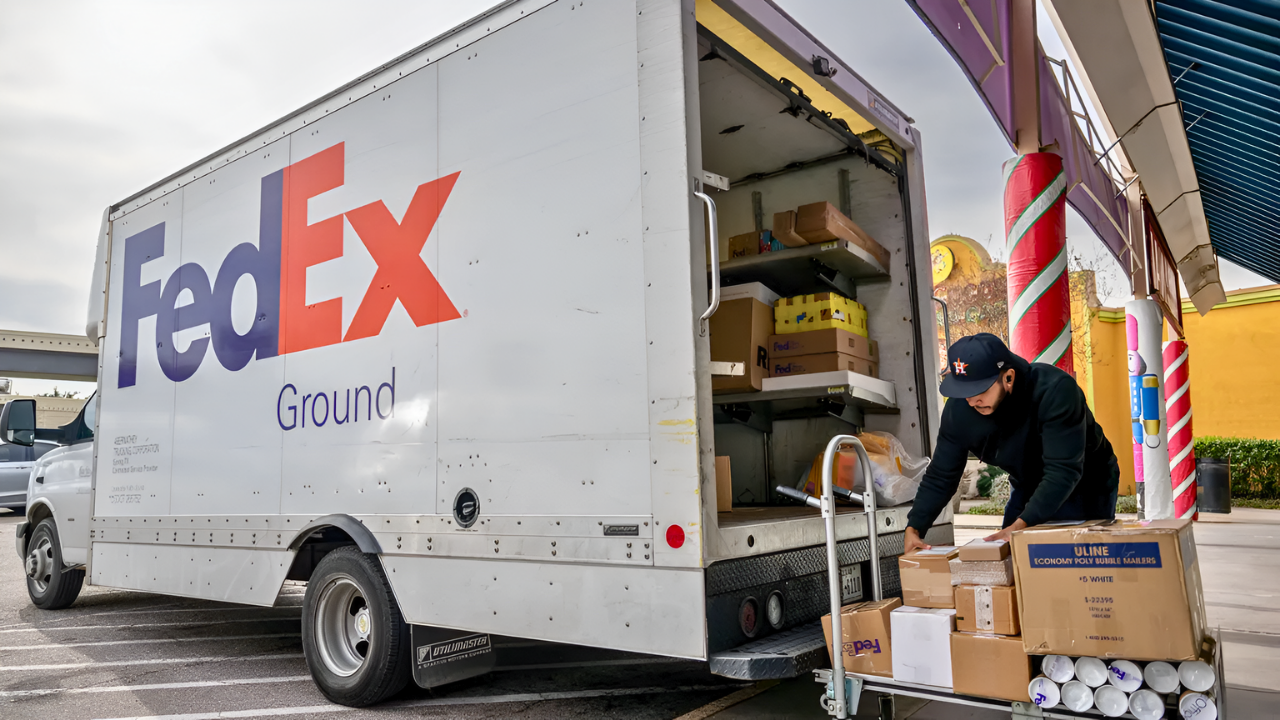
FedEx’s plan to cut 856 jobs at its large warehouse in Coppell, Texas, has turned a normally busy holiday hiring season into a time of worry. Instead of taking on extra workers to meet Christmas shipping demand, FedEx is preparing to lay off staff starting in January 2025. The facility is expected to close completely by April 2026.
This decision is part of a big change in how FedEx operates across the United States. The company is depending more on automation, machines and software that can do tasks once handled by people, and fewer physical locations. This shift reflects broader trends in the logistics industry, where many companies are rethinking how their warehouses run in response to changing business demands and technology.
A Closer Look at the Coppell Closure

FedEx told 856 employees at its Coppell logistics facility that their jobs will be eliminated as part of a company-wide reorganization. The first 60 jobs will end on January 29, 2025, and additional rounds of layoffs will continue over the next year until the site closes for good in April 2026.
The cuts are linked to FedEx’s Network 2.0 plan, a program focused on reducing operating costs, combining delivery networks, and making the entire system simpler and more efficient. As part of this, FedEx aims to close around 30% of its package-handling centers across the country and move operations to fewer, bigger, and more automated facilities.
One reason the Coppell branch was targeted is that the site recently lost a major customer to another logistics provider. Losing that account made the facility unnecessary for FedEx’s current needs. The situation shows how vulnerable large distribution centers can be when they depend heavily on just a few big clients.
Workers and Communities Feel the Impact

The timing of this announcement has made things even more difficult for affected workers. Warehouses usually increase hiring in November and December to meet strong holiday shopping demand. But for the FedEx workers in Coppell, this season brings layoffs instead of extra shifts.
Because the job cuts will be spread out through 2025 and early 2026, employees face long months of uncertainty. Many do not yet know exactly when their jobs will end, which makes it hard to plan financially, look for new work, or enroll in job training programs. The stress of waiting can take an emotional toll on workers and their families.
The economic effects will likely reach beyond the warehouse doors. FedEx’s Coppell operation provided steady, middle-income jobs to many people. When hundreds of those positions disappear, local businesses such as restaurants and stores lose customers, and city governments may collect less in taxes. Communities that depend on warehouse work risk facing slower growth and fewer job opportunities for years to come.
Big Changes Across the Logistics Industry

FedEx’s move in Coppell is part of a larger trend happening across Texas and the United States. The company has already cut jobs this year at plants in Fort Worth, Garland, and Plano. Together, those closures amount to hundreds of lost positions in an area that has marketed itself as a logistics hub with strong transportation links and a growing economy.
FedEx isn’t alone. Many companies that had rapidly expanded their warehouse operations during the pandemic are now pulling back. Retailers and brands like Macy’s, Wayfair, Fanatics, and Dillard’s have all announced facility closures and staff reductions, even during what used to be their busiest seasons.
Government data confirms the shift. Jobs in warehousing and storage dropped by about 2.1% over the past year, down to roughly 1.81 million jobs nationwide. That equals about 38,500 fewer workers in a sector that once led job growth as online shopping soared after 2020. The current slowdown signals the end of that pandemic-era hiring boom.
A key driver behind this change is automation. New technologies, like robots, automated sorting systems, and advanced routing software, let companies handle more packages with fewer workers. FedEx’s “Network 2.0” strategy is expected to save billions by 2027 through technology upgrades and merging overlapping operations.
At the same time, mergers and acquisitions are reshaping the logistics world. Companies like Ceva Logistics have gone through restructuring after major takeovers, such as its parent company CMA CGM’s purchase of Bolloré Logistics. When firms combine operations, duplicate jobs, especially in office and management roles, are often cut.
The Future of Warehouse Work
These shifts raise big questions about the future of warehouse employment. The job once seen as stable and dependable is becoming less predictable. Some laid-off workers may find openings at other logistics firms, while others might change industries entirely, moving into areas like retail or customer support. However, those new roles may offer lower pay or fewer benefits.
Communities that built their economies around distribution centers now face uncertainty. The loss of a single customer, combined with corporate restructuring and advances in automation, can quickly change the economic outlook for an entire region.
As the logistics industry continues to evolve, both workers and policymakers will need to adapt. Job retraining programs, investments in regional economic diversity, and improved safety nets could help cushion the impact. But the Coppell case stands as a reminder: even in a thriving state like Texas, automation and consolidation are reshaping what it means to work in logistics, and not always for the better.
Sources
FedEx to shut down Coppell facility, nearly 900 layoffs expected – FOX 4 News
FedEx Supply Chain layoffs in Texas to impact more than 850 workers – Commercial Appeal
Goldman Sachs issues grim job warning as FedEx axes 856 in Texas – TheStreet
FedEx to close Dallas, Texas-area facility, impacting 856 jobs – WSWS