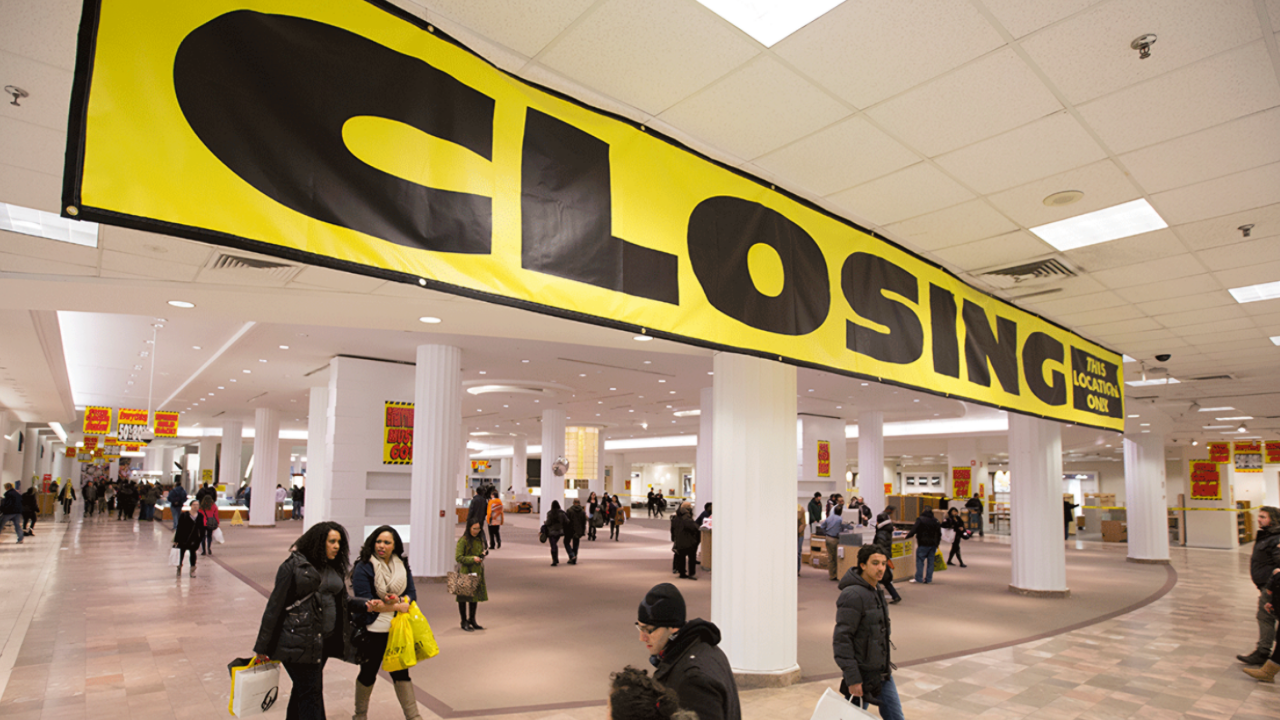
For years, brands like Supercuts, Cost Cutters, and Roosters were fixtures of American malls and neighborhood shopping centers, promoted as steady, “recession-resistant” services. Now their owner, Regis Corporation, is unwinding that presence at an unprecedented pace. In fiscal 2025 alone, the company closed 443 franchised salons, signaling not just a corporate retrenchment but a broader shift in how Americans shop, work, and spend on everyday services.
Retail Shakeout Meets Salon Chains
The Regis pullback is unfolding against a wave of closures across U.S. retail. By 2025, more than 3,700 stores had already shut or announced plans to close, with net closures projected to reach about 9,200 locations nationwide by year’s end. Salon chains are now part of this wider contraction.
Regis, once a dominant operator of mall and strip-center salons, has been scaling down for years. More than 100 franchised salons have closed every year since 2020: 102 in 2020, 273 in 2021, 156 in 2022, and 196 in 2023. By the start of 2025, the Supercuts network was already considerably smaller than at its peak. The latest wave, confirmed in Regis’s Q1 2026 earnings call, represents the sharpest annual decline yet and underscores how exposed mall-based service businesses have become to falling foot traffic and shifting consumer habits.
Franchise Economics Under Strain
Behind each shuttered salon sits a franchise owner squeezed by high upfront costs and thin operating margins. Launching a Supercuts typically requires a total investment estimated between about $185,000 and $318,000, including a $39,500 franchise fee. Once open, owners generally pay around 6% of gross sales in royalties and another roughly 5% in advertising fees.
Industry estimates suggest that a single store’s annual net income often falls between about $39,700 and $51,100. With total startup costs at the higher end exceeding $300,000 and ongoing fees consuming roughly 11% of revenue, many franchisees operate with limited room for error. When sales soften or rents rise, losses can accumulate quickly, leaving owners with large sunk costs and few attractive exit options.
Performance gaps within the system are stark. Salons that closed were averaging roughly $350,000 less in trailing 12-month sales than top-performing locations. Once revenue fell below profitability thresholds, many franchisees could no longer cover rent, labor, and required payments to corporate. The result has been a widening divide between strong units in dense, high-traffic markets and weaker sites in declining retail corridors.
Closures, Jobs, and Community Fallout

Each closure reverberates beyond the salon’s four walls. According to franchise documentation, a typical Supercuts location requires between 6 and 8 employees to operate. Using that range, the 443 closures in 2025 put an estimated 2,658 to 3,544 jobs at direct risk. Some estimates, accounting for variations in staffing levels, salon size, and cascading effects on suppliers and related sectors, suggest broader impacts that could approach 11,000 positions when the full ripple effects are factored in.
The impact lands heavily on stylists and support staff, many of whom earn a mix of hourly wages and commissions and have limited financial buffers. When a salon shuts its doors, long-built customer relationships dissolve overnight, and workers must scramble to find new chairs, rebuild clientele, or leave the field.
The effect on commercial districts is visible. Vacant salons in malls reduce overall foot traffic, weakening neighboring tenants and making it harder for landlords to fill space. In strip centers, empty units disrupt the mix of services and erode the appeal of the site. Hundreds of closed Regis locations mean hundreds of new vacancies, from large suburban centers to smaller town plazas. Over time, these empty storefronts can contribute to what economists call “retail deserts,” where local residents lose convenient access not only to grooming services but also to other everyday needs as surrounding businesses feel the strain.
Corporate Resilience, Strategic Reset
Even as franchise locations disappear, Regis’s corporate finances have recently moved in the opposite direction. The company reported $59 million in revenue for Q1 2026, a 28% increase year over year, with same-store sales up about 0.9%. That contrast—stronger corporate revenue alongside sweeping salon closures—highlights a structural feature of franchising: system-level results can improve even as individual owners struggle or fail.
Regis executives present the wave of shutdowns as part of a deliberate consolidation plan. The company is leaning into an asset-light model focused on fewer, more productive franchises. By eliminating underperforming units, leadership says it can concentrate resources on higher-volume markets and improve overall efficiency. Management has indicated that 2025 is expected to be the last year with closures on this scale, framing the current period as a turning point rather than an ongoing collapse.
To support the remaining network, Regis has introduced new customer-facing initiatives. In 2024, the company rolled out a loyalty program across roughly 1,900 salons and has been upgrading digital booking and engagement tools. The goal is to increase visit frequency, streamline scheduling, and keep clients within the brand’s orbit. While early same-store sales growth is modest, the company positions digital infrastructure and loyalty as central to stabilizing traffic.
Franchising, Malls, and the Future of Everyday Retail
The Regis contraction reveals pressure points far beyond one corporate balance sheet. Salon operators that built their businesses inside malls and traditional strip centers now face shrinking walk-in traffic, higher rents, and consumers who stretch time between haircuts, influenced by inflation and at-home beauty options. Mid-priced franchises that rely on constant volume feel these changes most acutely.
At the same time, competitors are repositioning. Independent salons, boutique concepts, and larger multi-unit operators with stronger finances are absorbing displaced stylists and moving into select markets left behind. The broader grooming sector is slowly consolidating around fewer, better-capitalized players, while the longstanding promise of franchising as a relatively secure route to business ownership is being reassessed.
For communities, the stakes go beyond one brand. The 443 Supercuts and related closures crystallize a larger reality: even everyday services once considered insulated from economic swings are vulnerable to changing shopping patterns, digital disruption, and margin pressure. Whether Regis’s bet on a smaller, more digitally connected network delivers a durable recovery will help determine not only the future of its own salons, but also how other service franchises navigate a retail landscape where the old formulas no longer guarantee staying power.
Sources
Regis Corporation – Q1 2026 Earnings Call Transcript – November 2025
Business Wire – Regis Corporation Reports Financial Results for Fourth Fiscal Quarter and Full Fiscal Year 2025
Frezka SaaS – Top Reasons Why Salon Businesses Fail (And What You Can Do Differently to Thrive in 2025)
Business Wire – Regis Corporation Reports Financial Results for the First Fiscal Quarter 2026 – November 12, 2025
TradingView – REGIS CORP SEC 10-Q Report – 2025 –
TipRanks – Regis Corporation’s Earnings Call Highlights Growth and Challenges