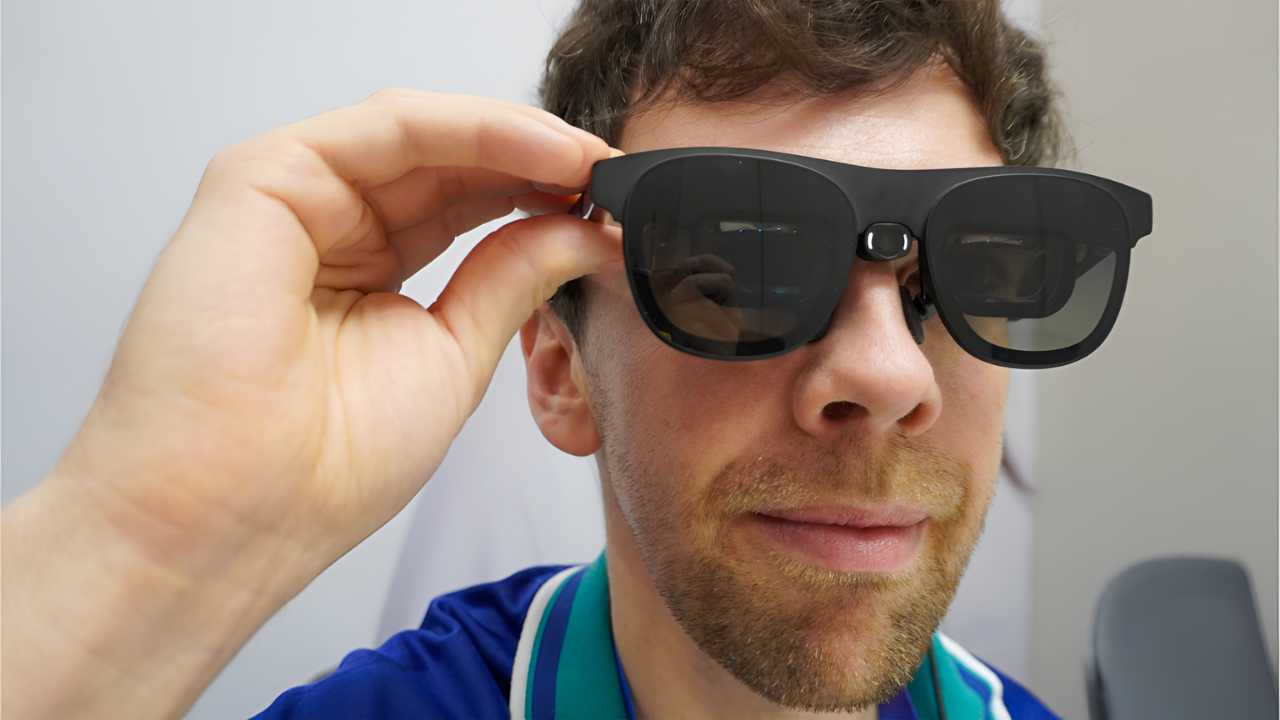
The technology landscape of 2025 reveals a fascinating paradox: while artificial intelligence companions promise to revolutionize how we interact with digital services, luxury bathroom fixtures are quietly transforming one of humanity’s most private rituals into a high-tech experience. This juxtaposition between AI “brains” you carry in your pocket and throne-like toilets that pamper your posterior represents two wildly different visions of technological progress—yet both aim to enhance daily comfort and convenience in ways that seemed absurd just years ago.
On one side stands the Rabbit R1—a bright orange AI companion device that attempts to replace your smartphone’s chaotic app ecosystem with conversational commands powered by Large Action Models. On the other stands an army of bidet toilet “thrones” featuring everything from foam shields to UV sterilization, heated seats, and automatic flushing systems that cost more than many used cars.
These technologies couldn’t be more different in purpose, yet they share remarkable similarities: both represent luxury reimaginings of mundane activities, both leverage cutting-edge sensors and AI, and both inspire the same question from skeptics: “Do we really need this?” The answer, apparently, is a resounding yes—at least according to manufacturers betting billions on these innovations.
The Throne Technologies: When Toilets Become Luxury Experiences
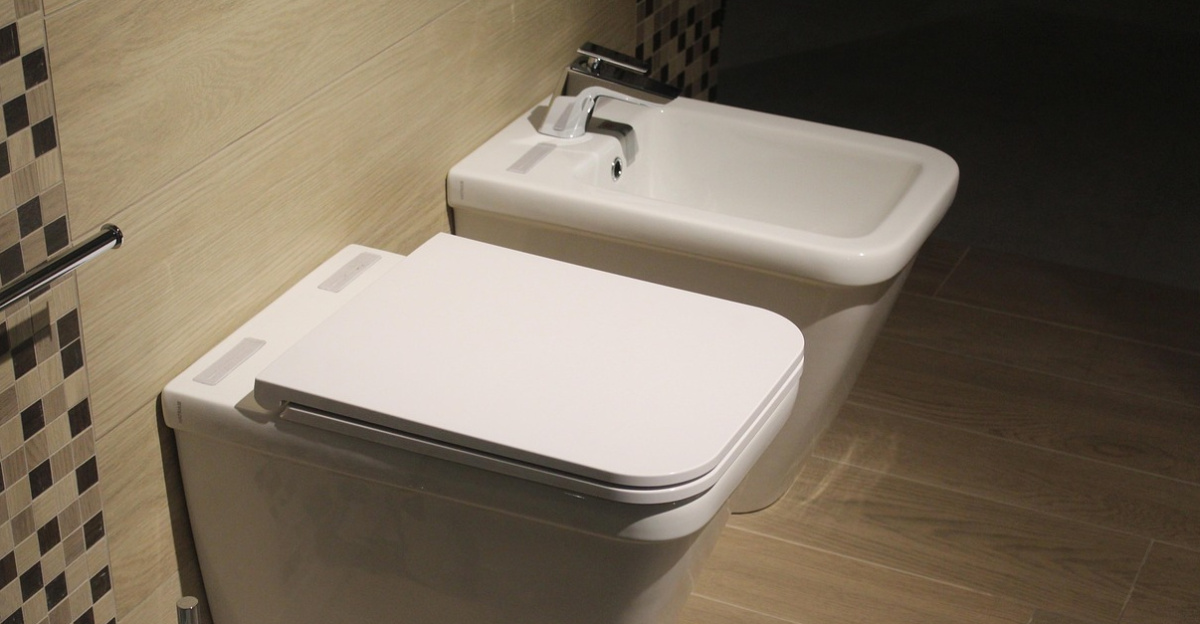
The smart toilet market reached new heights in 2025, with luxury models commanding prices between $2,000 and $10,000. These aren’t just toilets—they’re comprehensive bathroom wellness systems that transform a necessary biological function into something approaching spa treatment.
BidetKing Throne represents the apex of accessible luxury, featuring Direct Dry warm air drying with a dedicated nozzle that reduces drying time dramatically compared to traditional bidets. Its Foam Shield technology creates a layer of foam over the water surface, enhancing privacy and cleanliness while eliminating splash-back—a problem most people didn’t realize needed solving until someone solved it. Automatic features include motion-sensor-activated seat opening/closing and intelligent flushing that uses 3L for visits under 25 seconds and 4.5L for longer sessions. UV-C sterilization keeps the nozzle clean between uses, while the heated seat offers three temperature settings. At $3,000-$5,000, it delivers premium features without the ultra-luxury price tag.
TOTO Neorest NX1/NX2 epitomizes Japanese toilet engineering at its finest. These egg-shaped bidet toilets feature completely seamless designs with built-in night lights that emit an “aura-like glow” around the bowl perimeter. The NX2’s exclusive ACTILIGHT system uses ultraviolet light to break down dirt and grime automatically, keeping toilets sparkling clean with minimal manual scrubbing. PREMIST sprays a thin water coat to prevent waste adhesion, while CEFIONTECT ceramic glaze stops mold and bacteria growth. The TORNADO FLUSH system cleans powerfully yet quietly, and EWATER+ sanitizes the wand and bowl after each use. Four user presets remember individual preferences for water pressure, temperature, nozzle position, and drying settings. TOTO’s exclusive white glove warranty sends certified technicians to your home at no cost for issues that can’t be resolved remotely. The NX1 starts around $7,000; the NX2 exceeds $10,000.
Kohler Innate stands out for its electrolyzed water pre-rinse system that uses ionization to disinfect the bowl before each use. This advanced sanitation technology ensures a hygienic experience without harsh chemicals. Precision water pressure and temperature controls deliver customizable bidet functionality, while the heated seat, night light, and automatic flushing add convenience. The sleek, minimalist aesthetic features a user-friendly touchscreen remote. Priced at $4,000-$6,000, it represents the mid-to-high luxury segment.
Woodbridge Smart Toilet democratizes luxury features for budget-conscious consumers, offering auto-open/close lids, heated seats, carbon filter deodorizers, night lights, and automatic flushing at $1,500-$2,500. While lacking the premium materials and advanced features of TOTO or Kohler models, Woodbridge delivers core smart toilet functionality that significantly upgrades the bathroom experience without breaking the bank.
Ultra NOVA Bidet Seat transforms existing toilets into luxury experiences without full replacement. Installing in under 30 minutes, it features customizable rear and front washes with oscillating spray, hot/cold pulse functions that rhythmically vary water temperature for a massaging effect, and a premium stainless steel radio frequency remote control. Two user presets save individual preferences, while the ultra-streamlined design complements any bathroom aesthetic. The Ultra NOVA+ version adds automatic flushing compatibility with any top-flush toilet for the ultimate hands-free experience. An automatic lid that opens as you approach and closes when you walk away means “no one will ever leave the seat up again”. At $1,299-$1,448, it’s the most accessible entry point to smart toilet luxury.
The AI Brains: Digital Companions That Think For You
While toilets focus on physical comfort, AI companion devices target mental convenience—attempting to reduce the cognitive load of managing dozens of apps, passwords, and interfaces through conversational intelligence and task automation.
Rabbit R1 with rabbitOS 2 underwent a complete transformation in 2025, moving from a disappointing 2024 launch to a genuinely useful AI companion. The card-based interface now organizes functions like Magic Gallery (photos), Meeting Recorder (transcription), and Rabbit Intern (complex AI tasks) in an intuitive Rolodex-style system. The breakthrough “vibe-coding” feature allows users to generate custom interfaces, voice profiles, and tools simply by talking—the first device ever to enable conversational app creation. Running on MediaTek Helio processors with 4GB RAM and 128GB storage, the R1 now offers offline meeting recording, multi-modal interactions combining voice, text, and camera input, and dramatically improved battery life. The Large Action Model (LAM) technology allows the R1 to interact with apps the way humans do, learning to complete tasks without custom integrations. At $199, it positions itself as a smartphone companion rather than replacement.
Razer Project AVA transforms AI assistance into visual entertainment with a 5.5-inch holographic display featuring animated avatars like the calm AVA, sharp KIRA, muscular ZANE, or even esports legend Faker. Currently powered by xAI’s Grok engine, the device uses human-like vision and audio sensing for full contextual awareness. The HD camera with ambient light sensors enables “PC Vision Mode,” analyzing on-screen gameplay or complex documents via high-bandwidth USB-C connection to Windows PCs. AVA provides real-time gaming coaching focused on strategy and lore (not automated play, to comply with game developer terms), handles data synthesis, offers multi-language translation, and tracks daily wellness. High-fidelity eye-tracking and facial expressions developed with Animation Inc. make interactions feel remarkably lifelike. Reservations opened with $20 deposits for expected late 2026 release.
An’An AI Panda represents a different kind of AI—one focused on emotional companionship rather than task completion. Handcrafted from Australian wool and sheepskin by Mind with Heart Robotics, this biomimetic robot contains over 10 sensor suites that recognize touch patterns, distinguishing between gentle strokes, firm squeezes, and being picked up. An’An’s emotional AI engine learns voice patterns and interaction habits over time, building a long-term memory system that personalizes responses over months. Designed primarily for elderly care, it provides 24/7 emotional support to combat loneliness at approximately one-fifth the cost of traditional therapeutic robots—under $600 for the consumer version. Early studies with older adults experiencing mild cognitive impairment or dementia showed measurable mood improvements. The clinical version captures interaction data and surfaces trends to caregivers through secure dashboards.
The Wild Cards: Technology That Defies Categories

Beyond toilets and AI companions, 2025 delivered innovations so bizarre they defy easy categorization—proving that no aspect of human experience is off-limits for technological enhancement.
Lollipop Star delivers music through bone conduction technology while you eat the candy—one of CES 2026’s most talked-about innovations. Electronics hidden in the stick transmit vibrations from your jawbone to your inner ear as you bite down with your molars. Three artist collaborations offer distinct flavor-music pairings: Ice Spice with white peach and strawberry (playing “Munch,” “Baddie Baddie,” and “Big Guy”), Akon with blueberry (“Beautiful Day”), and Armani White with lime salt (“Mount Pleasant”). Developed by Lava Tech Brands, each $8.99 lollipop is single-use, raising sustainability questions but delivering an undeniably unique experience. CES attendees reported the sound quality as somewhat muted but clearly audible, especially when using provided earplugs in noisy environments.
Seattle Ultrasonics C200 Knife represents 2025’s wild intersection of consumer technology and kitchen tools. The blade vibrates at over 40,000 times per second—vibrations so subtle you can’t see, hear, or feel them in the handle—allowing it to slice through food with extraordinary ease. This ultrasonic vibration makes the knife act much sharper than its physical edge, transforming tasks like slicing vegetables, meats, and bread from chores into effortless glides. Built on a sharp Japanese AUS-10 blade foundation, the knife functions as an excellent traditional tool even when turned off. At $399, it’s a premium kitchen investment that some view as too silly while others consider genuinely useful.
Throne vs Brain: The Philosophical Divide
The bidet toilet throne and Rabbit AI brain represent fundamentally different approaches to enhancing human life through technology, yet both reveal identical patterns in how we’re reimagining comfort and convenience.
Smart toilets focus on physical comfort during one of humanity’s most vulnerable moments, leveraging sensors, heated surfaces, and automated features to transform a necessary biological function into something approaching spa treatment. The philosophy: if we spend 30+ minutes daily on toilets, why shouldn’t they be comfortable? The technology stack includes occupancy sensors, pressure monitoring, temperature control, UV sterilization, and AI-driven flushing calculations.
AI companions target mental convenience, attempting to reduce the cognitive load of managing dozens of apps, passwords, and interfaces. The philosophy: if AI can understand natural language and complete tasks like humans do, why should we waste time tapping through menus? The technology stack includes Large Action Models, natural language processing, multi-modal input systems, and conversational interfaces.
Yet both share common DNA. Both use extensive sensor arrays capturing intimate data—toilets monitoring occupancy and positioning; AI devices capturing voice, images, and contextual information. Both employ machine learning—toilets for predictive maintenance and usage optimization; companion devices for task automation and personalization. Both promise convenience through automation while raising privacy questions about data collection in deeply personal contexts.
The market speaks clearly about adoption patterns. The smart toilet market has found strong traction in Asia, particularly Japan where TOTO pioneered the Washlet in the 1980s, and is now expanding rapidly in North America and Europe. Installation in luxury homes, high-end hotels, and commercial spaces signals that bidet toilets are transitioning from novelty to expectation in premium contexts. Price drops through scaled manufacturing drive adoption, with entry-level models now available under $1,500 compared to $5,000+ just years ago.
AI companion devices face a more challenging path. The Rabbit R1’s rocky 2024 launch created skepticism that rabbitOS 2 is only beginning to overcome. The broader question remains whether AI companion devices will become mainstream or remain niche curiosities. The pivot from “smartphone replacement” to “smartphone companion” suggests manufacturers have recalibrated expectations.
Perhaps most tellingly, both inspire identical reactions from skeptics: “This seems excessive.” And identical responses from adopters: “I can’t imagine going back.”
The Future of Intimate Technology
Both technology categories raise fascinating privacy considerations that will define their long-term viability. Smart toilets equipped with health monitoring capabilities—analyzing waste for glucose, hydration, and disease markers—promise integration with telemedicine platforms by 2030. This creates potential for early disease detection but also raises questions about who accesses such intimate health data and how it’s secured.
AI companion devices face even sharper scrutiny. Razer’s Project AVA explicitly monitors your screen and surroundings 24/7. Rabbit R1 requires linking service accounts through its Rabbit Hole portal. An’An panda robots transmit interaction data to caregivers and medical institutions. Each offers legitimate value propositions—gaming coaching, task automation, emotional support—yet each also normalizes unprecedented surveillance in exchange for convenience.
The practical question lingers: do these technologies solve real problems or create sophisticated solutions searching for problems? Smart toilets undeniably improve hygiene and comfort, particularly for elderly and mobility-challenged users. Their value proposition is immediate and tangible. AI companions show promise for specific use cases like meeting transcription, language translation, and emotional support for isolated seniors but struggle to justify their existence for general consumers satisfied with smartphones.
The wildest technology of 2025 reminds us that innovation often looks absurd before it looks inevitable. Television, personal computers, and smartphones all faced skepticism before becoming indispensable. Whether bidet toilet thrones and AI companion brains follow similar trajectories remains uncertain.
What’s clear is that 2025’s technology landscape embraces comfort and convenience in increasingly specific ways. From toilets that pre-clean themselves with ionized water to AI pandas that provide emotional support through wool-crafted hugs, from orange AI devices that talk to apps on your behalf to lollipops that play music through your skull—the message is consistent: no aspect of daily life is too mundane for technological enhancement.
The Throne vs. Brain debate isn’t really about bathrooms versus AI. It’s about whether we’re willing to accept that the future will be weird, wonderful, and more comfortable than ever—even if that comfort comes from sources we never imagined needing. The answer from manufacturers, investors, and early adopters is a resounding yes. The rest of us are just along for the wild ride.
Sources:
“Study: Natural Light Is the Best Medicine for the Office” from PR Newswire (2018), reporting an 84% drop in eyestrain and headaches in daylit offices.
Secondary citations in USGBC and other summaries reference Hedge’s work with varying percentages (e.g., 51-63% reductions).
Boeing 1960s initiatives documented in aviation history publications, reducing errors via natural light.
Delos metrics on healthcare costs from WELL Building Standard reports. No precise article titles confirmed in results.