
H&M stands at a critical inflection point. Once synonymous with fast-fashion dominance, the Swedish retailer is undergoing a sweeping restructuring that reflects a fundamental shift in how consumers shop. The company misjudged demand during the pandemic and was caught off guard by the accelerating move to online purchasing. Now, through aggressive store closures and digital investment, H&M is attempting to rebuild profitability in an industry being reshaped by nimble competitors and changing consumer behavior.
A Shrinking Physical Footprint
The numbers tell a stark story. H&M’s physical store network has contracted by 19 percent since its pandemic peak, with 78 locations already shuttered across Asia, Oceania, and Africa—markets where e-commerce has become the dominant shopping channel. By 2025, the company announced plans to close approximately 200 additional stores globally, with 110 net closures after accounting for new openings. This represents one of the most aggressive retail pullbacks in the company’s history.
The closures are concentrated in mature, saturated markets. Western Europe and North America, where H&M once maintained extensive retail networks, are bearing the brunt of the reductions. Even iconic locations are not immune: two of H&M’s largest Manhattan stores—at the World Trade Center and East 86th Street—will close by January 2026, signaling a retreat from one of the world’s most competitive retail markets.
The Economics of Digital Dominance
The shift toward e-commerce is no longer optional for H&M; it has become existential. Online channels now generate over 30 percent of total revenue, and the company has concluded that maintaining underperforming brick-and-mortar locations no longer makes financial sense. Every dollar spent on retail leases and utilities is now being redirected toward enhancing digital infrastructure and logistics capabilities.
This reorientation is already yielding results. Despite a 3.4 percent drop in sales during the third quarter of 2025, H&M’s operating profit surged by 40 percent. The paradox is instructive: fewer stores can be substantially more profitable than a sprawling network of underperforming locations. By focusing on strategic, high-performing retail sites while prioritizing digital channels, H&M is improving operating margins and offsetting revenue declines.
Brand Consolidation and Strategic Exits
H&M’s restructuring extends beyond store closures. The company is consolidating its brand portfolio, with the youth-focused Monki brand—acquired in 2008—being eliminated from physical retail entirely. All 56 Monki stores will close in 2025, with some transitioning to H&M’s Weekday brand. This decision underscores a broader strategy: weaker brands are being moved online or absorbed into stronger labels rather than maintained as separate retail operations.
Geographic Reorientation
While H&M retreats from mature markets, it is strategically expanding in emerging regions. Latin America and Southeast Asia are experiencing growth, with the company opening new locations in markets where e-commerce penetration remains lower and physical retail still holds potential. Most notably, H&M opened its first store in Brazil in August 2025, with additional locations planned for 2026. These emerging markets represent untapped growth opportunities where consumer shopping habits are still evolving.
Competitive Pressures and the Digital-Native Challenge

H&M faces mounting pressure from digital-first competitors like Shein and Temu, which operate with minimal overhead and can respond rapidly to consumer demand. These nimble rivals have captured significant market share through lower prices, faster turnaround times, and algorithm-driven inventory management. The traditional fast-fashion model that once defined H&M’s competitive advantage is being displaced by a digital-native approach that the company is now scrambling to match.
The Human and Strategic Costs
The wave of closures unfolding throughout 2025 carries a significant human cost. Store employees and workers across logistics, supply chain, and warehouse operations will be affected as the company finalizes closure timelines and transition plans. Communities relying on these retail jobs face disruption as H&M’s transformation reshapes local employment landscapes.
Looking Forward
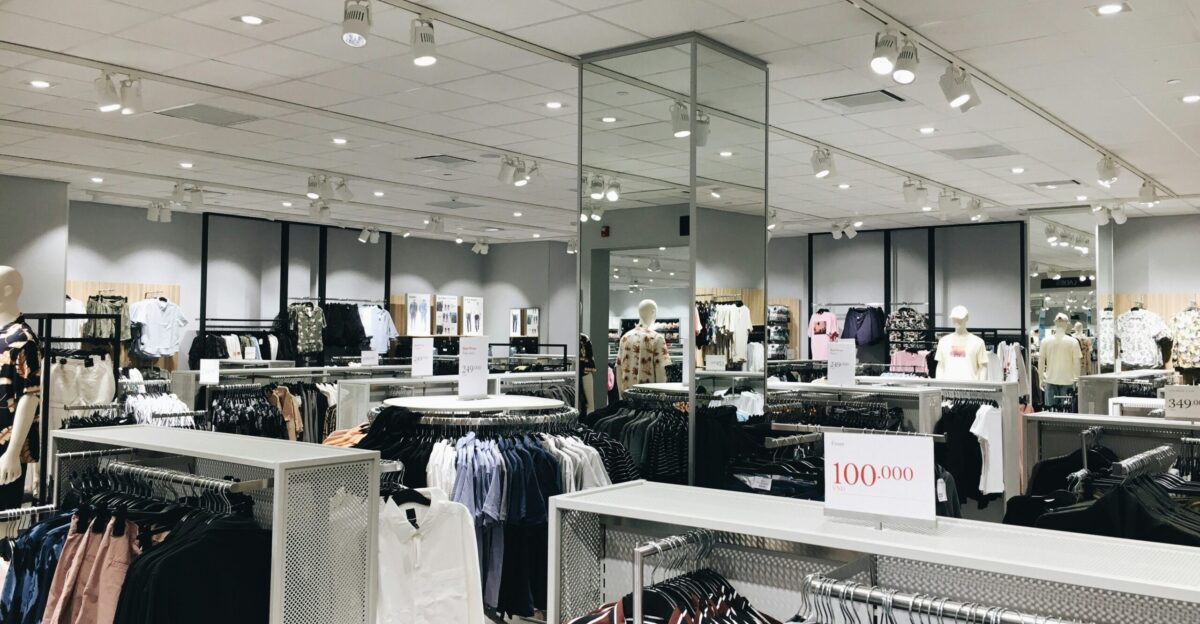
H&M’s strategic pivot reflects a broader industry transformation. The company is betting that a leaner, more efficient model—combining selective physical retail in high-growth regions with robust e-commerce infrastructure—will sustain competitiveness in an increasingly digital marketplace. Whether this omnichannel approach, supported by digital integrations in flagship stores and brand consolidation, will prove sufficient against entrenched online competitors remains an open question. The next few years will determine whether H&M’s restructuring represents a successful adaptation or merely a temporary reprieve in a rapidly evolving retail landscape.
Sources:
Harlem World Magazine – H&M To Close 200 Stores Globally, Ends Monki’s Physical Presence(November 26, 2025)
TheStreet – Fast Fashion Chain Closing 200 Stores, Ending Physical Brand(November 25, 2025)
Modaes – H&M Kicks Off Brazil Expansion with Two Stores in Regional Growth Move(July 28, 2025)
Yahoo Finance – Fast-Fashion Chain Closing 200 Stores, Ending Physical Brand(November 25, 2025)
Independent UK – H&M Closes 135 Stores Globally as Cost-Cutting Boosts Profits(September 24, 2025)