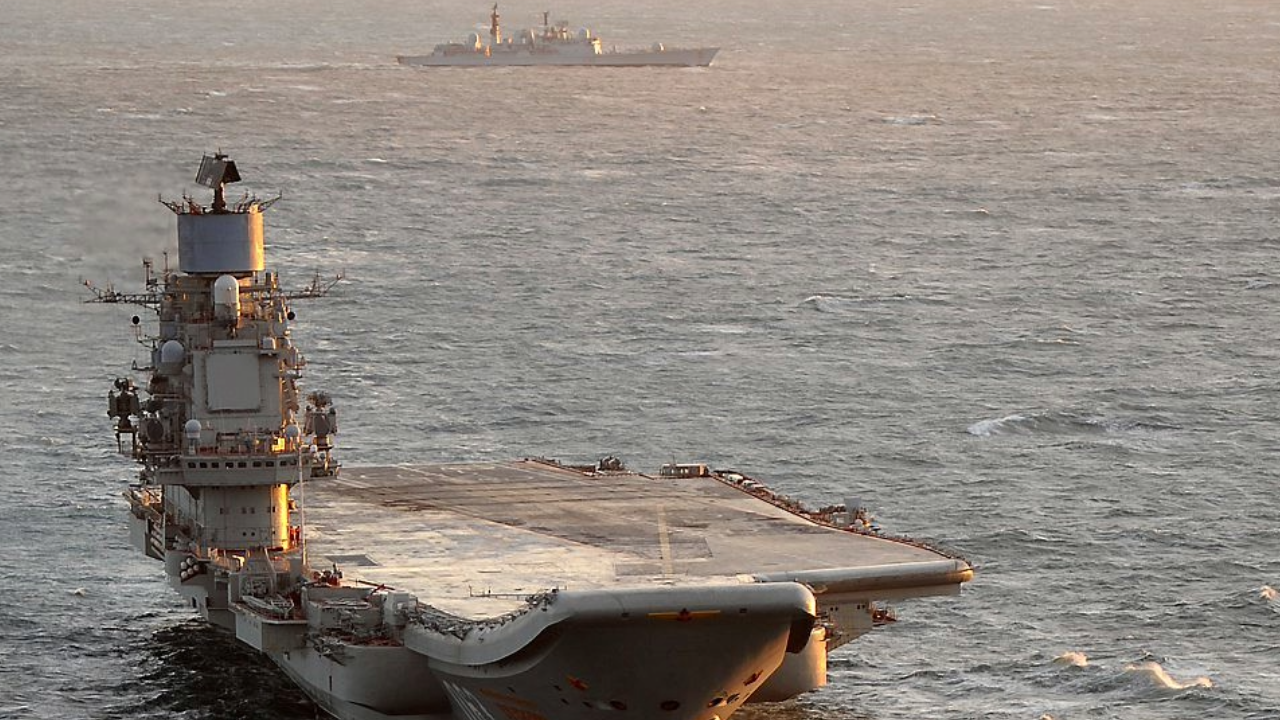
In early January 2026, a Russian destroyer armed with anti-submarine missiles and helicopter escorts shepherded two sanctioned cargo vessels through international waters off Portugal’s coast, marking a dramatic escalation in Moscow’s defense of its illicit maritime network. The naval protection arrived just 48 hours after U.S. forces completed an 18-day Atlantic pursuit and seizure of the Russian-flagged oil tanker Marinera, intensifying the confrontation over sanctions evasion.
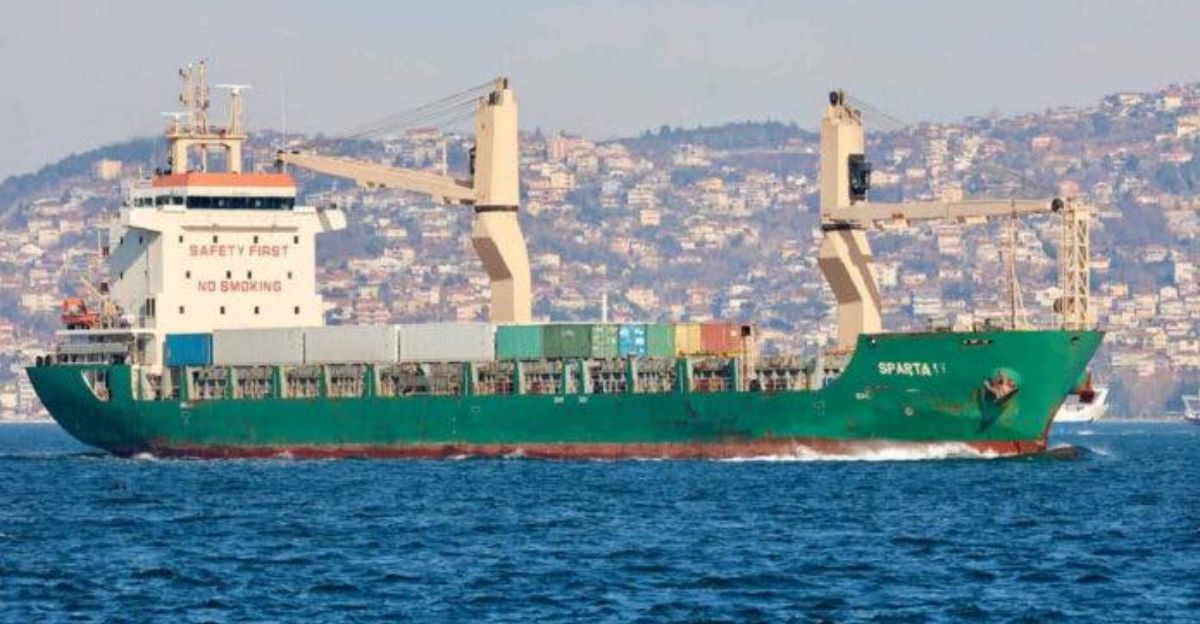
The Severomorsk, a 535-foot Udaloy-class destroyer from Russia’s Northern Fleet, escorted the cargo ships Sparta IV and MYS Zhelaniya toward declared destinations in Egypt, though intelligence agencies suspect onward routes to Syria’s Tartus naval base and potentially Libya.
Moscow’s Military Shield
Russia’s deployment of military escorts for sanctioned commercial vessels represents a significant tactical transformation. Since June 2025, Russian Navy warships have regularly accompanied shadow fleet convoys, with the January operation representing a notable escalation as a major surface combatant protected cargo ships directly linked to Moscow’s military-industrial complex in Atlantic waters.
The Severomorsk, commissioned in 1987 and equipped with long-range sonar and two Ka-27PL helicopters, traveled thousands of miles to shield vessels that Western intelligence confirms support Russia’s Arctic energy projects and Syrian military operations. Naval analysts noted the shift from protecting individual tankers to securing entire logistics corridors, transforming gray-zone commerce into state-backed supply lines.
The Hidden Maritime Empire
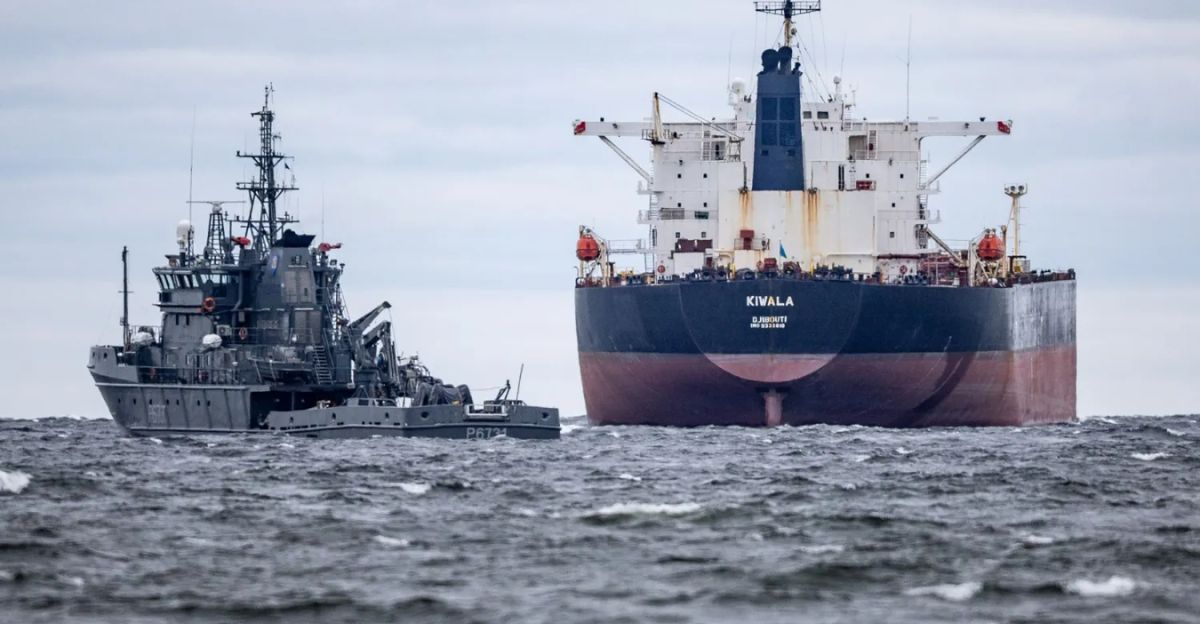
Russia’s clandestine shipping network has expanded dramatically from roughly 600 vessels in late 2022 to between 1,100 and 1,400 ships by December 2025. These “shadow” vessels operate outside standard maritime regulations through fake ownership structures, flag-hopping between registries, and falsified documentation to conceal cargo origins.
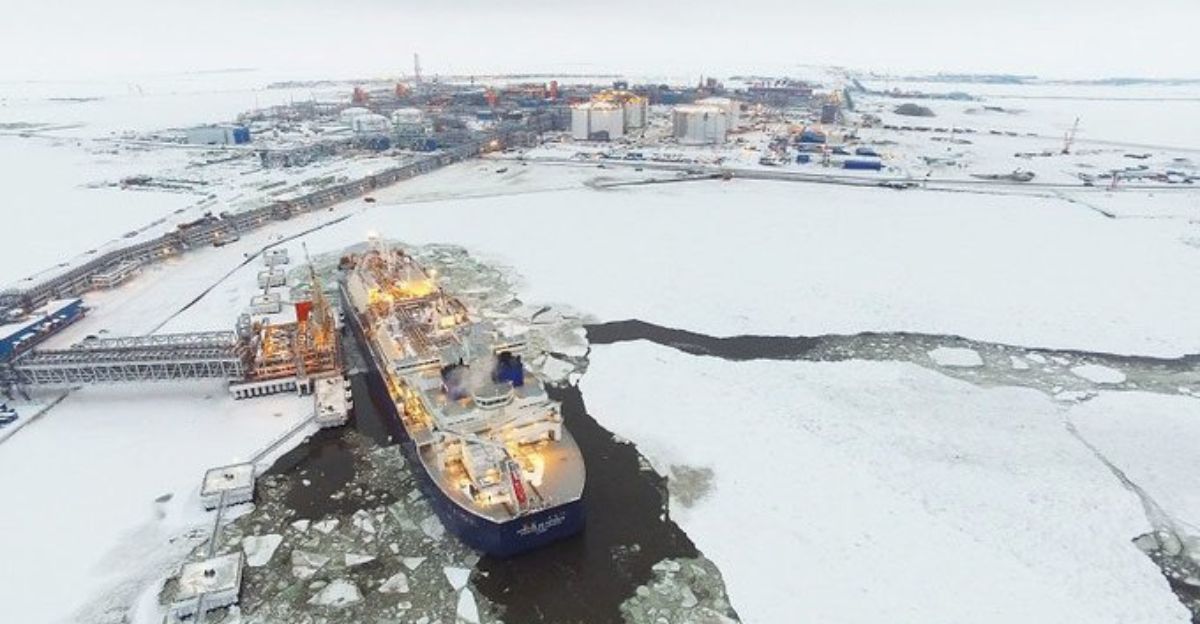
Despite this massive fleet, only 118 vessels appeared on U.S., EU, and UK sanctions lists before the January convoy incident, meaning approximately 90 percent of shadow ships avoided direct penalties. Intelligence estimates suggest the network generates between $87 billion and $100 billion annually in energy sales, sustaining both Russia’s war effort in Ukraine and sanctioned Arctic projects. The two cargo vessels escorted by Severomorsk exemplify this network’s dual purpose: MYS Zhelaniya links directly to Russia’s Arctic LNG 2 project through the sanctioned company Eco Shipping LLC, while Sparta IV operates under SC-South LLC, a subsidiary of Oboronlogistika, the Russian Defense Ministry’s logistics monopoly since 2016.
Portugal’s Atlantic Dilemma
Portugal, a founding NATO member since 1949, found itself hosting the maritime standoff with limited options for response. NATO Deputy Secretary General Radmila Shekerinska visited Lisbon January 7-8, addressing defense investment and strategic challenges, just hours before the convoy appeared near Portuguese waters. Portuguese authorities monitored the destroyer-led convoy with intelligence assets but conducted no interdiction, constrained by international maritime law guaranteeing freedom of navigation through the Strait of Gibraltar.
The timing underscored NATO’s limited enforcement role—member states must enforce sanctions individually, and the alliance deployed its Baltic Sentry initiative in January 2025 without direct authority for maritime interdiction. The convoy’s passage highlighted a strategic gap: while the U.S. possesses global maritime enforcement capacity, demonstrated by the Marinera seizure that consumed significant Naval, Coast Guard, and SEAL resources, European NATO members face legal and operational constraints in international waters.
Implications and Escalation Risk
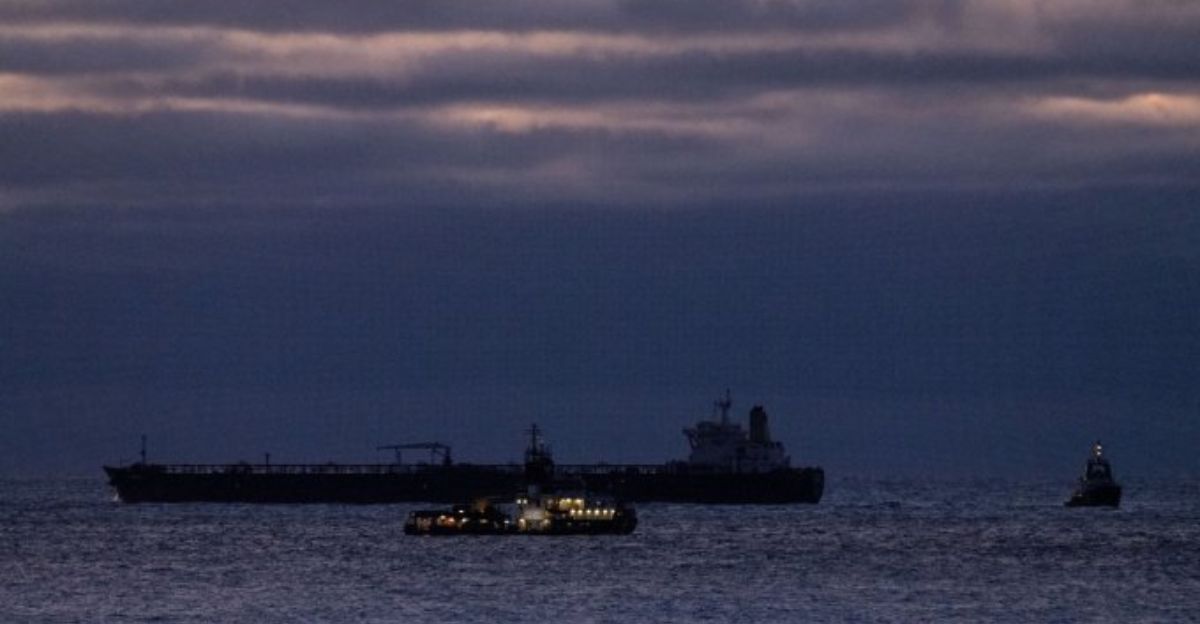
The Severomorsk operation reveals Moscow’s fundamental strategic recalibration regarding its shadow fleet. Rather than relying solely on open registries, Russia began re-registering vessels under its own flag to claim state-backed legal protection against boarding operations. The Marinera crew’s mid-voyage flag-painting and registry change from Guyanese to Russian reflected this coordinated strategy, transforming sanctions evasion from commercial subterfuge into diplomatically protected logistics. Each military escort concentrates adversary attention and creates tracking opportunities, yet simultaneously raises escalation risks from gray-zone commerce interdiction to potential naval confrontation.
The convoy’s connection to Tartus occurs amid profound uncertainty following Bashar al-Assad’s December 2024 regime collapse and Syria’s new government renegotiating terms with Moscow. Russia’s armed escort suggests hedging against restricted Mediterranean access while maintaining supply lines supporting operations in Libya and North Africa. As sanctions pressure intensifies—with the EU’s 19th package targeting LNG transshipments and the U.S. expanding vessel seizures—Moscow’s willingness to deploy combat destroyers signals determination to preserve logistics corridors regardless of international pressure. Whether this military protection proves sustainable or merely masks operational desperation remains the unresolved question confronting Western enforcement efforts.
Sources:
CEPA,various analysis reports, December 17, 2025
NBC News, U.S. seizes Russian-flagged oil tanker linked to Venezuela, January 7, 2026
Windward AI, Russia Reclaims Its Dark Fleet as Venezuela Tankers Come Under Attack, January 4, 2026
United24Media, Russian Warship Escorts Sanctioned Ship Near NATO—Days After US Seized a Similar One, January 9, 2026
Wikipedia, Russian shadow fleet, December 17, 2024
NPR, U.S. seizes tanker that raised Russian flag after weeks-long chase in North Atlantic, January 8, 2026