Starbucks has closed approximately 400 stores across major U.S. cities in 2025, representing the coffee giant’s largest urban retreat in company history. New York City lost 42 locations—12% of its footprint—while Los Angeles, Chicago, and San Francisco also faced significant closures.
The $1 billion restructuring marks CEO Brian Niccol’s dramatic response to declining sales and changing consumer behavior.
NYC Loses Top Spot to Dunkin’
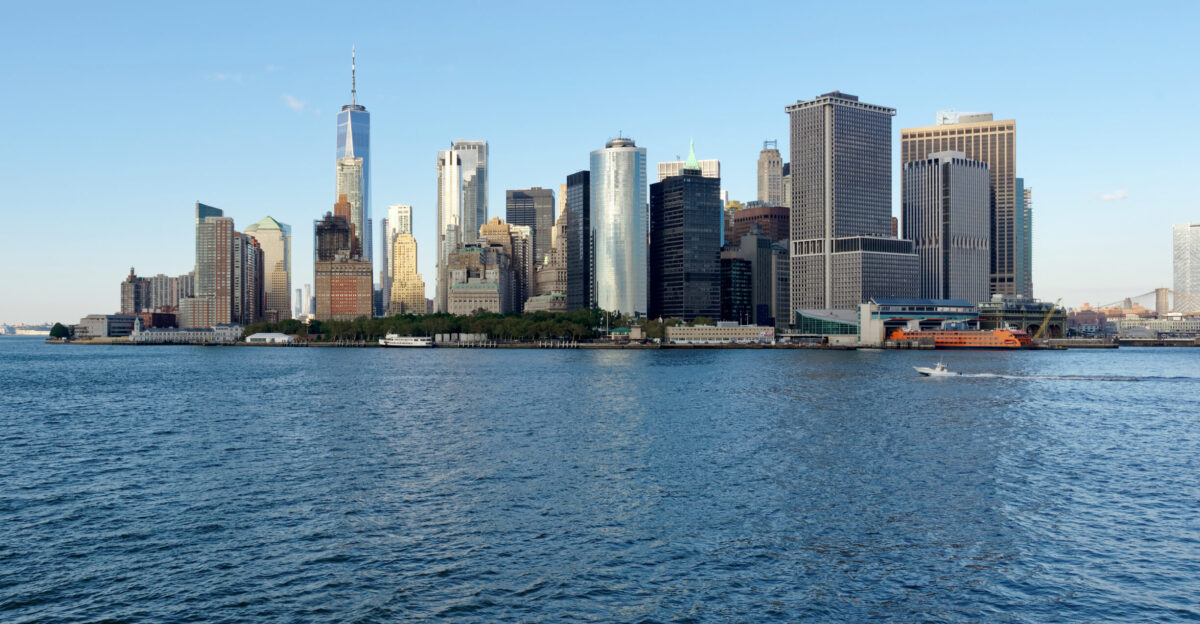
Manhattan’s coffee landscape has fundamentally shifted, with Dunkin’ surpassing Starbucks as the city’s largest chain for the first time.
Starbucks closed 42 New York City stores while independent coffee shops proliferated throughout urban neighborhoods. The reversal signals Starbucks’ diminished dominance in America’s densest coffee market, where it once commanded premium positioning and unmatched convenience.
Remote Work Devastates Downtown Locations
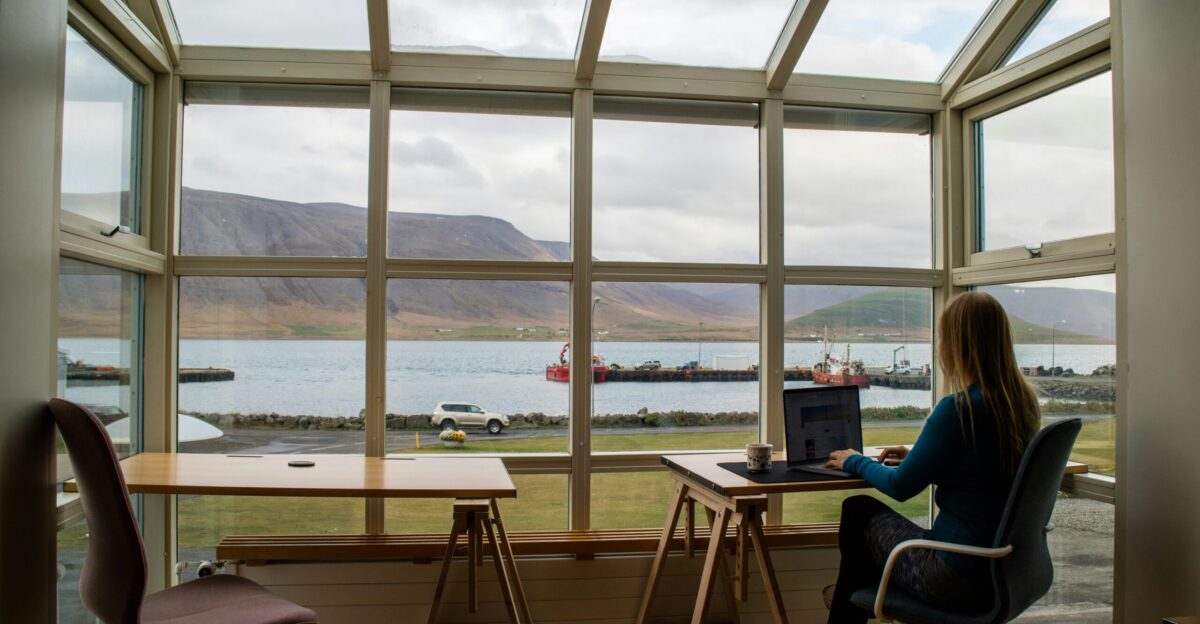
The permanent shift to remote work has decimated foot traffic in central business districts where Starbucks historically thrived. Former Starbucks real estate chief Arthur Rubinfeld noted that “urban America has seen a dramatic increase in competitive coffee shop openings that eat away at store volume.”
Downtown office buildings that once guaranteed morning crowds now stand partially empty, destroying the economic foundation for dense urban store networks.
Q4 Sales Show First Signs of Recovery

After seven consecutive quarters of declining same-store sales, Starbucks achieved flat U.S. comparable sales in Q4 2025, with September and October turning positive. Global comparable sales grew 1% in Q4, driven entirely by transaction growth demonstrating renewed customer traffic.
However, non-GAAP operating margins contracted 500 basis points year-over-year to 9.4%, compressed by coffee inflation and substantial labor investments.
Suburban Drive-Throughs Become Priority

Starbucks is aggressively pivoting toward suburban locations with drive-through capabilities, which generate 35% higher revenue than traditional stores. CFO Patrick Grismer stated in 2020 that “we are seeing very significant increases in customer traffic at our suburban drive-thrus” while urban locations struggle.
The company plans continued expansion in residential corridors where convenience-driven consumers represent more reliable traffic patterns than depleted downtown districts.
$1 Billion Restructuring Underway
The transformation includes $850 million in store closure and asset write-offs plus $150 million in severance costs for 900 corporate employees.
Simultaneously, Starbucks is investing in 1,000 store renovations over the next year—representing 10% of company-owned U.S. locations—to restore coffeehouse ambiance with upgraded seating, communal tables, and warmer design. The dual approach closes underperforming sites while reinvesting in high-potential locations.
CEO Niccol’s “Back to Starbucks” Vision

Brian Niccol, recruited from Chipotle in September 2024 with compensation approaching $100 million in his first year, has implemented sweeping changes. The company reintroduced Sharpie markers for personalizing cups, reinstated condiment bars, and trimmed 30% of menu offerings to simplify operations.
Niccol’s strategy emphasizes operational excellence and customer experience restoration while deliberately reducing promotional discounting that had eroded brand premium perception.
Investors Remain Skeptical Despite Progress

Starbucks shares have declined approximately 8% year-to-date through early January 2026, underperforming broader indices despite operational improvements.
The stock trades at a forward P/E ratio of approximately 33.3x compared to a five-year average of 27.8x, indicating the market is pricing in successful turnaround execution but remains cautious. Analyst price targets range from $69 to $117, reflecting profound uncertainty about recovery trajectory.
Labor Strike Hits 180 Stores
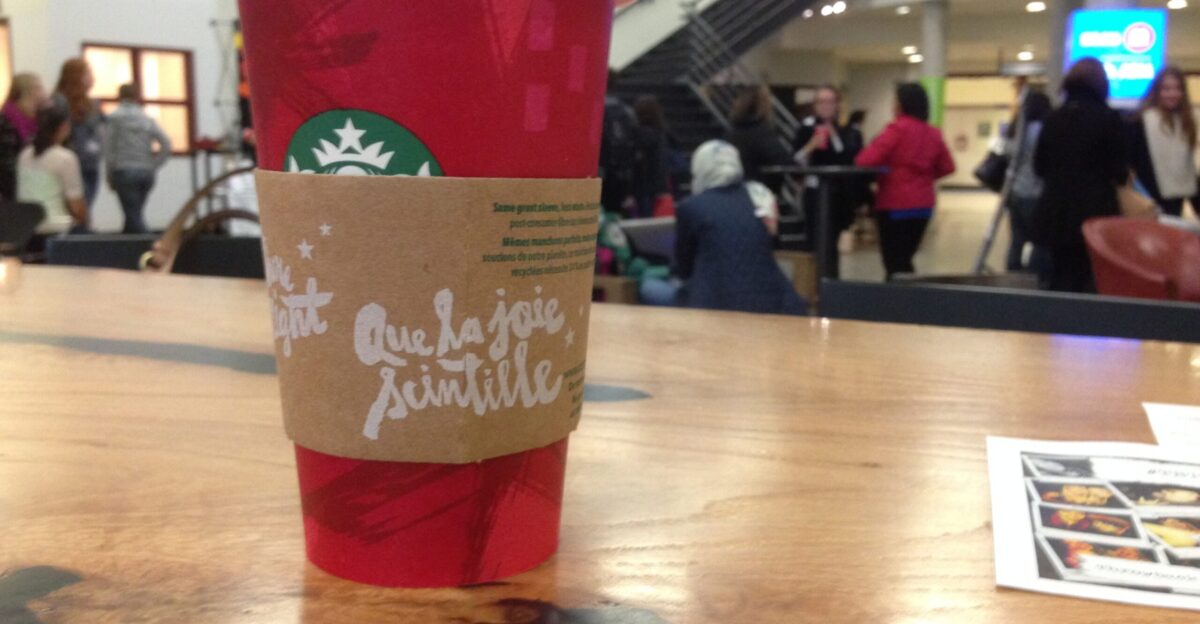
Starbucks Workers United’s “Red Cup Rebellion” strike expanded to over 180 stores across 130 cities beginning November 13, 2025, representing the most extensive labor action in company history. Over 3,800 baristas participated, demanding higher wages, improved staffing, and resolution of 700+ unfair labor practice charges.
U.S. Senator Bernie Sanders and international unions joined solidarity actions, amplifying pressure on management during critical holiday season.
Competition Intensifies in Urban Markets
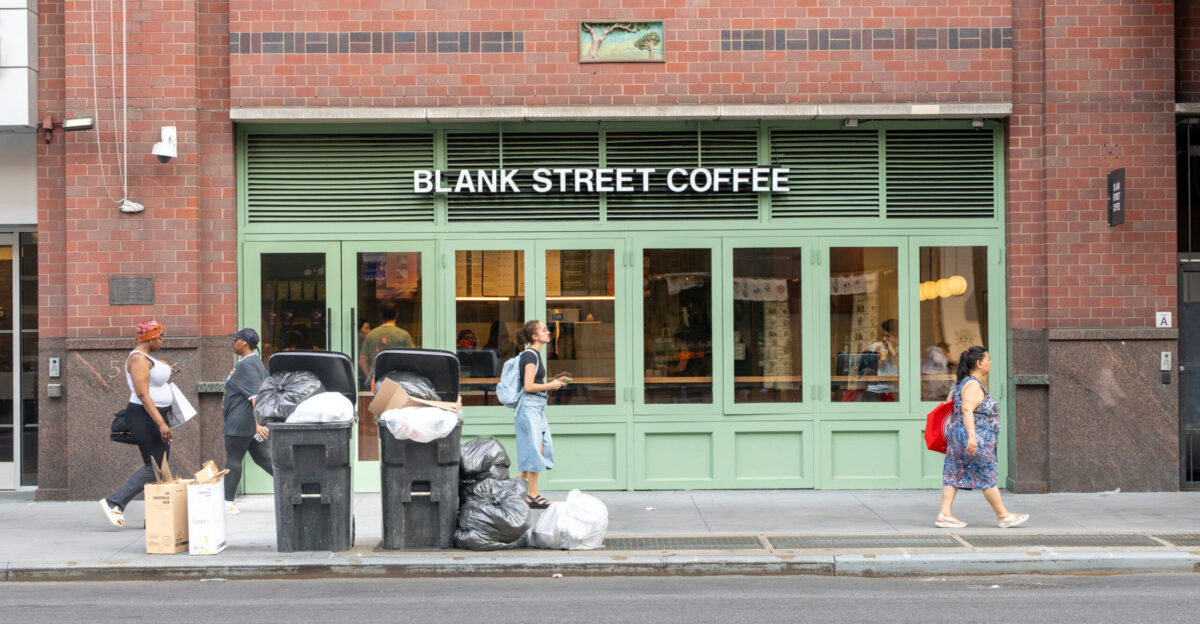
Venture-backed chains like Blank Street Coffee have scaled rapidly with small-format stores under 350 square feet, automated espresso machines, and aggressive pricing designed to steal Starbucks customers.
Blank Street raised over $100 million in venture capital and expanded to 84 locations, demonstrating investor appetite for alternatives. Independent specialty shops emphasizing craft quality and community connection have further fragmented markets where Starbucks once dominated.
Menu Simplification Reduces Complexity
Starbucks has cut 30% of food and beverage offerings to streamline operations and reduce preparation complexity during peak periods.
The company invested over $500 million in the “Green Apron Service” program to increase labor hours and staffing, resulting in record-low hourly partner turnover. Over 80% of company-operated locations now achieve the target service time of under four minutes per order.
Profit Margins Under Pressure

Q4 2025 adjusted earnings per share of $0.52 fell short of the $0.56 consensus, representing a 35% decline year-over-year.
Arabica coffee prices increased nearly 20% in 2025, creating commodity inflation that compressed margins alongside tariff pressures and labor investments. GAAP earnings plummeted 47% due to restructuring charges, though management characterized store closures as “slightly accretive to profitability” going forward.
China Provides Growth Bright Spot
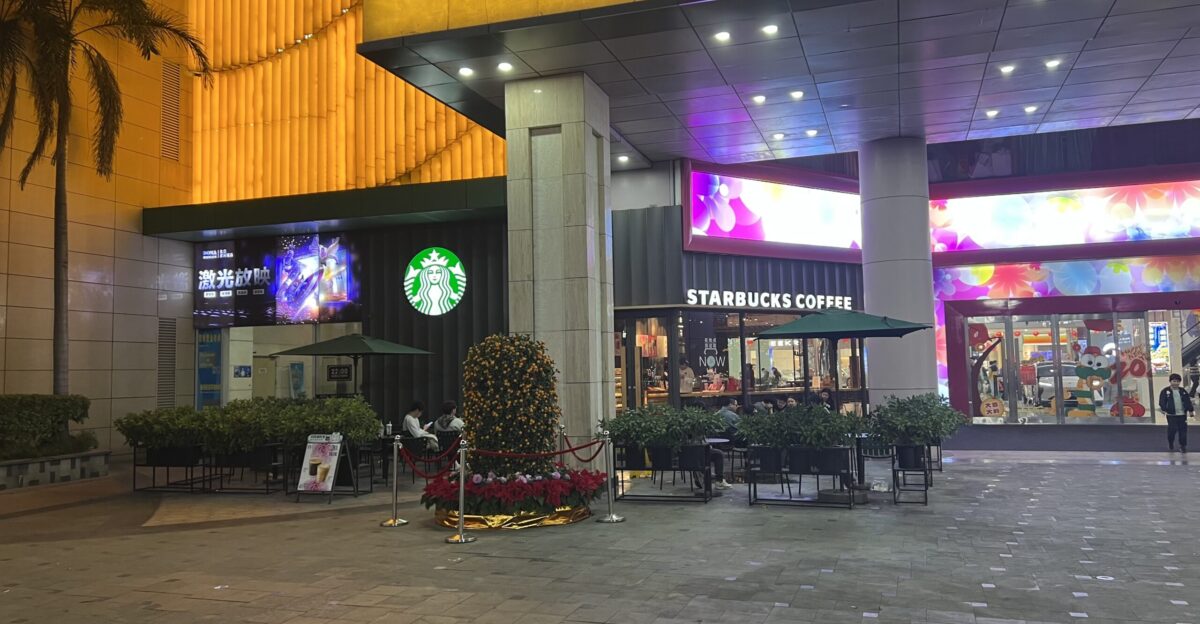
Starbucks’ China portfolio crossed 8,000 locations with 2% comparable sales growth and 9% transaction increases in Q4 2025. International comparable sales grew 3% in Q4, driven by 6% transaction growth, while the U.S. market stabilized.
The Asia-Pacific expansion demonstrates continued international potential that can offset domestic market maturity and provides critical diversification as North American challenges persist.
Cold Beverages Dominate Sales Mix

Cold beverages now comprise 75% of Starbucks’ U.S. drink sales, up from just 37% in 2013, reflecting fundamental consumer preference shifts. The company is launching high-protein cold foam with 15 grams of protein, coconut water-based beverages, and expanded gluten-free options targeting health-conscious consumers.
Specialty coffee consumption has reached 14-year highs, with 45% of American adults consuming specialty coffee daily.
Premium Positioning Tested by Inflation
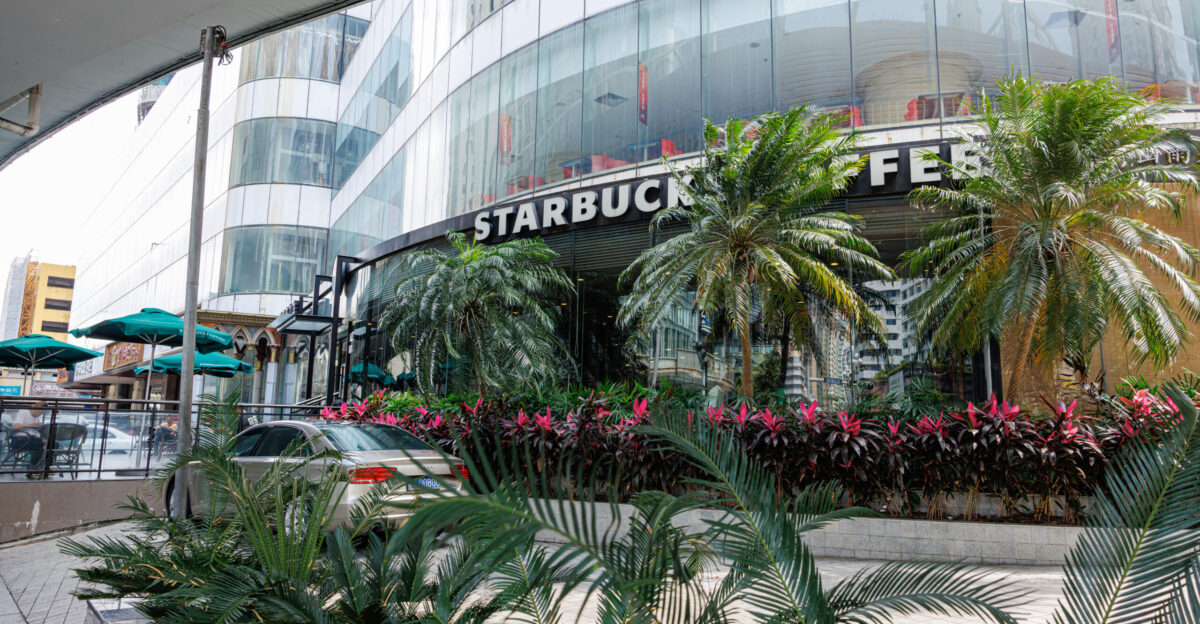
Starbucks has deliberately reduced deep-discount promotions that had trained customers to wait for deals, eroding premium brand perception. Q4 2025 saw a 1% increase in average ticket in North America despite flat transactions, reflecting the premiumization strategy.
CFO Cathy Smith emphasized that “we are rebuilding our transaction base” while repositioning as a premium brand amid consumer concerns about value during sustained inflation.
CEO Pay Ratio Fuels Union Organizing

Brian Niccol earned $95.8-97.8 million in his first year, creating a 6,666:1 pay ratio to the average Starbucks worker earning $15,000 annually—the highest among S&P 500 companies according to the AFL-CIO’s Executive Paywatch report.
The compensation disparity has provided potent messaging for union campaigns and intensified political scrutiny. Despite $500 million in labor investments, Starbucks and the union remain deadlocked after six months without progress toward a first contract.
Renovations Target “Third Place” Experience

The 1,000-store renovation program aims to restore Starbucks’ original “third place” coffeehouse ambiance between home and work. Upgraded seating, communal tables, power outlets, and warmer design aesthetics are intended to differentiate from competitors and mobile-order-focused efficiency.
However, skepticism persists about whether Starbucks can authentically recreate community space while simultaneously optimizing for drive-through throughput and convenience-driven transactions.
Investor Day to Reveal Long-Term Strategy

Starbucks’ Investor Day scheduled for Q2 fiscal 2026 (likely late January) will provide multi-year guidance and articulate how current investments translate into sustained margin recovery.
The market awaits clarity on whether Niccol’s transformation can deliver profitable growth or whether structural headwinds prove insurmountable. The presentation will prove critical in validating current valuation multiples or triggering further investor skepticism.
Channel Development Revenue Surges
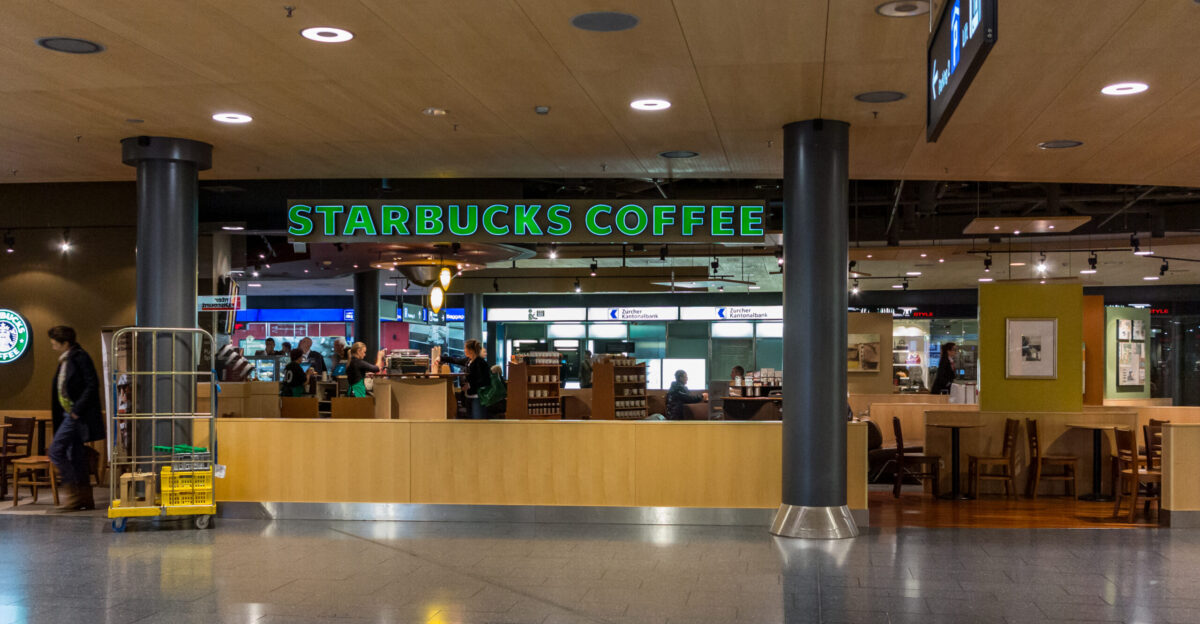
Starbucks’ packaged coffee and ready-to-drink channel development business grew 17% to $542.6 million in Q4 2025, demonstrating brand strength beyond cafes. Consolidated net revenues increased 5% year-over-year to $9.6 billion, surpassing consensus estimates of $9.35 billion.
The performance indicates that while cafe operations face challenges, consumer demand for Starbucks products through retail and grocery channels remains robust.
Urban Saturation Strategy Declared Obsolete
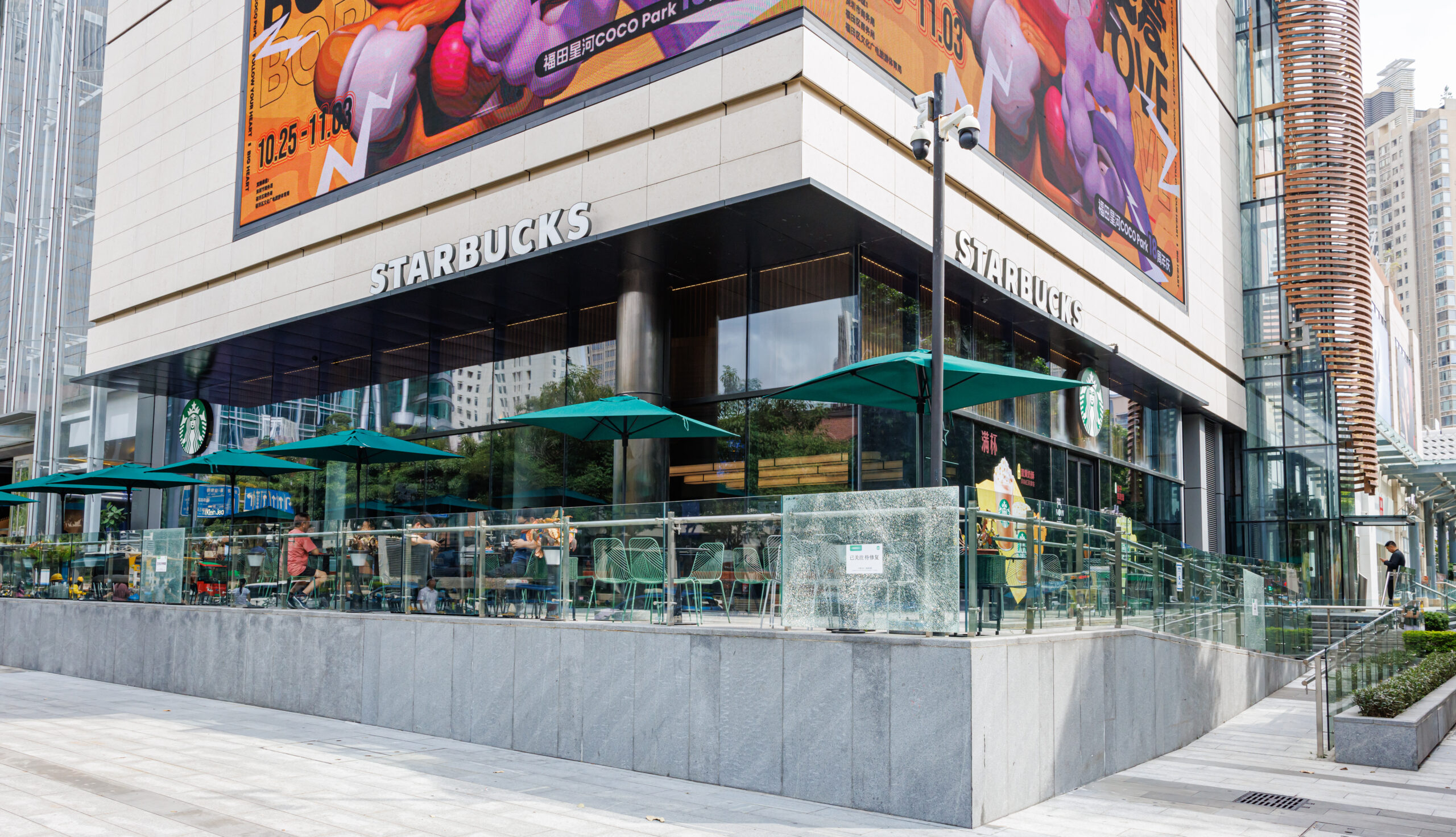
The closure program represents strategic acknowledgment that Starbucks’ decades-long ubiquity approach has become economically unsustainable in post-pandemic urban America.
CNN reported that “Starbucks doesn’t want to be on every street in New York and Los Angeles anymore” as the company deliberately exits dense markets where competition, costs, and declining traffic have destroyed unit economics. The retreat marks the end of an expansion era defined by market saturation.
Recovery Timeline Remains Uncertain

One quarter of stabilized same-store sales does not confirm sustained recovery, particularly with margin compression persisting and labor relations unresolved.
The company projects North America will have approximately 18,300 total locations by fiscal year-end, positioning for net growth resumption in fiscal 2026. Whether fewer, better stores in suburban locations can restore profitability and brand mystique that ubiquity diluted represents a strategic gamble defining Starbucks’ next decade.
Sources:
“Starbucks plans to close approximately 400 stores in major cities.” Yahoo Finance, Dec 2025.
“Starbucks doesn’t want to be on every street in New York and Los Angeles anymore.” CNN Business, Dec 2025.
“Starbucks Reports Q4 and Full Fiscal Year 2025 Results.” Starbucks Corporation Investor Relations, Oct 2025.
“Starbucks to close stores, lay off workers in $1 billion restructuring.” CNBC, Sep 2025.
“Starbucks workers’ union takes month-long strike to more cities.” Reuters, Dec 2025.
“AFL-CIO Executive Paywatch: Starbucks CEO Brian Niccol compensation analysis.” CNN Business, Jul 2025.