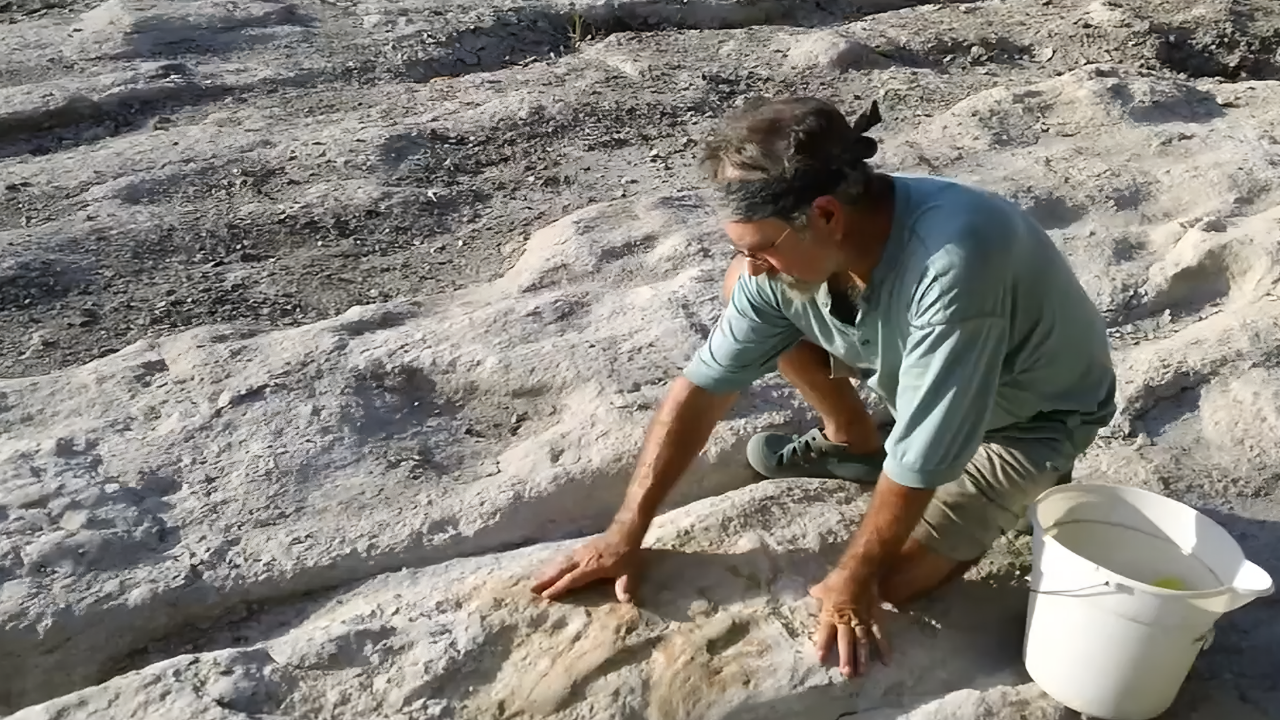
In the hills of Bolivia’s Torotoro National Park, a broad rock surface known as Carreras Pampa has emerged as the largest known record of dinosaur footsteps on Earth. Nearly 18,000 footprints, laid down about 70 million years ago in the Late Cretaceous, crisscross the site. Unlike many fossil localities, there are no bones here—only tracks—turning this expanse of ancient mudflat into a detailed log of repeated dinosaur activity rather than a single dramatic event.
Discovery and Scale of a Giant Trackfield
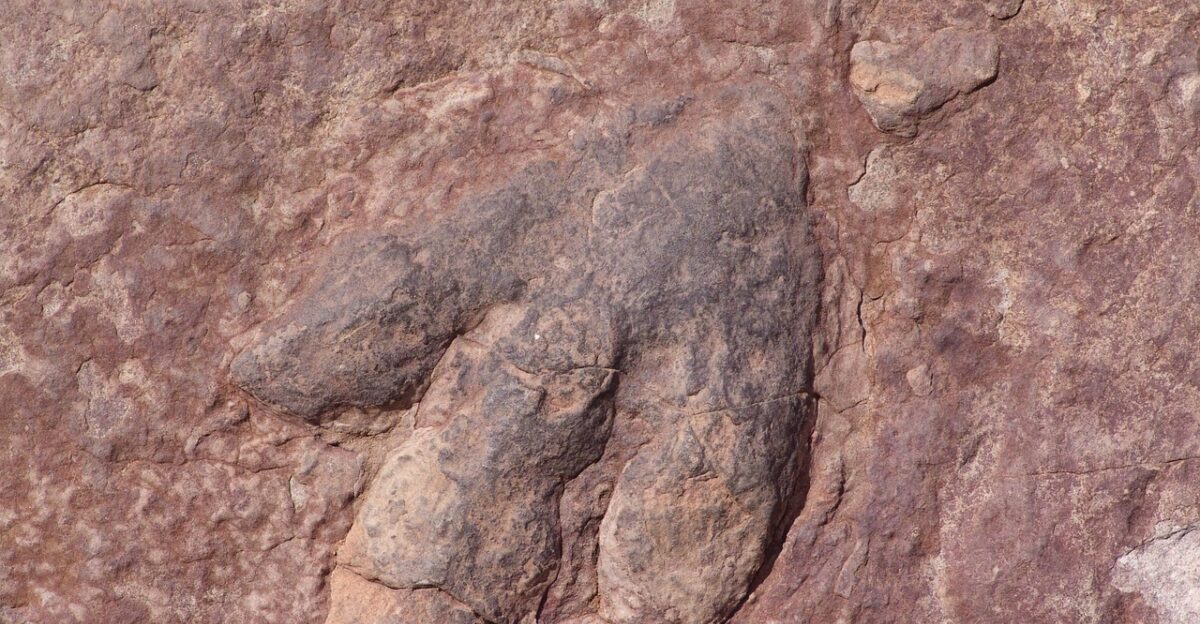
Carreras Pampa was familiar to local communities long before scientists began to investigate it in depth. Only recently did researchers carry out systematic mapping and excavation, peeling back sediment to reveal thousands of overlapping impressions and continuous trackways. That work led to the first major peer-reviewed study of the site, moving it from regional curiosity to a discovery of global significance.
The documented surface now includes more than 16,600 exposed three-toed dinosaur footprints, plus hundreds of other traces such as tail drag marks and impressions made while animals were partly buoyant in shallow water. In all, scientists have identified 1,321 distinct trackways—paths showing the repeated steps of individual dinosaurs. No other known location matches Carreras Pampa in the total number of preserved tracks or in the density with which they cover the rock.
Patterns of overprinting, varied preservation quality, and different orientations indicate the site was not created in a single episode. Instead, dinosaurs walked across these mudflats again and again, over what may have been hundreds or thousands of years, leaving behind a layered record of traffic through a landscape that clearly drew them back.
Reconstructing a Lost Landscape
The fossilized surface at Carreras Pampa offers a sharp contrast to the region’s dry environment today. When the tracks were formed, the area was humid and frequently waterlogged. Dinosaurs crossed soft, saturated mud that later dried, hardened, and was quickly buried by additional sediment, protecting impressions that still show fine features such as claw marks.
Sedimentary structures around the footprints, including ripple patterns and subtle deformation of the underlying layers, point to very shallow water and unstable ground. Together, these signs suggest a setting of floodplains, wetlands, or low-lying coastal zones that were periodically submerged and exposed. The presence of numerous swim traces—where only claw tips or partial feet raked the substrate—supports the idea that water levels fluctuated and that dinosaurs regularly moved through flooded sections.
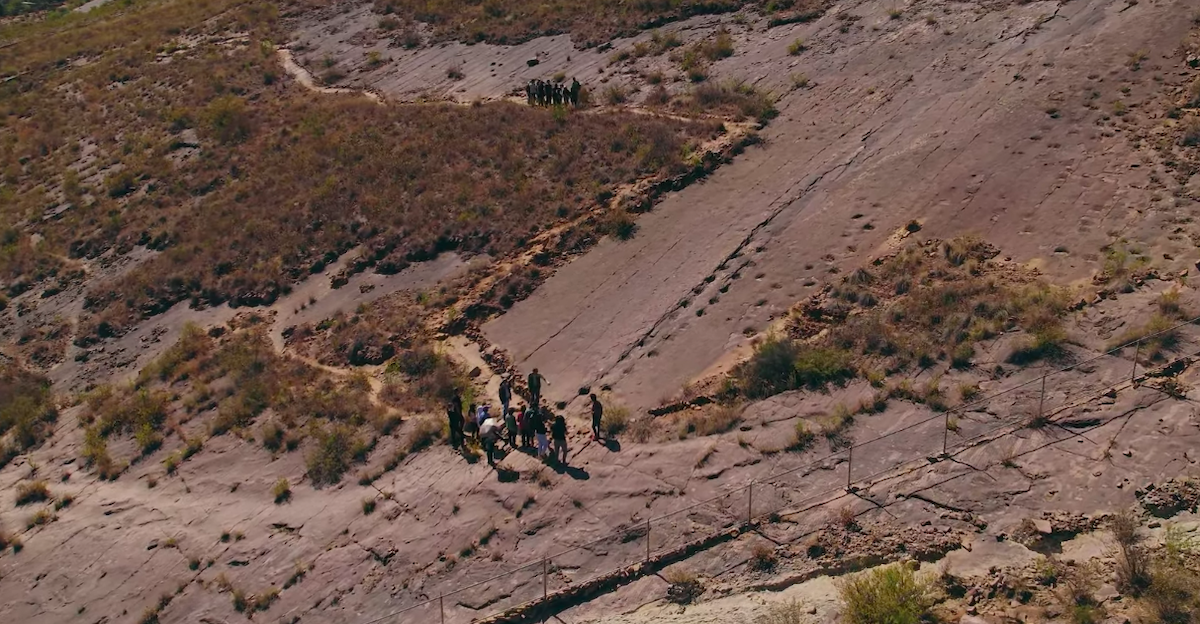
These environmental clues make Carreras Pampa not just a paleontological treasure but also a window into Late Cretaceous climate and hydrology. Track depth, spacing, and associated sediment features act as indirect indicators of soil moisture and water dynamics in a landscape that could repeatedly sustain large animals.
Who Made the Tracks—and How They Moved
Most of the footprints at the site are three-toed and made by animals walking on two legs, a pattern consistent with theropod dinosaurs, the group that includes many large predators. Many of these prints lack clear heel impressions but show distinct, evenly spaced claw marks, producing so-called “ghost tracks” where only the front of the foot registered cleanly in soft mud.
Alongside these are tail drag marks and extensive swim impressions, where only claws or the tips of toes scratched the bottom as the animals were partially supported by water. Possible birdlike tracks have also been identified, hinting at avian or near-avian dinosaurs moving across the same terrain. Differences in track sizes reveal that both smaller and larger individuals—whether different species or different age classes—used the area.
Because no bones have been found at Carreras Pampa, researchers must rely on footprint shape and dimensions to infer the trackmakers. The three-toed forms are compatible with theropods known from Gondwana in the Late Cretaceous, potentially including abelisaurid or noasaurid relatives. However, the prints cannot be tied with certainty to specific species, leaving the exact identities of the animals unresolved even as their movements are clearly recorded.
Behavior, Ecology, and Population Clues
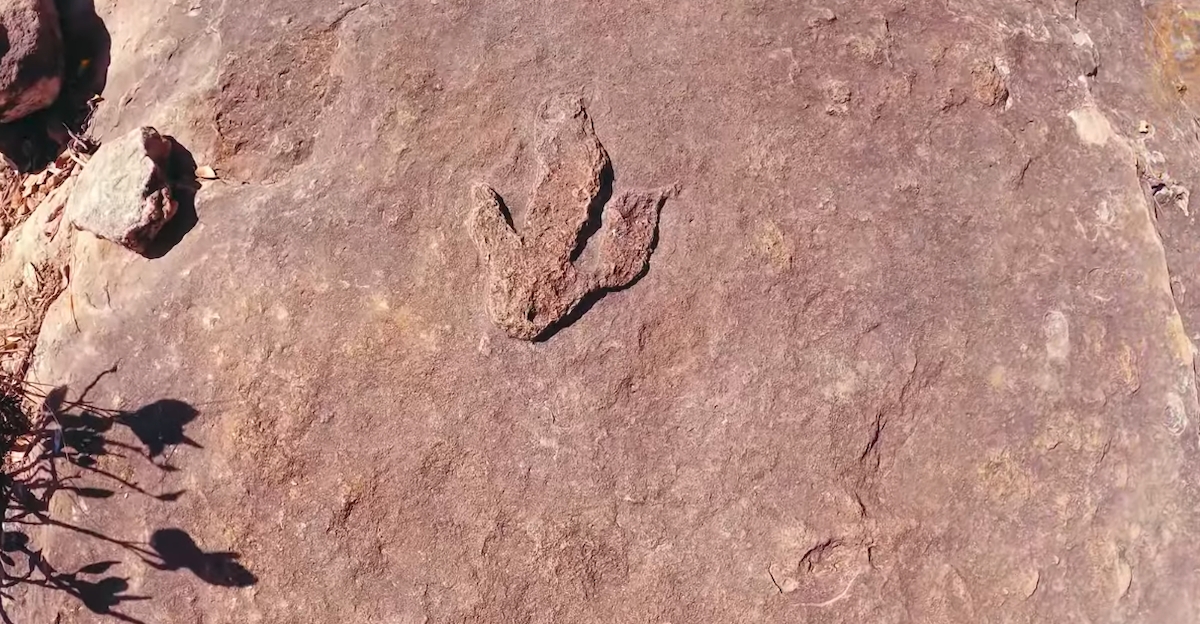
The sheer extent and organization of the trackways provide a rare glimpse into dinosaur behavior. Parallel paths and consistent directions in sections of the site suggest coordinated travel across the surface, rather than animals wandering randomly. Variations in footprint size along these paths point to juveniles and adults using the same routes, hinting at mixed-age groups moving together or repeatedly exploiting the same corridor.
The number of trackways—over 1,300—indicates that dozens to hundreds of individuals passed through over an extended period, even though the nearly 18,000 prints do not represent 18,000 separate dinosaurs. This concentration of evidence supports the view that dinosaur populations in some regions could be relatively dense, at least seasonally, and that certain landscapes functioned as stable resource zones or movement corridors.
The dominance of theropod tracks suggests that predatory dinosaurs made particularly frequent use of Carreras Pampa. The repeated return to the same ground implies access to dependable water, prey, vegetation, or migration routes. In ecological terms, the site appears to have been an important node within the broader Late Cretaceous ecosystem of what is now central Bolivia.
Preservation, Technology, and Future Challenges
Carreras Pampa’s exceptional preservation stems from a precise sequence of events: dinosaurs stepping into soft mud, those impressions drying and hardening, rapid burial by new sediment, and, millions of years later, uplift and erosion exposing the hardened surfaces. This sequence allowed even delicate features to survive for roughly 70 million years.
The site is now classified as an ichnologic concentration and conservation Lagerstätte—a place where an unusually dense and well-preserved assemblage of trace fossils has been conserved. Researchers have combined traditional field mapping with high-resolution photography and photogrammetry to document the tracks in detail, producing digital models that capture the layout and condition of the site without exposing all areas to ongoing weathering.
Despite legal protection within Torotoro National Park, conservation remains difficult. Once visible, fossil footprints are vulnerable to erosion, temperature changes, and human activity. Scientists stress the need for careful management, controlled exposure, and continued digital recording to safeguard this extensive record of dinosaur behavior.
Carreras Pampa also fits into a wider paleontological context. Bolivia already hosts one of the world’s most extensive records of dinosaur tracksites from the Triassic, Jurassic, and Cretaceous. The scale and quality of the Carreras Pampa tracks strengthen that reputation and highlight South America’s central role in reconstructing dinosaur evolution, movement, and ecology. Large parts of the surrounding region remain unexplored, and future fieldwork and subsurface imaging may reveal additional buried layers, potentially expanding the known footprint count even further.
Ultimately, the site demonstrates that a landscape of tracks—without a single bone—can still reveal how dinosaurs moved, where they traveled, and how often they returned. As research continues, Carreras Pampa is likely to remain a key reference point for understanding dinosaur behavior and for appreciating how traces etched in mud can carry detailed stories across geological time.
Sources:
“Download Citation – PLOS One”
PubMed”Carreras Pampa (Upper Cretaceous), Torotoro National Park, Bolivia”
Discover Wildlif”16000 dinosaur footprints discovered in Bolivia. It’s the …”
Popular Mechanics
“Archaeologists Discovered the Origins of 18000 Ancient ‘ …”ABC New
“Tens of thousands of dinosaur footprints and swim tracks …”UPI (United Press International)
“World’s largest dinosaur footprint site identified in Bolivia – UPI”EurekAlert”Scores of dinosaurs walked and swam along a Bolivian …”Smithsonian Magazine
“This Site in Bolivia Boasts 16600 Exposed Dinosaur …”ScienceAlert