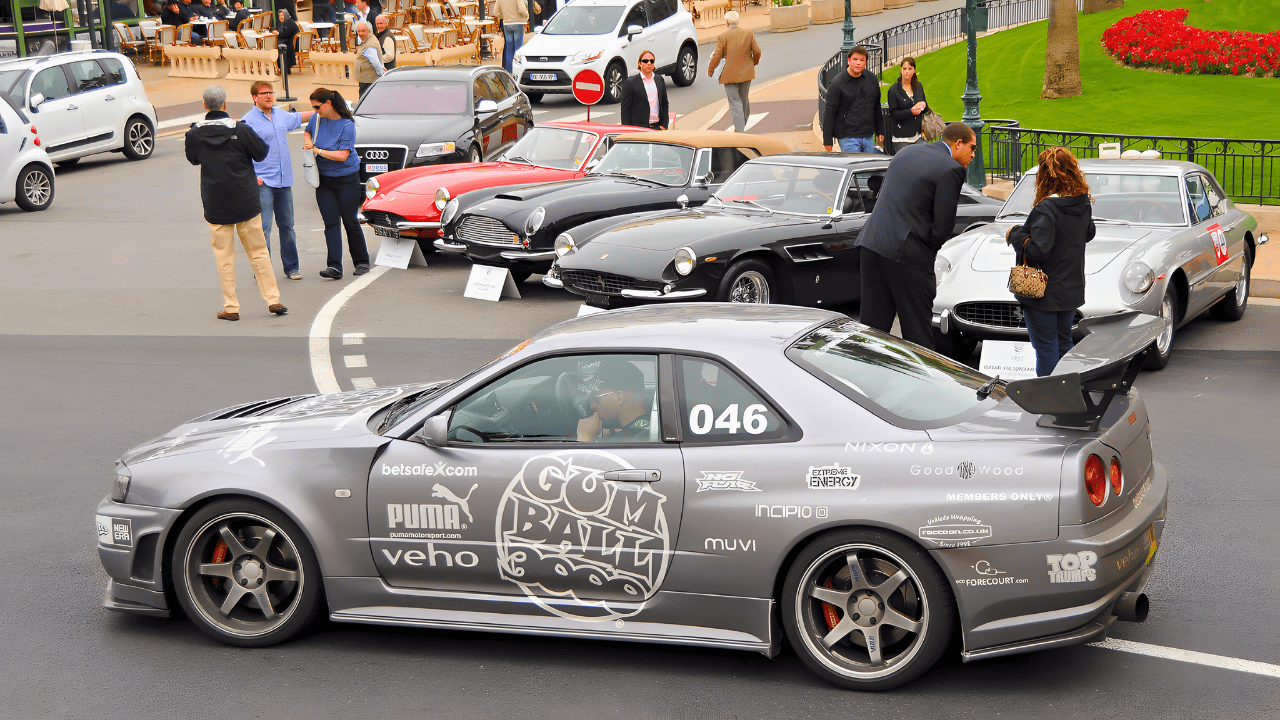
The auction room falls silent as a 1995 BMW M3 Lightweight crosses the block for $179,200, a car once dismissed as too harsh for daily use. That single sale captures a wider shift: focused performance machines from the 1990s, long overshadowed by newer technology, are now among the most aggressively pursued vehicles in the collector market. Rarity, motorsport pedigree, and generational nostalgia have turned yesterday’s track toys into blue-chip assets, with prices that routinely stretch into six and even seven figures.
Analog Icons and Homologation Legends
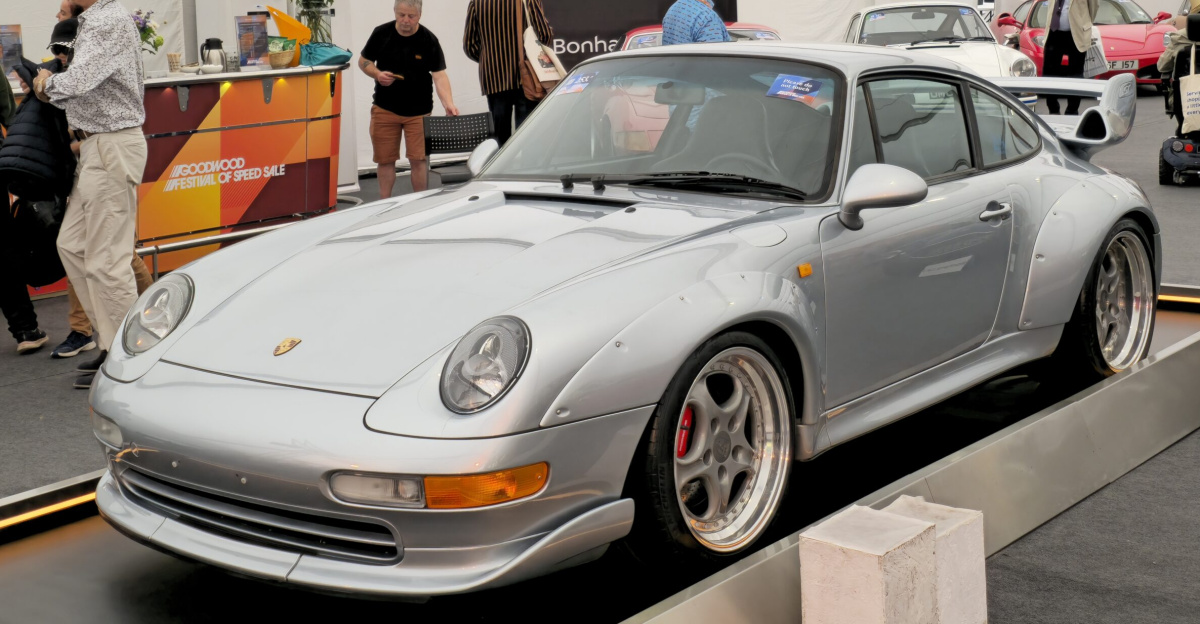
Among the most prized models are road cars built to satisfy racing rules or closely derived from competition machinery. The 1995 Porsche 911 GT2 is a prime example. Only 57 road-going versions of this air-cooled, rear-drive turbo were produced, and its deliberately raw character—minimal driver aids and intense power delivery—has helped push auction values well beyond $1 million.
Porsche’s homologation theme continues with the 1993 911 Carrera RS 3.8 (964-generation). Created to qualify cars for BPR GT competition, it is believed that about 55 examples were built for road use. Strong recent sales, including estimates in the $700,000–$900,000 range, underline its status as one of the most coveted classic 911s. Collectors have also embraced the later 993-generation Carrera RS (1995–1996), a distinct, more refined model with a naturally aspirated 3.8-liter engine and a larger production run of 1,104 units. Even so, scarcity and performance have driven at least one example to an $830,000 result.
Japanese Performance Ascends
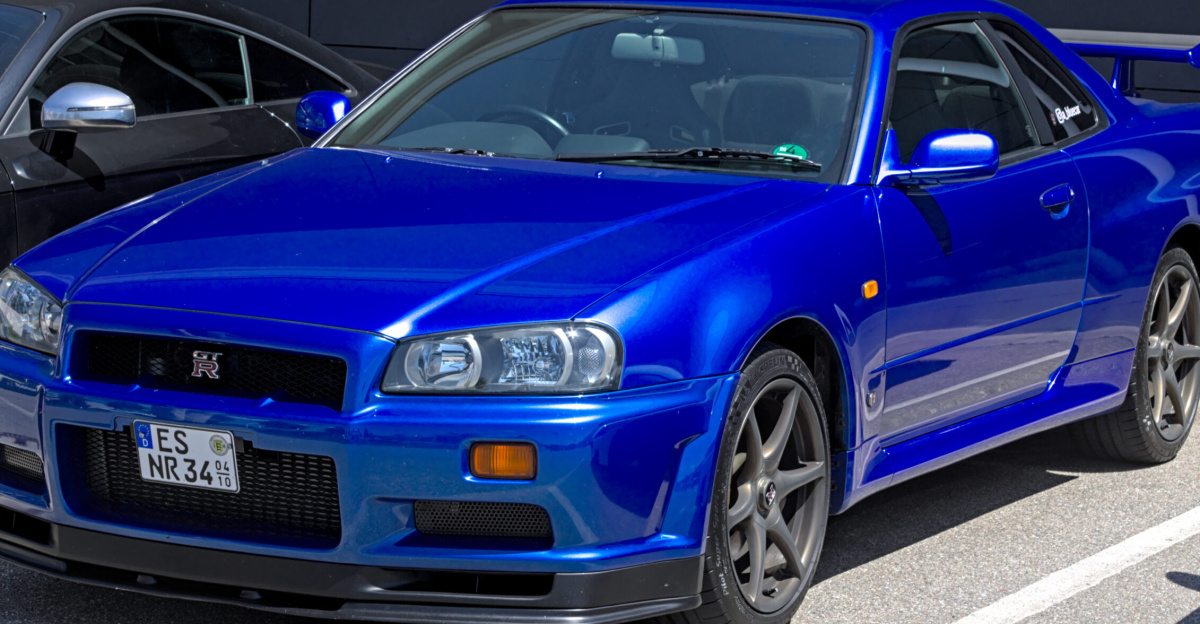
High-performance models from Japan’s 1990s “golden era” have seen some of the steepest price climbs. The 1999 Nissan Skyline GT-R V-Spec R34, once unobtainable for American buyers due to import regulations, is now a highly sought-after icon of the JDM scene. As more cars become legal to import, top-condition examples have reached well over $300,000 at auction, reflecting a global audience that grew up idolizing the R34 in games and film.
Even rarer is the 1996 Nissan Skyline GT-R NISMO 400R. Developed as an extreme evolution of the R33 GT-R, only 44 units were produced. That scarcity, combined with its elevated performance, has pushed values into the seven-figure range, with one documented sale at $995,000. This places the 400R among the most valuable Japanese road cars ever built.
Toyota’s 1990s halo models show a similar trajectory. Early 1993 Toyota Supra Turbo (JZA80) examples have moved from tuner-car status to serious collectibles, with prime Mk4 cars achieving six-figure auction prices starting around $122,500. While appearances in popular movies helped spotlight the Supra, demand today is driven by its robust engineering, tuning potential, and the appeal of unmodified or lightly modified cars.
Within the Supra family, the 1997 15th Anniversary Edition has emerged as a standout. Collectors particularly value examples finished in Royal Sapphire Pearl with a tan interior, a rare combination that has become one of the most desirable specifications for enthusiasts focused on Japanese domestic-market heritage.
Rally-Bred Heroes and Everyday Exotics
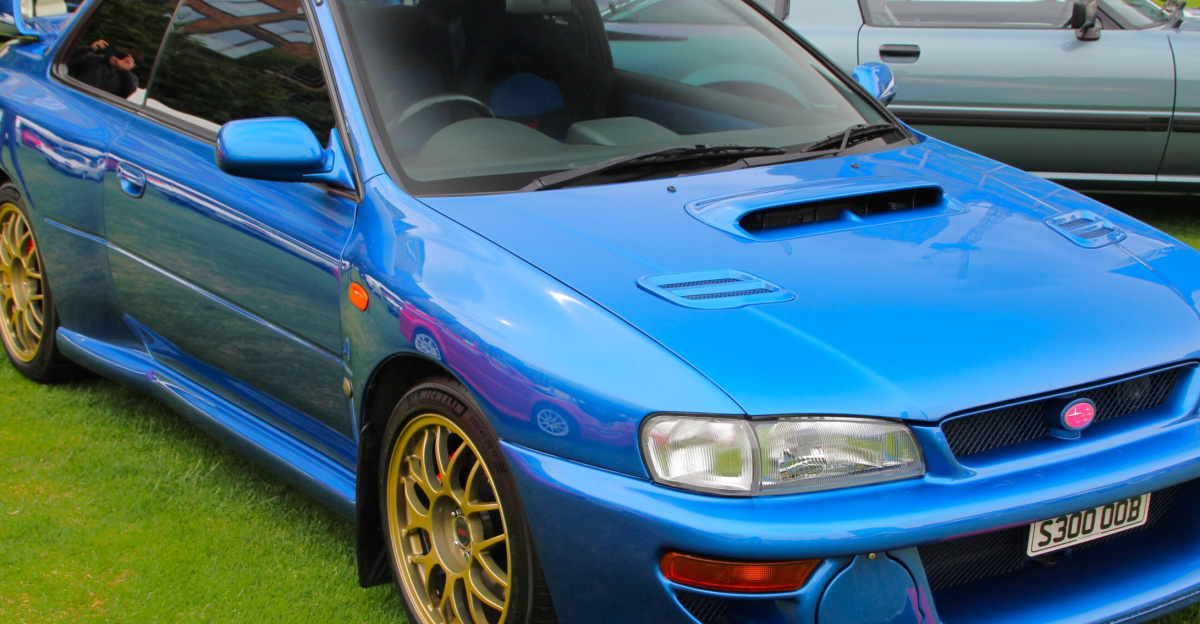
The 1990s also produced road cars shaped directly by rally competition. The 1998 Subaru Impreza 22B STI was built to celebrate Subaru’s World Rally Championship success, with only 424 units produced. Its wide bodywork, bespoke engine tuning, and competition lineage have pushed values to six-figure territory, with exceptional examples approaching or exceeding $200,000 at auction—far above its original price and still trending upward.
Toyota’s answer in the rally arena, the Celica GT-Four, enjoyed a longer production run from 1991 to 1999 but still offers key limited editions. The ST185 Carlos Sainz Limited Edition saw 5,000 units produced to meet FIA homologation requirements, while later ST205 Group A models were limited to 2,500 homologation cars. As the cleanest examples become harder to find, these Celicas are increasingly sought after and command rising premiums, particularly from collectors who prize their World Rally Championship connection.
On the supercar side, Honda’s 1999 Acura NSX Zanardi Edition illustrates how focused variants can transform values. Built to honor racer Alex Zanardi’s CART championship titles, just 51 units were produced. Today, these lightweight, fixed-roof NSXs regularly reach well into six-figure territory, reinforcing Honda’s reputation for combining reliability with exotic-level engineering.
European Muscle and Understated Power
Not all valuable 1990s collectibles are flamboyant two-seat exotics. The 1992 BMW M5 E34 with the Nürburgring handling package shows how a seemingly practical sedan can evolve into a coveted asset. This track-focused package sharpened the already capable M5, and cars so equipped, especially low-mileage examples, now bring a clear premium. Once considered a sensible high-performance daily driver, the Nürburgring-package M5 is increasingly treated as a rare find to be preserved rather than used.
BMW’s 1995 M3 Lightweight shows the brand’s more extreme side. Only 126 of these pared-back E36 coupes were built, with significant weight savings and track-ready features. For years they were viewed as too uncompromising for everyday use, but they now regularly achieve six-figure prices at auction, with recent sales ranging from about $115,000 to $195,000. The M3 Lightweight divides opinion—some see it as the purest expression of BMW’s driver-focused ethos, while others find it too specialized—but its market performance confirms its place among the marque’s modern legends.
American and British Flagships
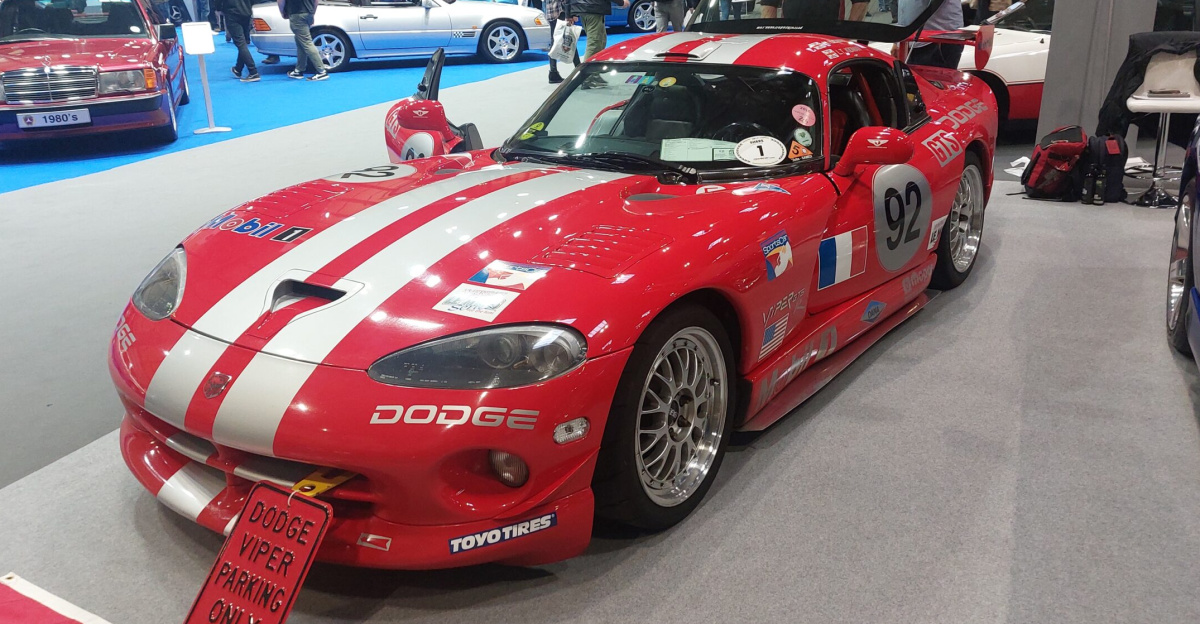
The 1996 Dodge Viper GTS Coupe, finished in its signature blue with white stripes, represents 1990s American performance at its most dramatic. Early production examples, particularly those with extremely low mileage, can command six-figure sums at auction. Buyers are drawn to its large-displacement V10 engine, manual transmission, and minimal driver aids, attributes that are increasingly rare in modern performance cars.
At the upper end of the 1990s supercar spectrum sits the 1994 Jaguar XJ220S TWR. Only six road-going versions were built by Tom Walkinshaw Racing, giving this model near museum-level exclusivity. Its Le Mans-inspired engineering, combined with British racing heritage and luxurious appointments, has established the XJ220S as one of the most valuable supercars of its decade.
Rising Values and What Comes Next
Taken together, these limited-production machines show how nostalgia, scarcity, and competition pedigree can rapidly transform 1990s performance cars into high-value collectibles. Enthusiasts who once saw them as weekend toys now treat them as significant financial investments, while new buyers enter the market to secure icons from their youth before prices climb further. As supply tightens and younger collectors gain purchasing power, the most original, well-documented examples are likely to remain in high demand, suggesting that the 1990s performance boom still has room to run.
Sources:
“1995 BMW M3 Lightweight | Monterey 2025.” RM Sotheby’s, Aug 2025.
“1996 Nissan Skyline GT-R NISMO 400R | Monterey 2025.” RM Sotheby’s, Aug 2025.
“The Japanese Collector Car Market is Maturing.” Hagerty, Sep 2023.
“10 Of The Hottest Collectible Cars From The 1990s.” HotCars, 2023.