
A hidden economic crisis has gripped the United States, slashing national income by 12%—equivalent to $3.5 trillion annually—without mass layoffs or recessions. This damage stems from rising temperatures over the past five decades, rippling through agriculture, trade, and energy systems in ways long overlooked by economists.
Scale of the Losses
Researchers analyzing over 50 years of daily weather and county-level income data from 1969 to 2019 uncovered the extent of the harm. The central estimate pegs cumulative income reduction at 12%, with a confidence interval of 2% to 22%, or $2.5 trillion to $4.6 trillion yearly. Recent routine temperature shifts alone cut annual income by 0.32%, within a 95% confidence interval of -0.17% to 0.82%.[1][2] Every state feels the impact, though effects cascade nationwide via interconnected markets, turning local heat into a systemic drag comparable to major economic shocks.
Data Reveals the Mechanism

The study paired granular temperature records with personal income trends, revealing patterns missed in prior sector-specific analyses. Initial losses appeared minor, under 1%, but adjusting for temperature persistence—where heat lingers across days—and trade spillovers ballooned the figures. Heat waves in one area disrupt supply chains elsewhere, amplifying damage through labor shortages, higher energy use, and reduced productivity. This national-scale tracking, rare until now, proves climate change has already embedded deep economic costs.
Hardest Hit Regions

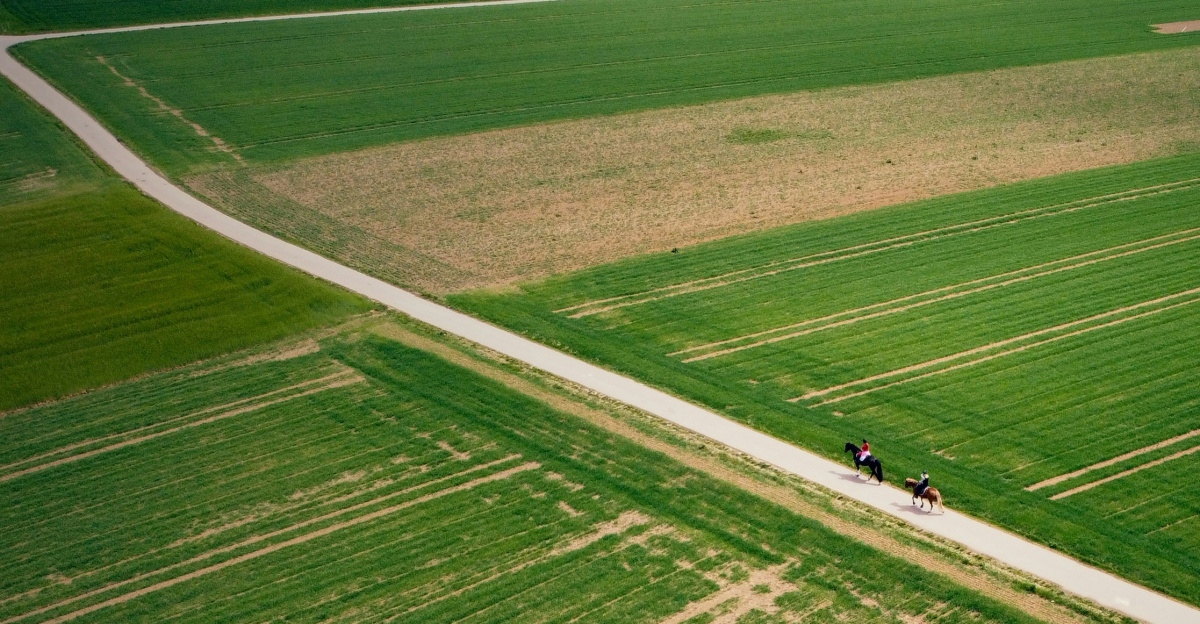
The Great Plains and Midwest suffer most, with agriculture bearing the primary blow. Daily heat exposure cuts crop yields, stresses livestock, and spikes irrigation and cooling demands, eroding farm output and local incomes. These declines spread via trade networks: a Midwest drought raises food prices and disrupts manufacturing nationwide. Even milder eastern climates face fallout from elevated energy costs and supply disruptions, while northern areas like Alaska see minor gains from extended growing seasons and lower heating needs—far outweighed by aggregate losses.
Overlooked Systemic Effects

Past research fixated on isolated sectors, underestimating interconnections. Economist Derek Lemoine noted that without grasping current costs from available data, future projections falter. Government bodies like the Treasury and Federal Reserve recognize risks but lack integrated models for GDP or income forecasts. Academic centers at Yale, MIT, and Stanford now advance economy-wide frameworks, confirming climate acts through trade, labor, and energy—not just farms or power plants.
Path Forward and Risks
Embedded warming guarantees ongoing income suppression for decades, demanding massive investments in resilient infrastructure, crops, and grids. Mitigation might curb worse losses, but adaptation scales challenge policymakers. With temperatures set to rise through mid-century, the 12% baseline could compound, pitting urgent action against incremental steps. Globally, nations with robust climate strategies gain competitive edges, while U.S. delays heighten legal pressures on investors to address documented risks. Younger workers face compressed earnings, raising questions of generational fairness. This reframes climate as a core economic priority, demanding unified policy responses.
Sources:
Lemoine, Derek. 2025. “Climate change has already made the United States poorer.” University of Arizona News. 2025. “Climate change’s hidden price tag: a drop in our income.” December 2, 2025.
Feng, A., et al. 2021. “We Are All in the Same Boat: Cross-Border Spillovers of Climate Risk Through International Trade and Supply Chain Linkages.”
Feng, A., et al. 2023. “Cross-Border Spillovers of Climate Shocks Through International Trade.”
Environmental Defense Fund (EDF). 2022. “How Climate Change Will Impact U.S. Corn, Soybean and Wheat Yields in the Midwest.”
University of Alaska Fairbanks & Arctic Focus. 2024. “Climate change could enable Alaska to grow more of its own food.”
Columbia University School of International and Public Affairs (SIPA). 2019. “How Climate Change Impacts the Economy.”