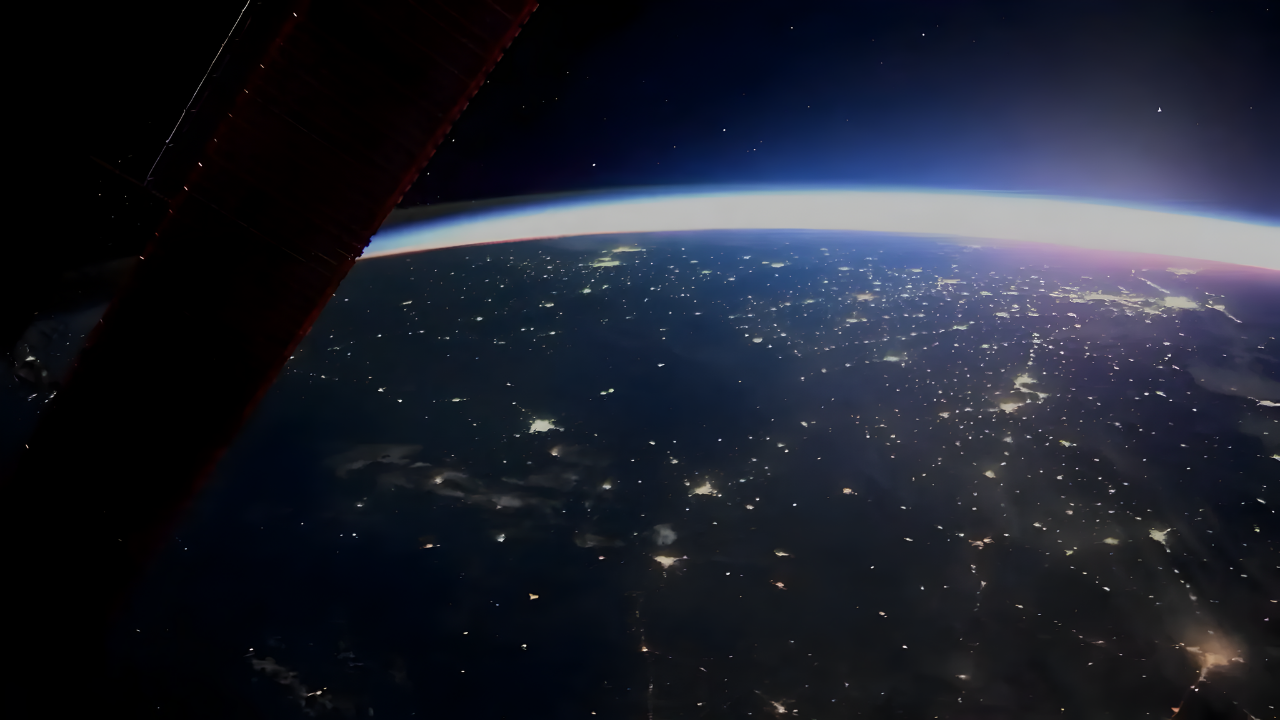
The sky above Earth suddenly pulses with intense energy—solar flares burst from the Sun’s surface, sending waves of plasma hurtling through space. The source: Sunspot region 4299, an unusually active area that has captivated scientists’ attention. Within moments, a massive coronal mass ejection (CME) is barreling toward Earth.
At speeds around 535 kilometers per second, it’s set to strike the planet’s magnetosphere in just a few days. As alarms sound across NOAA and NASA’s monitoring systems, the world braces for the unknown—how severe will this solar storm be?
The Flare Erupts
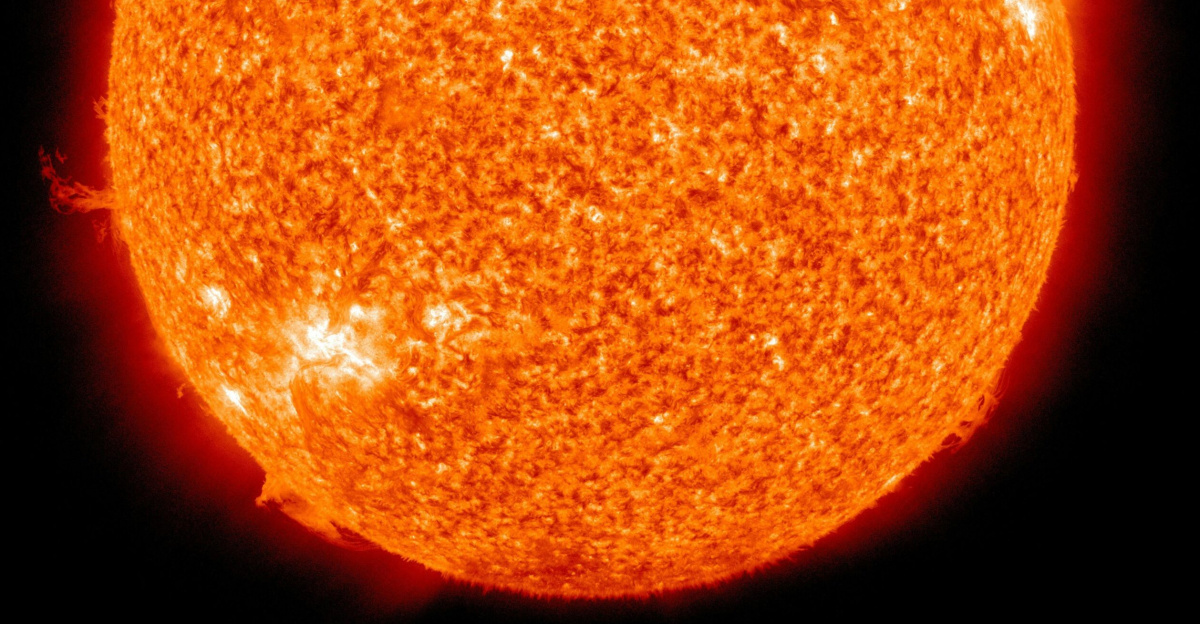
On December 6, 2025, the Sun unleashed an M8.1-class solar flare from Sunspot 4299, one of the most powerful bursts in recent months. This eruption was an M8.1-class flare, one of the most powerful solar flare classifications, releasing enormous amounts of energy across the solar spectrum. Within minutes, a full-halo coronal mass ejection (CME) was heading directly for Earth.
With a speed of approximately 535 kilometers per second—projected to arrive on December 9 with an uncertainty of ±8 hours—it was clear: this storm would soon arrive, but how would it affect us?
What is a Coronal Mass Ejection?
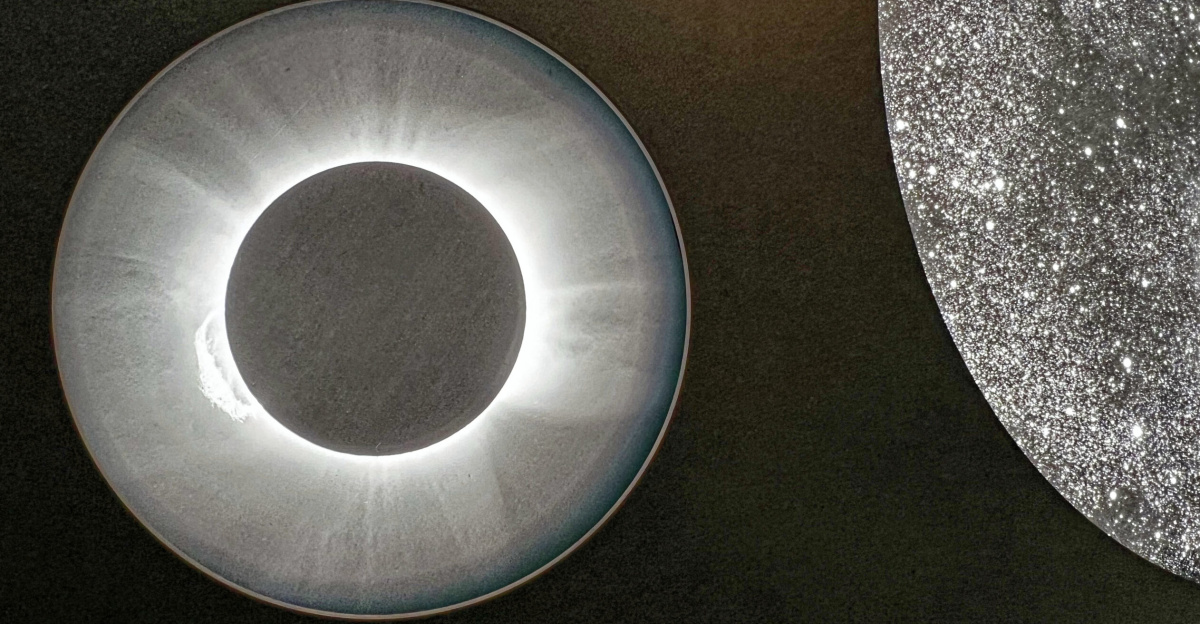
A coronal mass ejection is a giant eruption from the Sun’s outer atmosphere, releasing massive amounts of ionized plasma into space. These bursts can carry up to billions of tons of charged particles. When directed at Earth, they interact with our planet’s magnetosphere, causing geomagnetic storms.
The CME from December 6 is especially intense, triggering concerns about its impact on technology and the natural world.
Storm Watch Intensifies
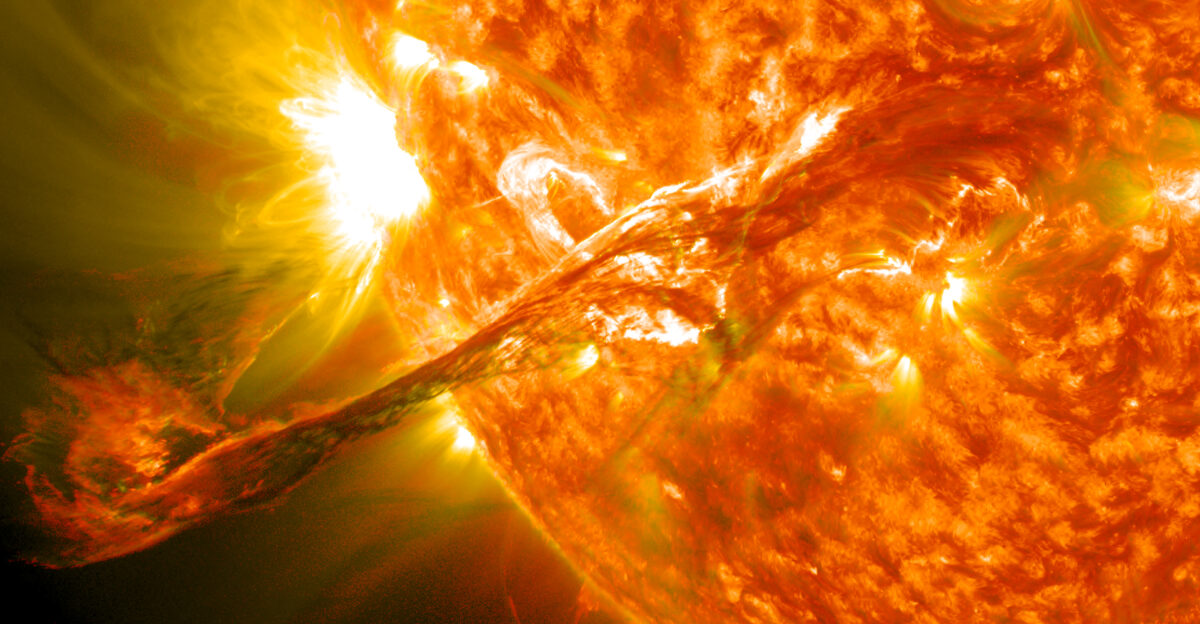
As the CME sped toward Earth, NOAA upgraded its forecast, moving from a watch to a storm warning. By December 8, it issued a G3 (strong) geomagnetic storm alert for the next day. Power grids, satellites, and airlines across North America were put on high alert.
As media outlets spread the news, the focus shifted from the scientific facts to sensational headlines. The stage was set for a story of uncertainty and fascination.
Aurora Visibility Extends Across Multiple U.S. States
On December 9, the geomagnetic storm lit up the skies, with the aurora forecast extending across more than a dozen U.S. states—with forecasts indicating potential visibility in 15 to 22 states depending on storm intensity and atmospheric conditions. This unprecedented viewing opportunity meant that millions of Americans across the affected regions were in prime position to witness one of the most dramatic aurora displays in recent memory.
Where to See the Lights?
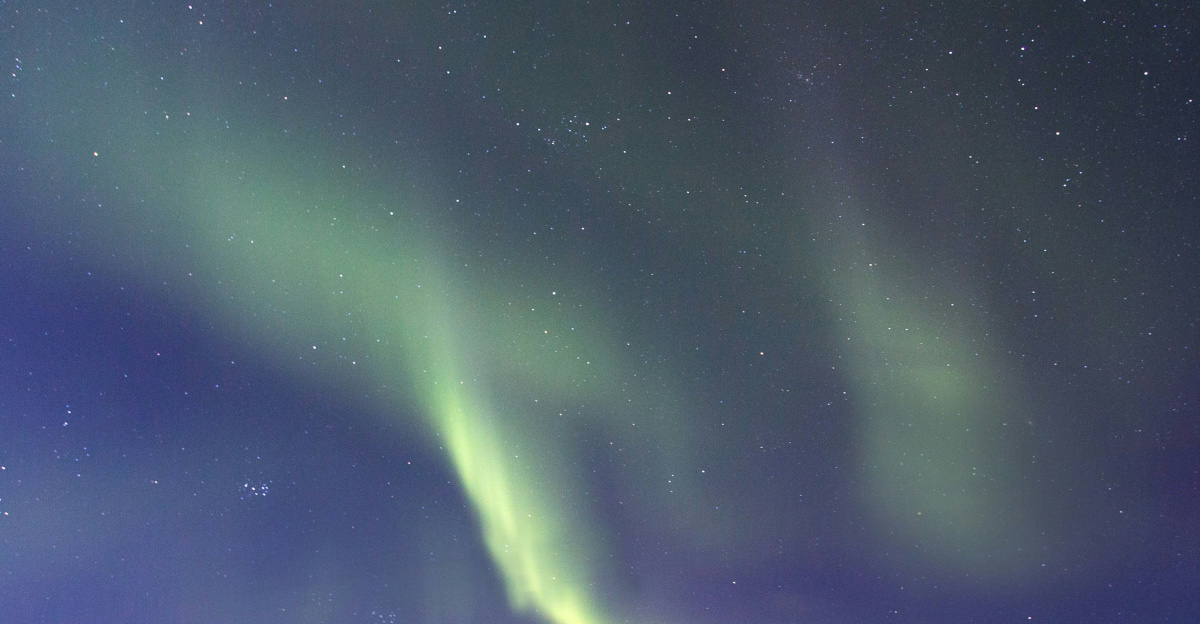
NOAA’s forecast suggested that aurora visibility would stretch across the northern U.S. and Midwest. States like Alaska, Washington, and Maine had the clearest view. Other areas, including Nebraska, Ohio, Montana, and parts of the lower Midwest, were expected to have viewing opportunities as well.
With an event of this scale, the northern lights were expected to reach far south, creating a once-in-a-lifetime spectacle for many. However, cloud cover in some regions limited visibility, disappointing viewers.
Real-Time Accounts of the Aurora
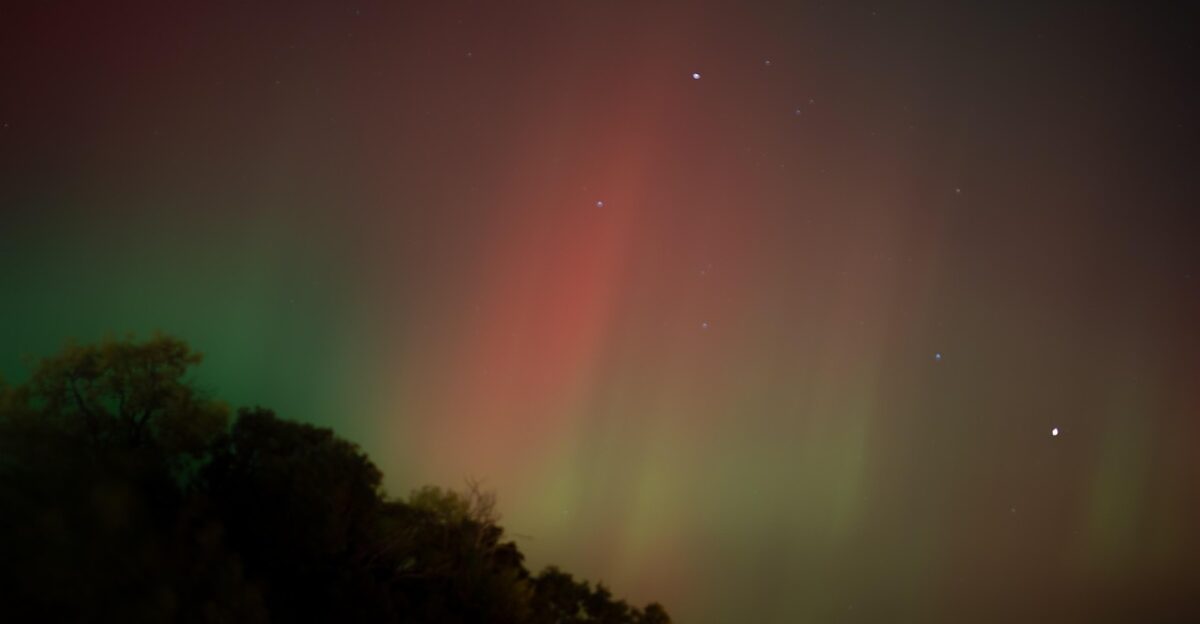
Aurora enthusiasts across the affected region documented the event, with reports and photos emerging from Montana to Maine.
The aurora displays featured the characteristic colors of geomagnetic storms—greens, purples, and pinks—as auroras reached far south from their typical Arctic zones. However, not everyone was fortunate. In places like the Pacific Northwest, cloud cover blocked the view entirely.
Behind the Scenes: Infrastructure Impact
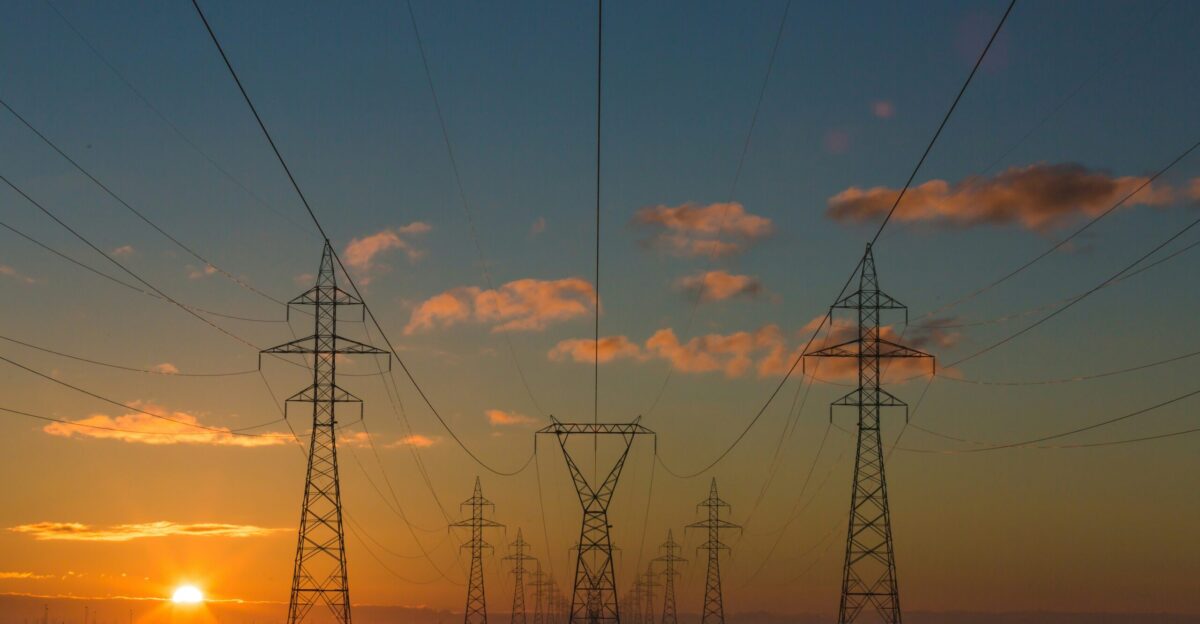
While the public marveled at the auroras, infrastructure faced significant challenges. Power grid operators in northern states braced for geomagnetically induced currents (GICs) that could damage transformers. Satellite operators adjusted positions to shield their devices from radiation exposure.
Even airlines rerouted polar flights to avoid increased radiation. Despite these preparations, major widespread power outages were not reported, indicating that modern mitigation strategies helped minimize disruption even during a significant geomagnetic event.
A New Solar Cycle Emerges
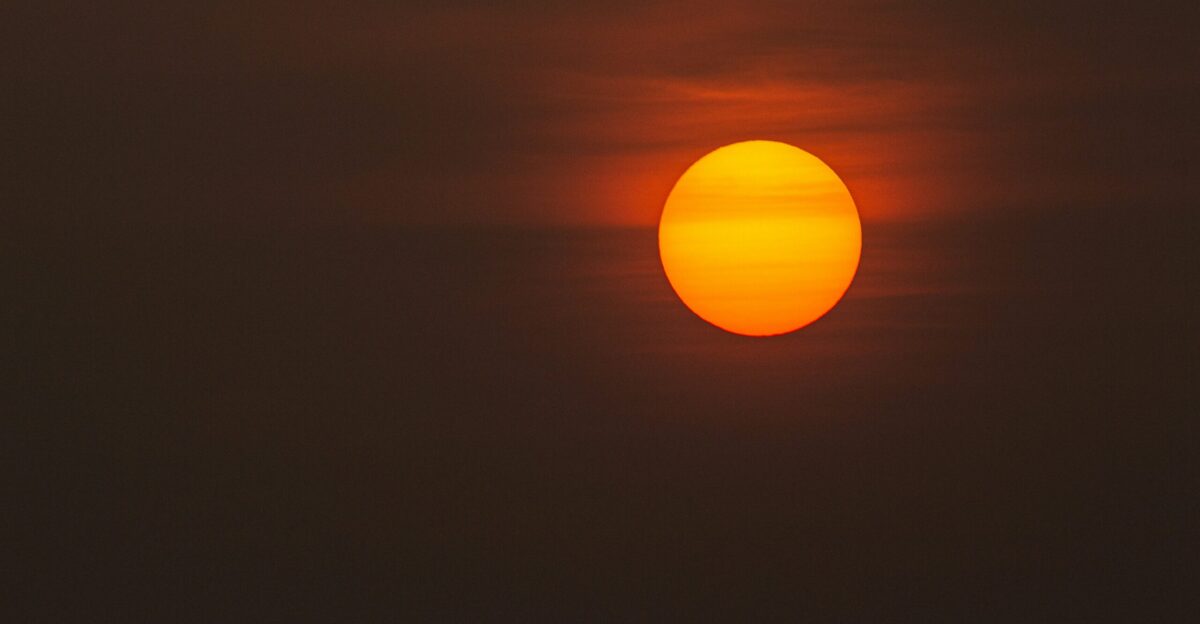
The December 9 storm marked another chapter in Solar Cycle 25, which began in December 2019. This cycle is proving to be more intense than predicted, with sunspot activity and solar flares surpassing long-term expectations. NASA and NOAA have ramped up their space weather monitoring efforts, keeping a closer eye on sunspot regions like 4299.
This active cycle promises continued solar activity through 2025, offering both challenges and scientific opportunities.
Aurora Visibility Forecasts
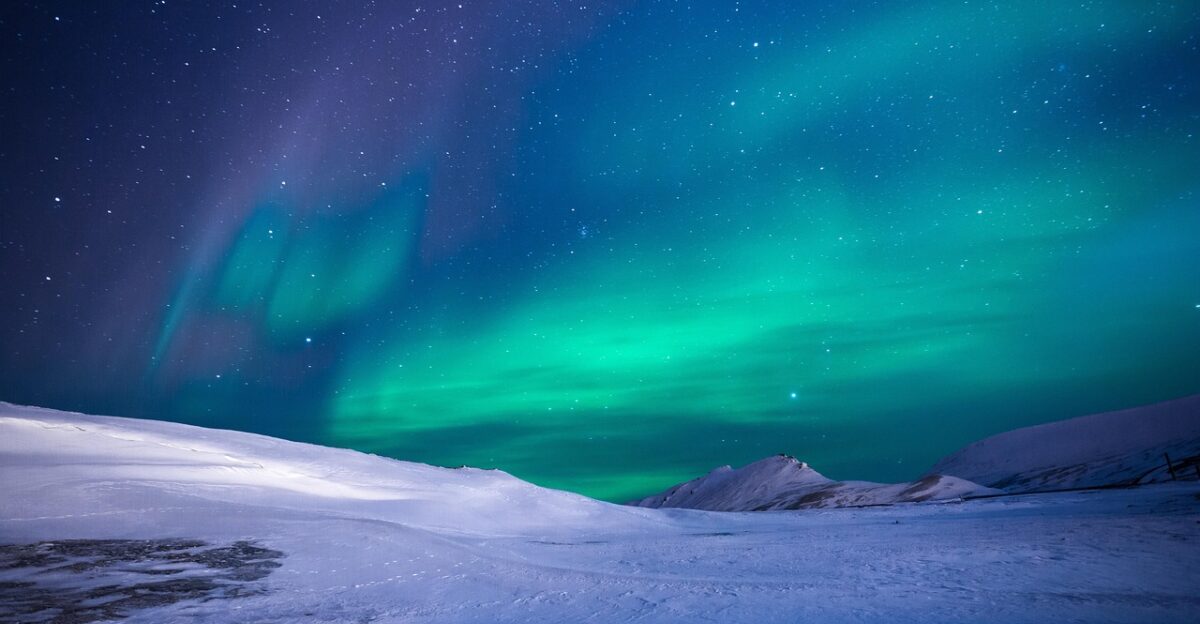
The strength of the geomagnetic storm and atmospheric conditions have a role to play in what states the aurora will be visible from. NOAA’s forecast indicated aurora could be visible across 15 to 22 U.S. states.
The viewing zone extended far farther south than typical aurora events. Some initial reports underestimated the viewing zone, while others were optimistic about how far south the lights would reach.
As a result, many readers were intrigued, eager to learn about the actual forecast zone and the rare opportunity to witness the phenomenon.
Forecasting Accuracy Meets Reality
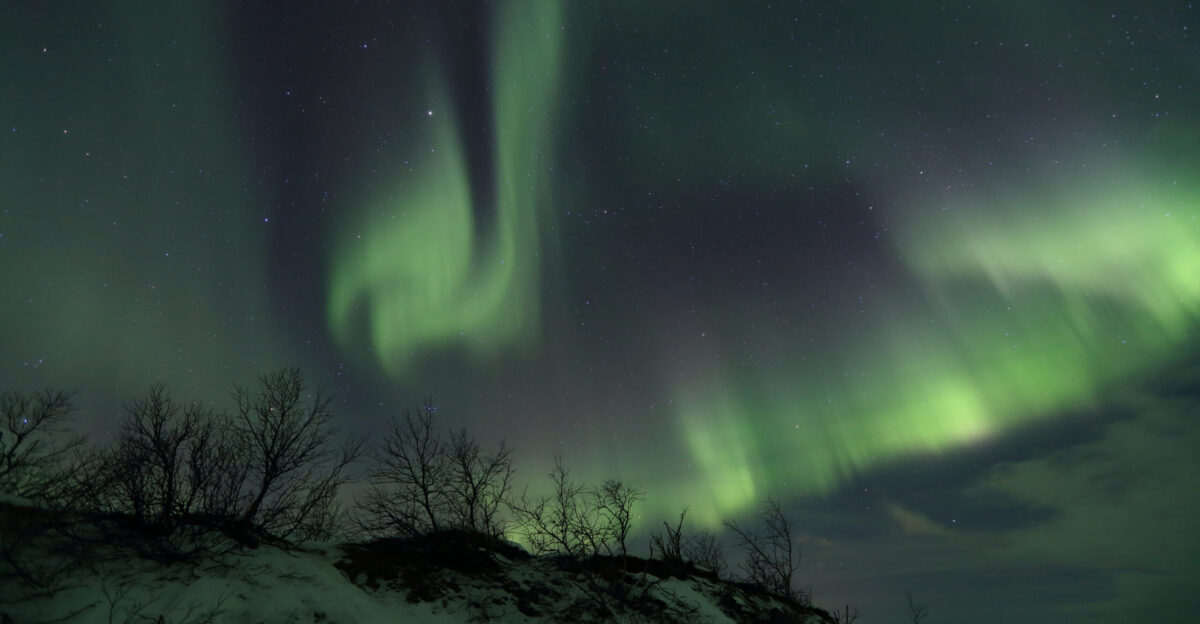
Meteorologists face a challenge in balancing accuracy with uncertainty. While NOAA’s forecast accurately predicted the storm’s intensity and timing, visibility was less certain due to cloud cover. Many people who adjusted their plans to view the auroras found themselves disappointed by weather conditions.
This tension between prediction and reality is a constant in space weather forecasting, where conditions on Earth are far more unpredictable than the space weather itself.
Economic Opportunity: Aurora Tourism Surges
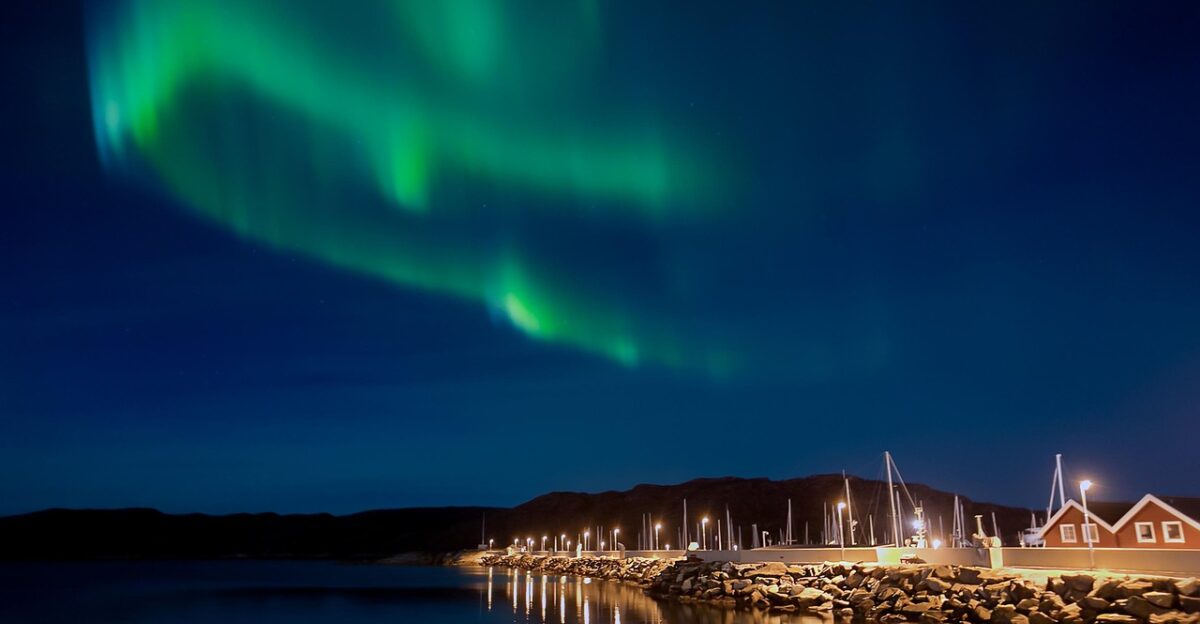
Beyond the scientific and cultural fascination, the December 9 geomagnetic storm presented significant economic opportunities for regions across the viewing zone. The global aurora tourism market has grown substantially, valued at approximately $855 million in 2024 and projected to reach $1.59 billion by 2031, with a compound annual growth rate of 9.4%.
The heightened solar activity during Solar Cycle 25 has already sparked increased interest in aurora-viewing destinations. Countries like Finland, Norway, and Iceland have experienced tourism booms tied to aurora forecasts, with some regions reporting hotel search surges exceeding 300% during peak aurora seasons. In North America, Alaska and Canadian regions are similarly capitalizing on enhanced aurora activity, developing luxury lodges and tailored tour packages that appeal to aurora enthusiasts worldwide.
The Communication Dilemma
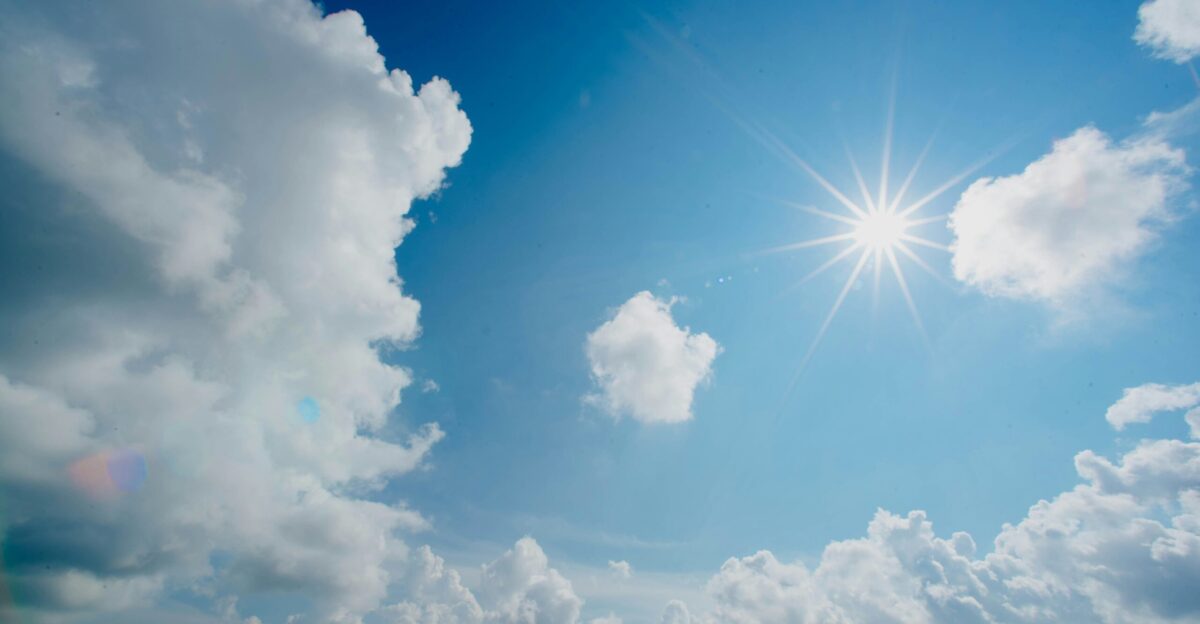
NOAA and NASA worked hard to issue clear, accurate warnings about the geomagnetic storm’s potential effects. However, their messages about the limited risk to public health got lost in the noise of sensational headlines. Despite their best efforts to clarify that aurora visibility was the main concern, many media outlets framed the storm as a catastrophe.
This highlights the ongoing difficulty in communicating space weather events to the public in a way that avoids fearmongering.
Communication Challenges
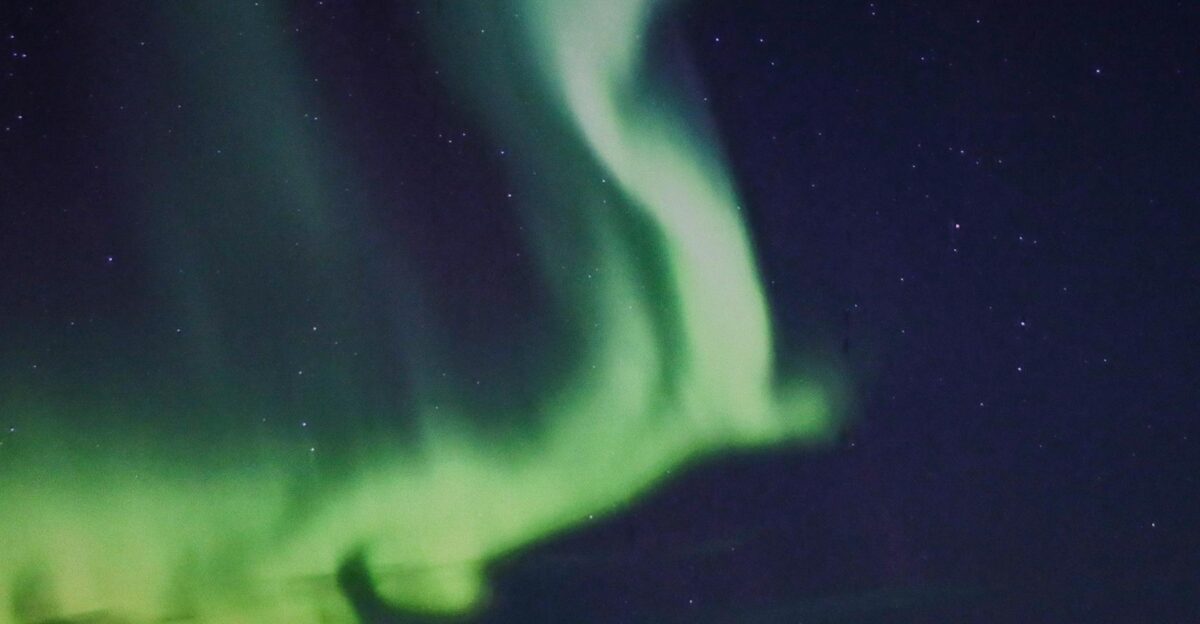
Space weather communication presents inherent challenges. NOAA and NASA issue precise technical forecasts, but media outlets often use dramatic terminology that can create confusion about whether phenomena pose direct threats or represent viewing opportunities.
As solar activity continues to rise during Solar Cycle 25’s active phase, accurate public communication remains essential for maintaining credibility in future space weather warnings.
Predictive Power of Space Weather Forecasting
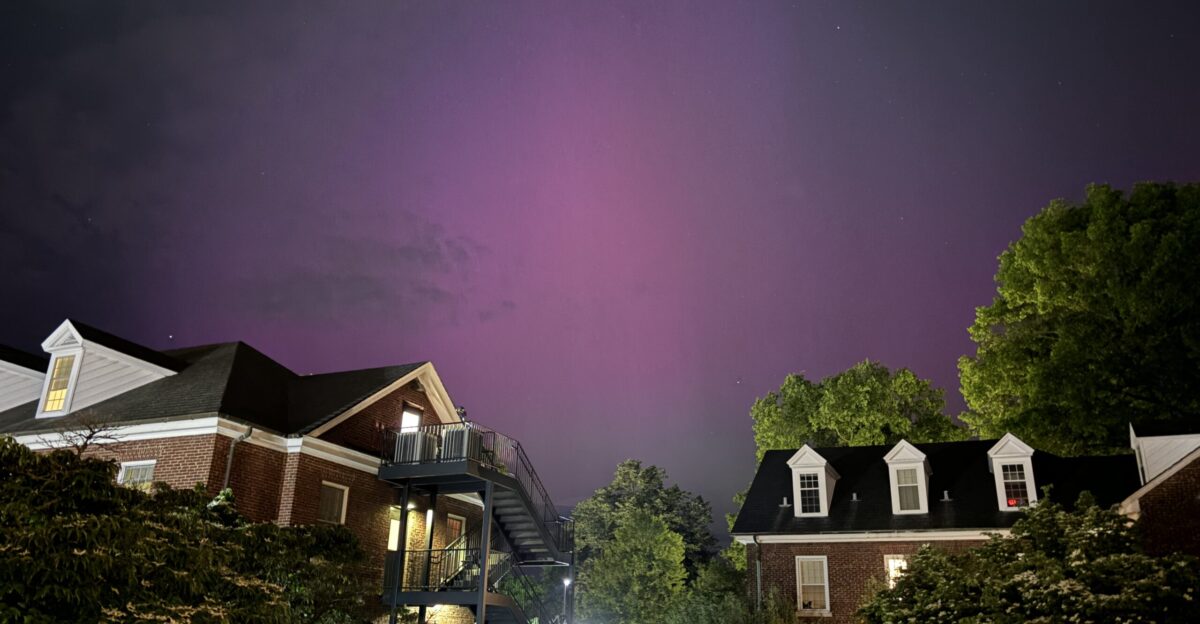
Despite the media sensationalism, NOAA and NASA’s predictions about the solar flare and geomagnetic storm were remarkably accurate. The agencies predicted the CME’s arrival within an 8-hour uncertainty window—a significant achievement given the distance between Earth and the Sun. Their forecasts about the aurora visibility zones were also spot on, showing the effectiveness of advanced solar observation tools and models.
Space Weather and Infrastructure
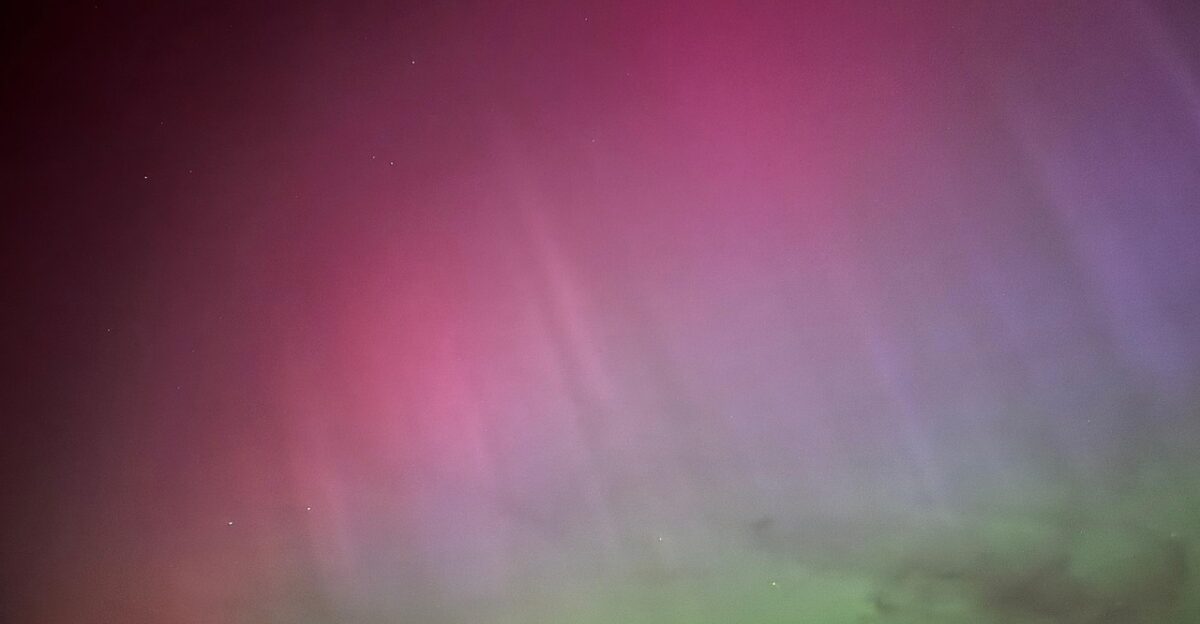
The storm highlighted the need for better infrastructure resilience in the face of space weather. Electric utilities and satellite operators have developed strategies to deal with the effects of geomagnetic storms. However, smaller utility companies and industries outside the core space weather zones remain less prepared.
Policymakers are now under pressure to invest in better monitoring systems and backup technologies.
International Collaboration on Space Weather
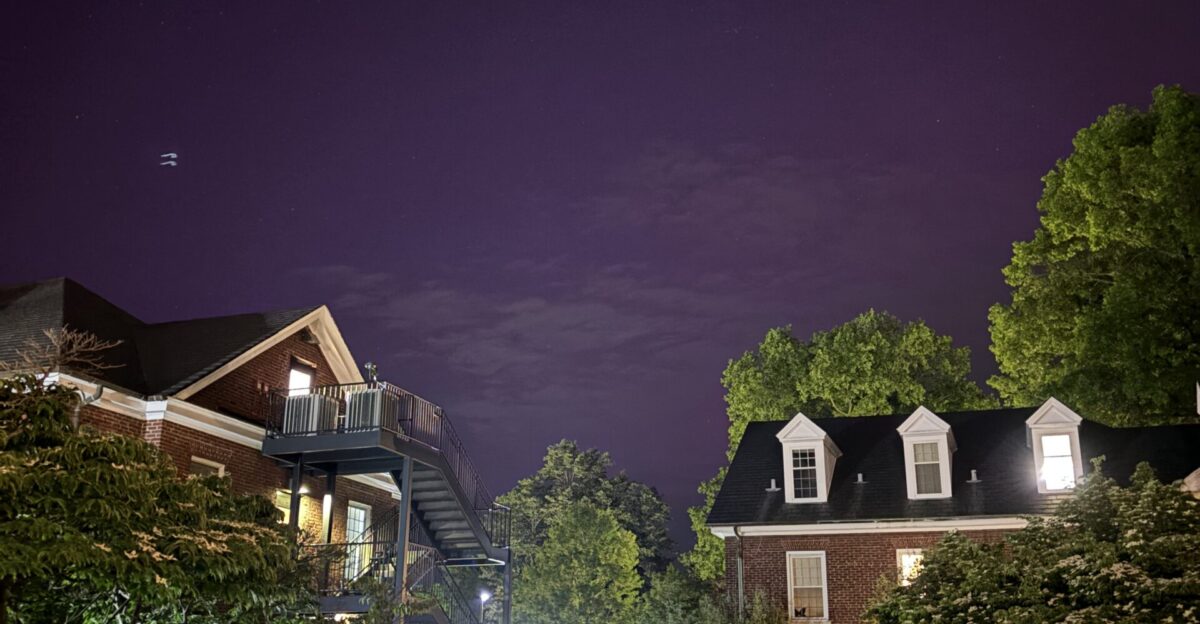
The December 9 event underscored the global nature of space weather. The International Space Weather Roadmap, supported by space agencies worldwide, calls for improved international data sharing and coordinated forecasting efforts.
As solar activity impacts countries across the globe, nations are recognizing the need for a unified approach to space weather risk management.
Long-Term Impact on Technology
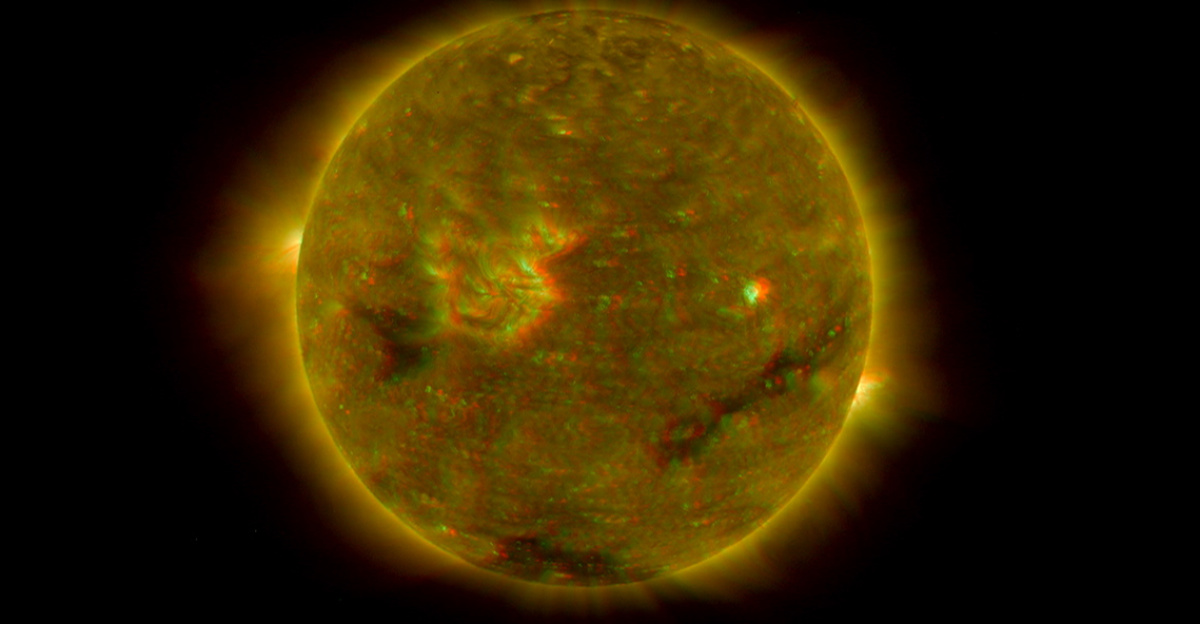
As solar activity intensifies, we face growing concerns about its impact on technology. Geomagnetic storms can disrupt everything from GPS systems to satellite communications.
With the world’s increasing dependence on space-based technology, a prolonged period of intense solar activity could lead to widespread disruptions that we are only beginning to understand.
The Cultural Fascination with the Aurora
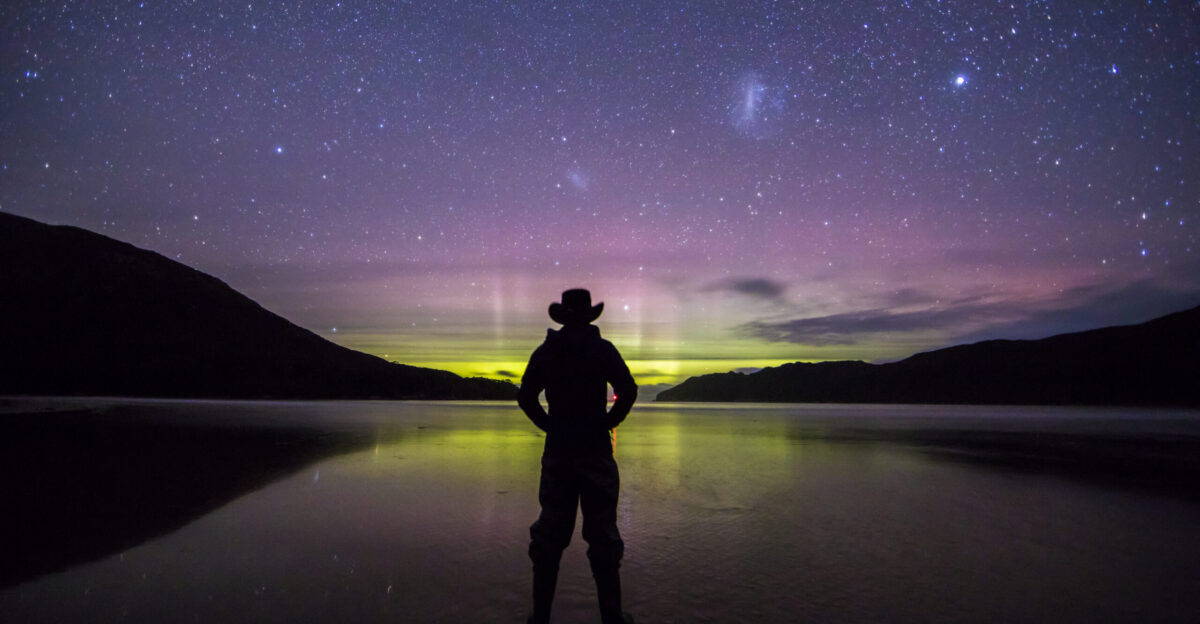
For many, the December 9 aurora was more than a scientific event—it was a cultural experience. Aurora enthusiasts and observers shared documentation and observations from across the affected regions. The event sparked wonder, particularly among those who had never witnessed the northern lights firsthand.
The storm became not just a space weather event, but a reminder of the connection between Earth and the cosmos.
The Real Lesson of December 9
![Multicolored aurora borealis, northern lights over Brastad, Lysekil Municipality, Sweden. Photo taken from Tuntorp. Sometimes you are lucky enough to get these tall pillars stabbing down from the sky. They usually don’t last more than a minute or two, and you need to keep your head on a swivel on such nights because they pop up in random sections of the sky, almost like they are taunting you. These pillars that are hundreds of kilometers high (reaching the altitudes where satellites are <a rel="nofollow" class="external autonumber" href="https://www.thealaskacollection.com/aurora-height-chart">[1]</a>), are easier to see down at my latitude than up at the Polar circle, since we see them from the side and people further up north get a worm’s eye view of them from below. I don’t think this is a <a href="https://en.wikipedia.org/wiki/STEVE" class="extiw" title="w:STEVE">STEVE</a>, since those tend to be even longer. There might be a couple of proto-STEVEs in the pillar since the white-ish light lingered longer than the pillar, but they are very insignificant.](https://aws-wordpress-images.s3.amazonaws.com/ruckus/wp-content/uploads/2025/12/multicolored-aurora-borealis-pillar-over-brastad-cropped.jpg)
The December 9 geomagnetic storm taught us a valuable lesson about science communication. While the event itself caused no major disruptions, the media’s sensational coverage created widespread confusion. As solar activity continues to rise, it’s crucial that scientists, space agencies, and the media collaborate to provide clear, accurate information to the public.
The real story is not about fear, but about understanding and preparing for the solar phenomena that shape our world.
Sources:
NOAA Space Weather Prediction Center (SWPC)
Strong (G3) Geomagnetic Storm WATCH Valid for 09 Dec 2025
December 6, 2025
Space Weather Live
M8.1 solar flare with earth-directed CME
December 7, 2025
SpaceWeather.com
Archive page for December 8, 2025
December 8, 2025
The Hill / Nexstar Media Wire
Solar flare may spark strong geomagnetic storm, northern lights this week
December 7, 2025
Space.com
Sun unleashes powerful X-class solar flare, knocking out radio signals across Australia
December 1–9, 2025
TechStock²
Strong G3 Geomagnetic Storm Forecast for December 9, 2025: Northern Lights Chances and Possible Impacts Explained
December 7, 2025