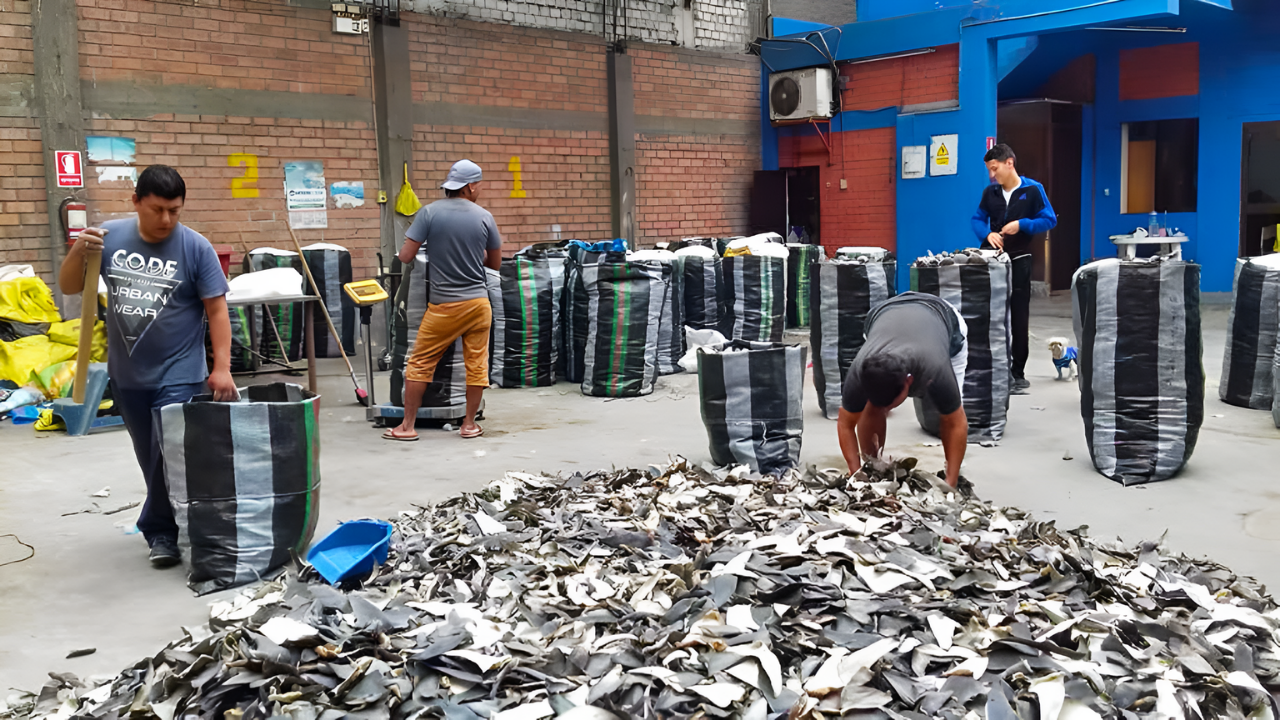
On November 10, 2025, U.S. and Peruvian authorities dismantled a major trafficking operation at Callao port near Lima, seizing approximately 10,000 shark fins weighing 9.3 tons and valued at over $11.2 million. Three individuals connected to a transnational criminal organization were arrested at the scene. The operation represents one of Latin America’s most significant wildlife trafficking busts on record, coordinated between Peru’s Organized Crime Investigation Division and the U.S. Fish and Wildlife Service.
The criminal network operated an elaborate laundering scheme spanning South America and Asia. Operators purchased shark fins from Ecuadorian fishermen, then created fraudulent documentation falsely claiming catches originated in Peruvian waters. The falsified paperwork masked illegal origins of shipments destined for Asian markets. Once processed and dried in Callao storage facilities, the fins underwent final preparation for export to China.
Ecuador’s role as a major source has become increasingly problematic for international conservation efforts. The Convention on International Trade in Endangered Species suspended Ecuador’s commercial shark and ray trade in March 2024 following severe irregularities in export records. Investigators uncovered massive discrepancies between the numbers of shark fins reported as exported by Ecuador and the imports documented by Peru. Protected shark species from Ecuador illegally enter Peru through border cities of Tumbes and Piura, where they disappear into shadow supply chains bound for Asia.
Species Under Extreme Pressure
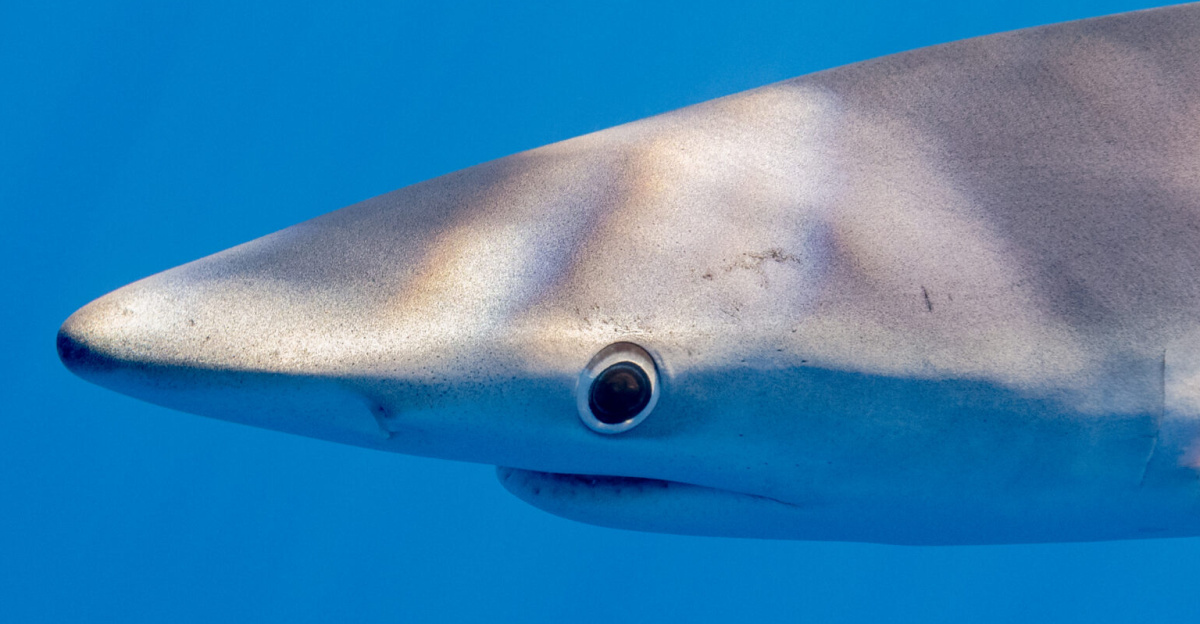
The seized fins originated from three shark species facing extreme population pressure and elevated extinction risk. Blue sharks comprise approximately 50-60% of global shark bycatch across major fisheries worldwide. Historical population data indicate an 80% decline in male blue shark abundance and a 60% overall reduction in North Atlantic catches between 1977 and 1994. Despite initially possessing higher reproductive capacity than other shark species, blue shark populations have collapsed since the 1980s following expansion of the Asian fin market.
Pelagic thresher sharks seized during the Peru operation face extinction due to critically slow reproductive cycles. These species require eight to fourteen years to reach sexual maturity and produce only minimal offspring during each reproductive cycle. The International Union for Conservation of Nature classifies pelagic threshers as Endangered, indicating high extinction risk. Their life history characteristics create profound vulnerability to overexploitation, making population recovery from intensive fishing pressure extremely difficult.
Common thresher shark populations have experienced catastrophic declines serving as a cautionary example for ocean ecosystem health. Global population reductions are estimated at 30-49% over three generations spanning 76.5 years. Mediterranean Sea studies documented 99.9% abundance declines over the past 108 years, representing one of the most severe predator population collapses recorded in scientific literature.
Ancient Tradition Fueling Modern Extinction

Shark fin soup originated centuries ago as a luxury dish served exclusively to Chinese royalty during the Song Dynasty. The tradition transformed into a global status symbol representing wealth and prosperity at celebrations and high-profile events. Premium restaurants across Asia charge approximately $100 per bowl, with individual fins commanding prices up to $1,300.
While shark fin soup consumption declined approximately 80% in China following awareness campaigns, demand surged dramatically in Thailand, Vietnam, Indonesia, and Macau. A 2025 study examining nearly 20,000 shark fin samples from Hong Kong markets revealed protected species remain surprisingly common despite 2014 international trade regulations. Genetic DNA analysis detected 70 times more oceanic whitetip fins and 10 times more hammerhead fins than legal reporting data suggests should exist in commerce.
The Underground Economy and Enforcement Challenge
The global illegal wildlife trade generates between $15-20 billion annually, ranking as the world’s fourth-largest criminal enterprise behind only drug trafficking, arms smuggling, and human trafficking. Transnational criminal organizations increasingly dominate wildlife trafficking, employing sophisticated money laundering techniques, armed enforcement, and corruption of government officials.
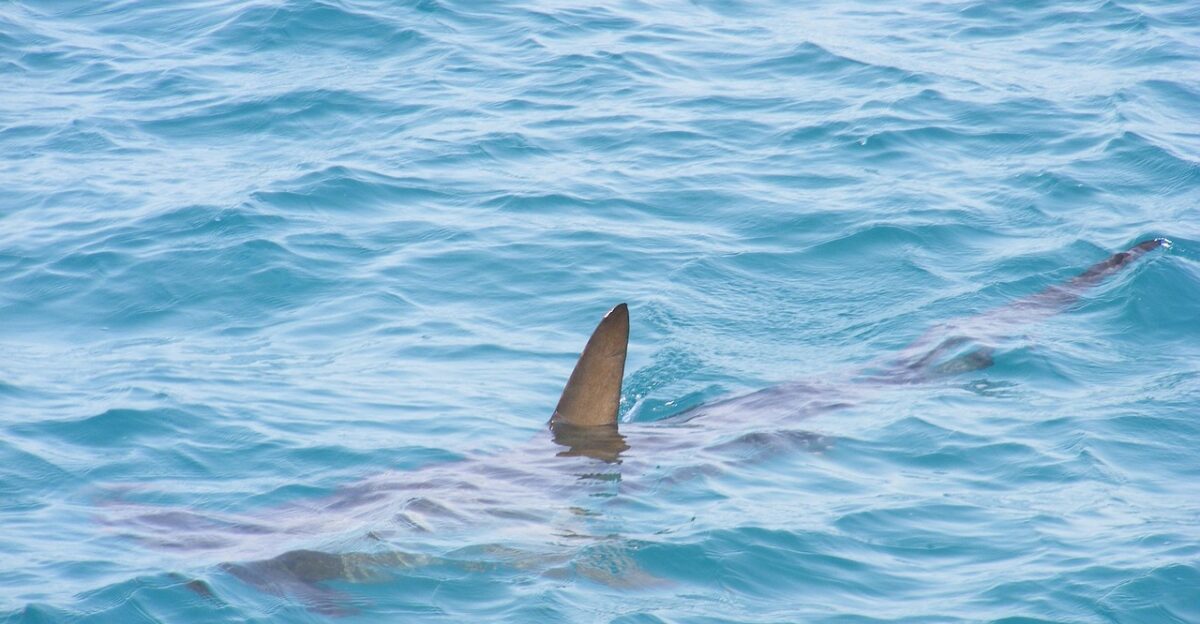
Shark finning represents one of wildlife trafficking’s most inhumane practices. Fishermen slice fins from living sharks and discard mutilated bodies back into the ocean, where they succumb to blood loss, suffocation, or predation. Between 76 and 80 million sharks face annual slaughter for fins alone according to peer-reviewed research. Nearly 50 countries and most regional fishery management organizations have implemented shark finning prohibitions; however, enforcement data indicate finning activities continue to rise globally despite legal bans.
Earth League International’s investigative operations revealed that identical criminal actors participate in multiple illegal enterprises simultaneously. The same trafficking networks that smuggle shark fins frequently operate jaguar parts trafficking, elephant ivory smuggling, and endangered bird trafficking. This convergence strategy maximizes operational efficiency and minimizes detection risk.
Ecological Consequences and Future Outlook
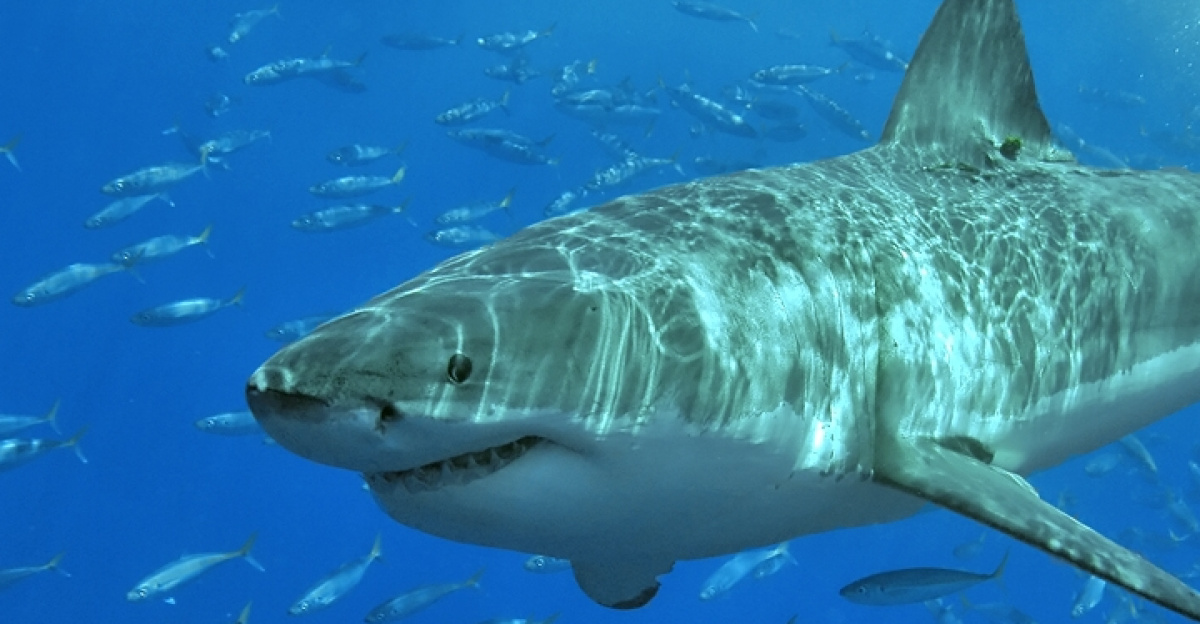
Sharks function as critical apex predators essential to maintaining balanced, healthy marine ecosystems. Their population declines trigger cascading effects throughout ocean food webs. Caribbean coral reef research demonstrated that decreased shark populations enabled proliferation of grouper fish, which subsequently resulted in increased parrotfish populations. This cascade pattern explains why algae now dominate many degraded Caribbean reef ecosystems, crowding out coral growth.
Scientific research off the North Carolina coast revealed that shark overfishing precipitated complete collapse of the commercial scallop fishery. When fishing pressure eliminated large shark populations, their primary prey—the cownose ray—experienced explosive population growth. Uncontrolled ray populations subsequently decimated bay scallop populations beyond recovery thresholds, eliminating a century-old commercial fishery supporting coastal communities.
A 2024 peer-reviewed study determined that one-third of sharks killed annually represent species officially designated as threatened with extinction. More than one-third of all shark species worldwide now carry designations as Vulnerable or Endangered. Leading marine scientists warn that without immediate, meaningful reduction in shark fishing and international trade, global shark populations face potential complete collapse.
The Peru operation represents a significant tactical victory yet highlights enormous systemic challenges ahead. The U.S. Fish and Wildlife Service maintains a Regional Law Enforcement Attaché Office in Lima, providing sustained operational assistance to Peruvian authorities. This bilateral cooperation framework has led to multiple significant trafficking busts. However, enforcement officials emphasize that dismantling illegal shark trade networks requires unwavering commitment and coordinated international action to protect future ocean generations.