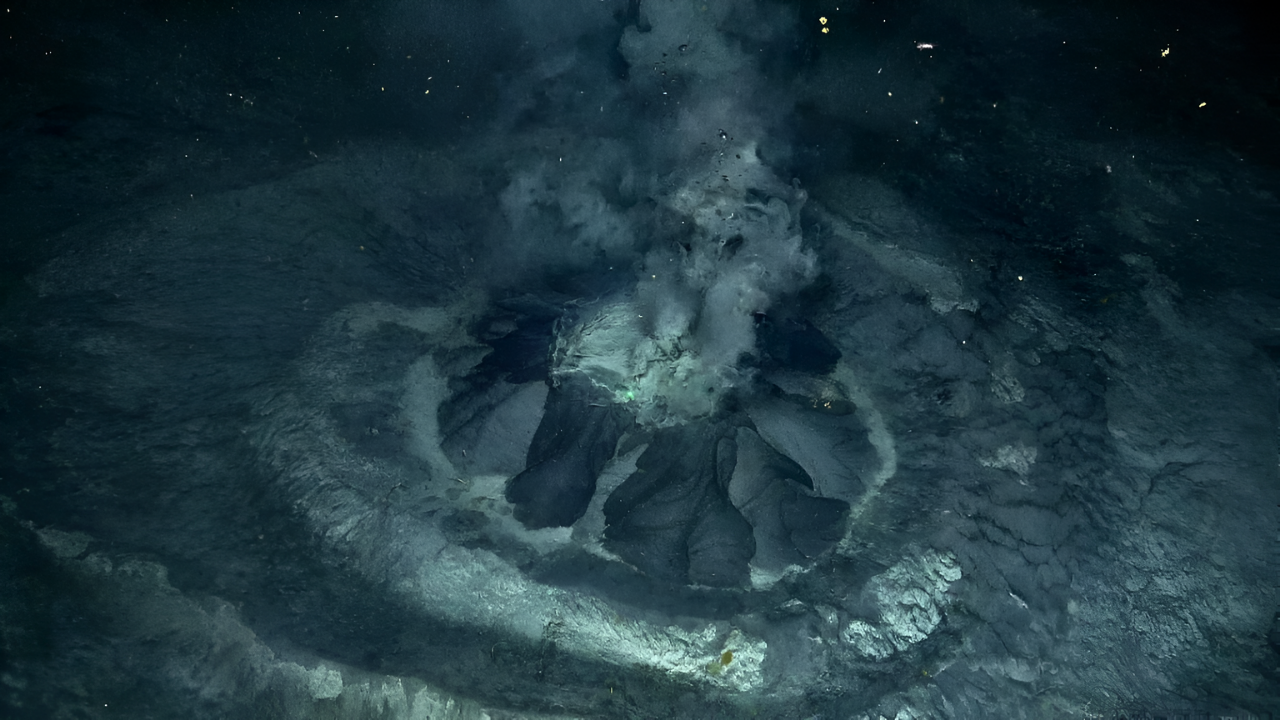
Deep under the Pacific Ocean, more than 300 miles off the Oregon coast, lies a restless underwater volcano known as Axial Seamount. It is the most active submarine volcano in the northeast Pacific and has entered another period of unrest.
Scientists have been recording hundreds to over a thousand small earthquakes each day, and sensitive instruments show that the seafloor above the volcano is slowly rising as magma gathers beneath it. Based on these warning signs, researchers expect that Axial will likely erupt again within the next few years, most probably sometime between the middle and end of 2026.
A Sleeping Volcano Awakening
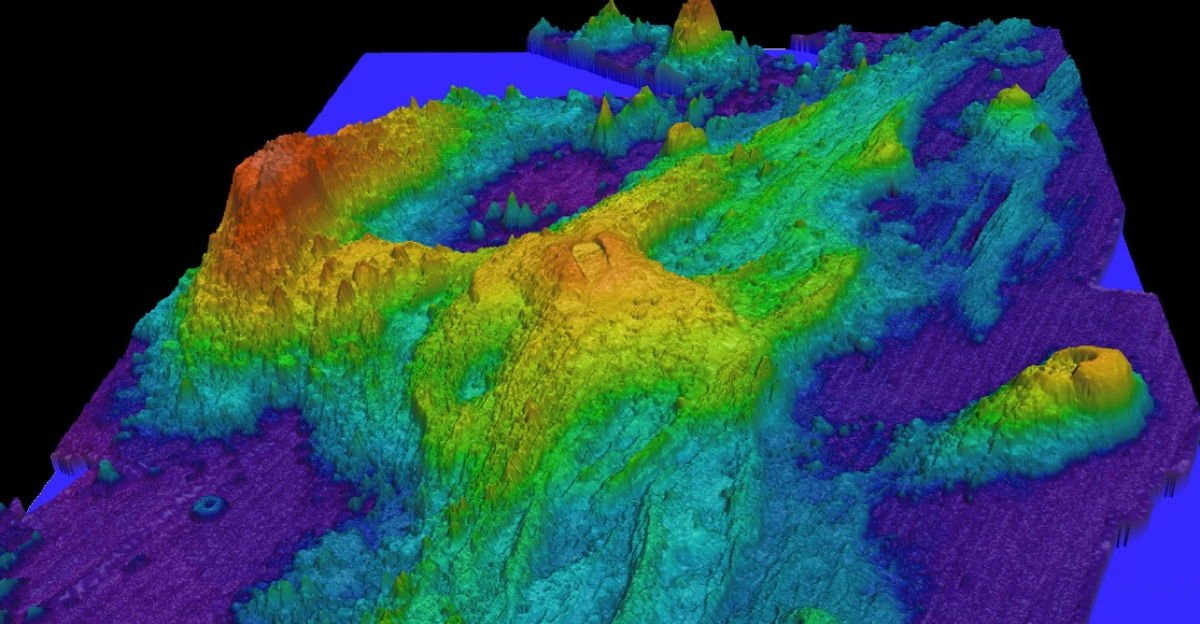
Axial Seamount is located along the Juan de Fuca Ridge, where two tectonic plates are pulling away from each other. This movement allows magma from Earth’s interior to rise and form new crust. The volcano stands about 3,600 feet above the nearby seafloor, although its peak is still nearly a mile below the ocean’s surface. Scientists have closely studied Axial for decades because it has erupted several times in recent history, in 1998, 2011, and 2015. These regular events make it one of the best-observed deep-sea volcanoes on Earth.
The increase in small earthquakes happening now looks very similar to the activity that occurred before the 2015 eruption. Back then, thousands of quakes were recorded within a day as magma pushed upward through cracks in the crust. Today, a permanent network of instruments on the seafloor, connected by cables, continuously listens to these seismic signals. The constant stream of real-time data helps scientists monitor exactly how the volcano is behaving and how close it may be to erupting again.
Pressure Building Below
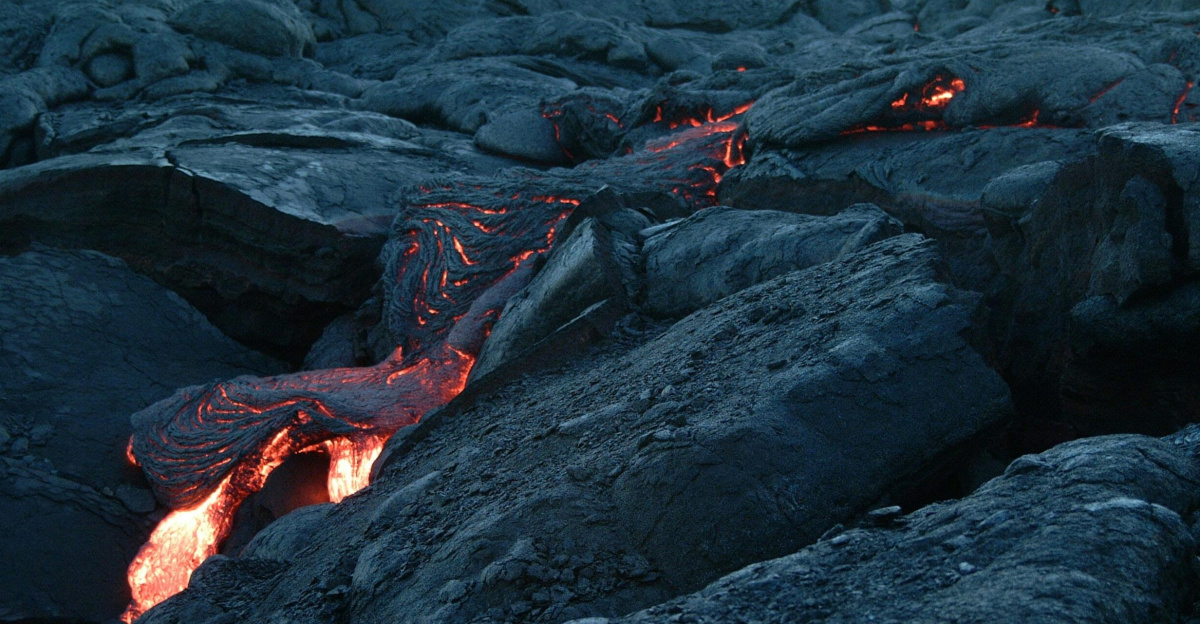
What drives all this unrest is the gradual buildup of magma about one to two kilometers beneath the seafloor. As this molten rock collects, it causes the ground above to slowly bulge upward. Highly precise pressure sensors and GPS instruments show that the volcano has been reinflating steadily since its 2015 eruption and, in recent years, has grown even more inflated than it was before that event. However, scientists have recently noticed that this uplift is happening slightly more slowly, hinting that it might take a bit longer for the system to reach enough pressure to trigger an eruption.
This rise and fall of the seafloor acts as a kind of “breathing” cycle for the volcano, and every small movement tells scientists something about what’s happening below. The steady flow of small earthquakes around the volcano comes from rocks cracking and adjusting under stress. By combining these seismic and inflation measurements, researchers can estimate how close the system is to breaking and releasing magma in an eruption, though it remains a challenge to pinpoint exactly when that will happen.
Forecasting What Comes Next

When scientists first studied the rate of seafloor uplift after 2015, they predicted Axial might erupt around late 2025 or early 2026. New observations, however, suggest a slightly slower buildup of pressure, shifting the expected window to mid-to-late 2026. Nonetheless, an earlier eruption cannot be entirely ruled out. Forecasting an underwater eruption is far from exact, and even the best models can only give probabilities rather than precise dates. The volcano’s behavior can change suddenly depending on how magma moves within the crust.
Still, the evidence points toward a high overall chance that Axial will erupt again within the next few years. Scientists are confident in this expectation because the volcano has followed the same pattern of inflation and eruption repeatedly over the past few decades. Each cycle offers new data that help refine forecasts and deepen understanding of how such systems work. Researchers remain cautious, emphasizing that predictions about deep-sea volcanoes come with uncertainty, the environment is remote, and surprises are always possible.
Safe but Scientifically Priceless

Despite how dramatic it sounds, Axial Seamount poses almost no danger to people or property. Located far offshore and nearly a mile underwater, any eruption there would be contained within the deep ocean. Past eruptions in 1998, 2011, and 2015 produced lava flows and gas release, but none created tsunamis or waves strong enough to reach land. Models of future eruptions suggest the same outcome, no significant threat to the Pacific Northwest or coastal communities. The quakes that accompany the volcano’s activity are also too small and deep to be felt onshore. Even ships directly above the site during an eruption would likely notice nothing unusual at the surface.
What makes Axial Seamount so valuable is its role as a natural laboratory. The Ocean Observatories Initiative’s Regional Cabled Array, managed by the University of Washington with support from the National Science Foundation, connects an entire network of sensors, cameras, and instruments across the site. These devices transmit real-time data to scientists on land, giving them a front-row view of what happens as a deep-sea volcano prepares to erupt. Researchers from around the world use this information to test new models of volcanic behavior and to study how magma movement creates new ocean crust. When the next eruption comes, they hope to capture before-and-after maps of the seafloor and live views of lava flows and hydrothermal vents.
In watching Axial’s evolution, scientists are not just tracking one volcano, they are observing Earth’s creative engine in action. The data gathered here could lead to breakthroughs in understanding how our planet builds and reshapes its surface, deep beneath the waves.
Sources
- Global Volcanism Program – Axial Seamount (Smithsonian)
- USGS – Axial Seamount overview
- Oregon State University Axial Seamount site and blog
- Ocean Observatories Initiative – Cabled Axial Seamount Array
- LiveScience – Eruption timing (mid-to-late 2026 focus)
- NBC News – Underwater volcano off Oregon may erupt