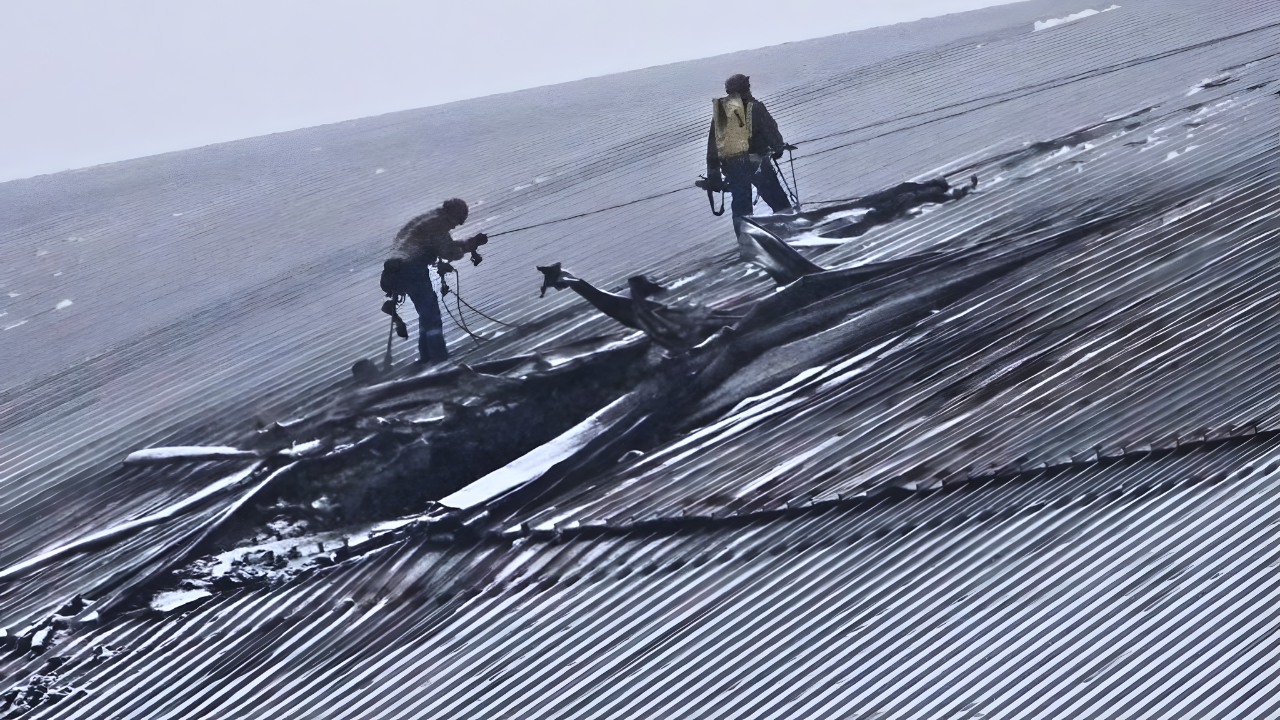
A drone strike has torn open the most important barrier between the world and the wreckage of Chernobyl’s Reactor Four, exposing vulnerabilities in a structure that was meant to keep nuclear danger contained for the next century. In minutes, a relatively cheap uncrewed weapon defeated a €1.6 billion protective system that took years to design and build, leaving nearby communities and European governments confronting renewed questions about long-term nuclear safety in the middle of an ongoing war.
New Safe Confinement Breached In Night Attack

In the early hours of February 14, 2025, at 1:54 a.m., a Russian Geran-2 drone carrying a high‑explosive warhead struck the northwest corner of Chernobyl’s New Safe Confinement (NSC). The impact punched through both layers of the enormous steel arch, opening a hole about six meters wide while International Atomic Energy Agency (IAEA) personnel were in the vicinity monitoring radiation. In sub-zero temperatures, a structure designed to withstand a century of corrosion and slow degradation failed in seconds, exposing the unstable remains of Reactor Four’s core to the outside air for the first time since the NSC was completed in 2016.
The NSC, a European-funded project with a price tag of about $1.75 billion, had been built to slide over the deteriorating 1986 concrete “sarcophagus” that was no longer airtight and was allowing radioactive dust and gases to escape. At 360 feet high, it is the largest movable land structure ever constructed, engineered to cope with gradual wear, extreme weather, and radiation—not with a direct explosive strike from modern loitering munitions.
Fire, Emergency Response, And Secondary Damage

The drone impact ignited insulation packed between the NSC’s double walls. As temperatures dropped to minus 16 degrees Celsius, flames spread through the roof cavity, where firefighters struggled to reach the seat of the fire. Water sprayed from outside froze before it could penetrate deeply enough to cool the burning materials, forcing crews to improvise their response over days and weeks.
To get water onto the hidden fire, emergency teams cut or forced roughly 330 additional openings in the NSC’s outer cladding. Each new gap was a calculated sacrifice: breaching the outer skin to extinguish the immediate fire, while undermining the long-term airtight seal that protected the environment from radioactive dust. The main overhead crane system used for maintenance and future dismantling work inside the shelter was also damaged, adding to the technical challenges of restoring the site. The fire was not declared fully extinguished until March 7, 2025, more than three weeks after the initial strike.
Containment Function Lost, Radiation Still Monitored
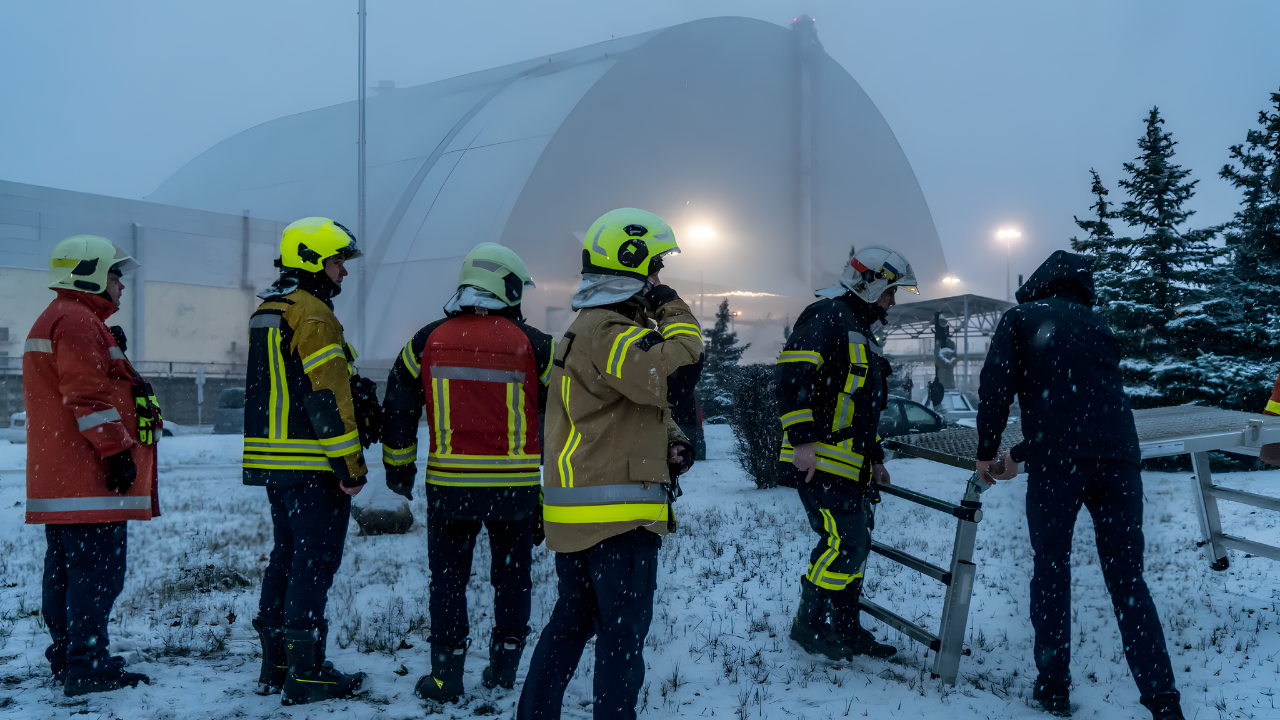
On December 6, 2025, IAEA Director General Rafael Mariano Grossi delivered the most consequential assessment since the attack. After an inspection mission the previous week, he reported that the New Safe Confinement had “lost its primary safety functions, including the confinement capability.” The agency’s findings confirmed that the structure can no longer reliably prevent radioactive material, dust, and gases from gradually escaping into the environment.
Immediately after the strike, radiation readings inside and outside the NSC remained within expected ranges, which offered short-term reassurance to neighboring states and monitoring bodies. But experts have stressed that stable initial readings do not eliminate long-term concerns. The damaged shell now allows slow releases from radioactive material that has been decaying since the reactor explosion of April 1986, which originally forced the evacuation of 116,000 people and ultimately displaced roughly 350,000. Any future structural deterioration, combined with weather and time, could increase the rate at which contamination leaks out.
Investigations, Denials, And The Cost Of Repair
Evidence gathered at the site, including drone fragments, has been examined by former UK military specialists at McKenzie Intelligence Services. They concluded that the debris is consistent with a Geran-2, Russia’s designation for the Iranian-designed Shahed-136 kamikaze drone, now produced in Russia and widely used in the war in Ukraine. These uncrewed systems, costing tens of thousands of dollars each, have become a central tool in Russia’s long-range strike capability.
Ukrainian President Volodymyr Zelenskyy has said Russian forces launched the drone knowing it would hit a nuclear facility, and Ukraine’s mission to the IAEA has formally attributed the attack to Russia. Moscow has denied responsibility, alleging instead that Ukraine staged or fabricated the incident. The IAEA has not assigned blame, reflecting the diplomatic sensitivity of doing so while key safety work is still pending.
Preliminary assessments indicate that repairing the NSC and restoring its sealing systems will cost tens of millions of euros, with the burden likely to fall on the Western governments and institutions that financed the original project. Chernobyl plant officials caution that replacing membranes and reestablishing a full containment envelope is a complex task in an area with high radiation levels. The European Bank for Reconstruction and Development has been linked to plans for restoration work beginning in 2026, but any large-scale effort depends on security conditions in an active conflict zone.
Lingering Human Consequences And Continental Stakes

The site’s vulnerability is amplified by its recent history as a frontline location. Russian troops seized Chernobyl in the first days of the February 2022 invasion, holding staff under duress and digging trenches in the highly contaminated Red Forest before withdrawing weeks later. Their occupation disrupted decommissioning work, scattered expert personnel, and diverted funds and logistics toward the wider war, setting back years of careful progress.
Nearly four decades after the initial disaster, about 6 million people still live in contaminated regions of Belarus, Ukraine, and Russia. Some residents have chosen to remain or return to affected areas, weighing chronic radiation risks against the immediate dangers of warfare elsewhere. Long-term studies of Chernobyl “liquidators,” the workers who responded in 1986, show increased rates of cerebrovascular disease, cognitive decline, depression, and dementia, while evacuees continue to face elevated levels of trauma-related mental health problems.
Within the 30‑kilometer exclusion zone, wildlife has unexpectedly flourished in the absence of human settlement. Populations of wolves, wild boar, and other species have grown despite persistent radiation. Yet for people living near the zone, thriving animal life does not equate to safety. Children still attend schools in areas with residual contamination, parents still work in and around the facility, and communities must now factor the erosion of a key protective barrier into their daily calculations alongside shelling and blackouts.
Modeling of potential future releases indicates that radioactive gases and dust from renewed damage to Chernobyl could once again travel far beyond Ukraine’s borders, as they did in 1986 when fallout reached Scandinavia and other parts of Europe. Such material can disperse widely and remain hazardous for extended periods, making the consequences of the February 2025 attack a matter of continental concern. As temporary patches hold in place and plans for comprehensive repairs remain hostage to battlefield realities, Chernobyl has re-emerged as a test of how well an interconnected Europe can safeguard shared environmental security in the era of high-precision, relatively low-cost weapons.
Sources:
IAEA Director General Statement on Situation in Ukraine – IAEA
INFCIRC/1272 – Communication from the Permanent Mission of Ukraine to the Agency – IAEA
Chernobyl New Safe Confinement – Wikipedia