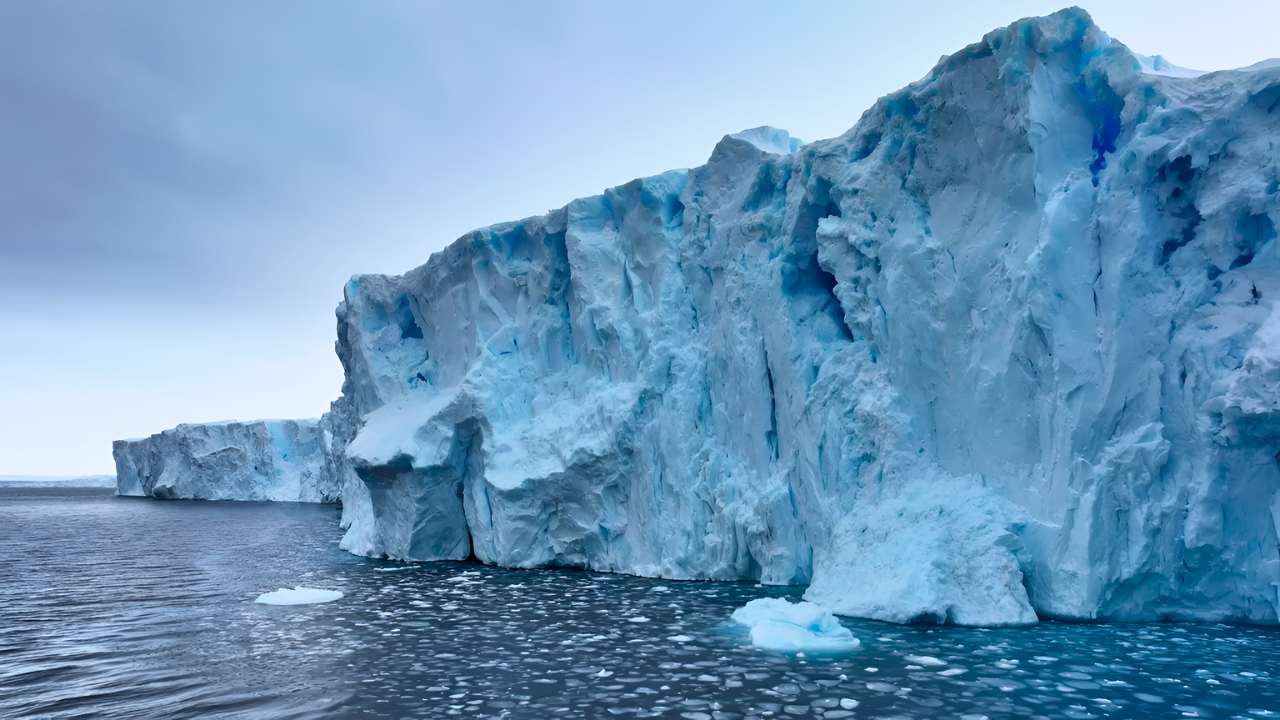
On December 26, 2025, NASA’s Terra satellite captured a vast iceberg in the South Atlantic streaked with bright blue melt ponds. The surface was fractured, pocked with water-filled hollows, and ringed by hundreds of broken ice fragments.
One day later, an astronaut aboard the International Space Station photographed the same scene from orbit. The iceberg—known as A23a—had shrunk dramatically and was actively disintegrating. After nearly 40 years, one of Earth’s longest-lived icebergs was visibly collapsing in real time.
A Record-Setting Colossus
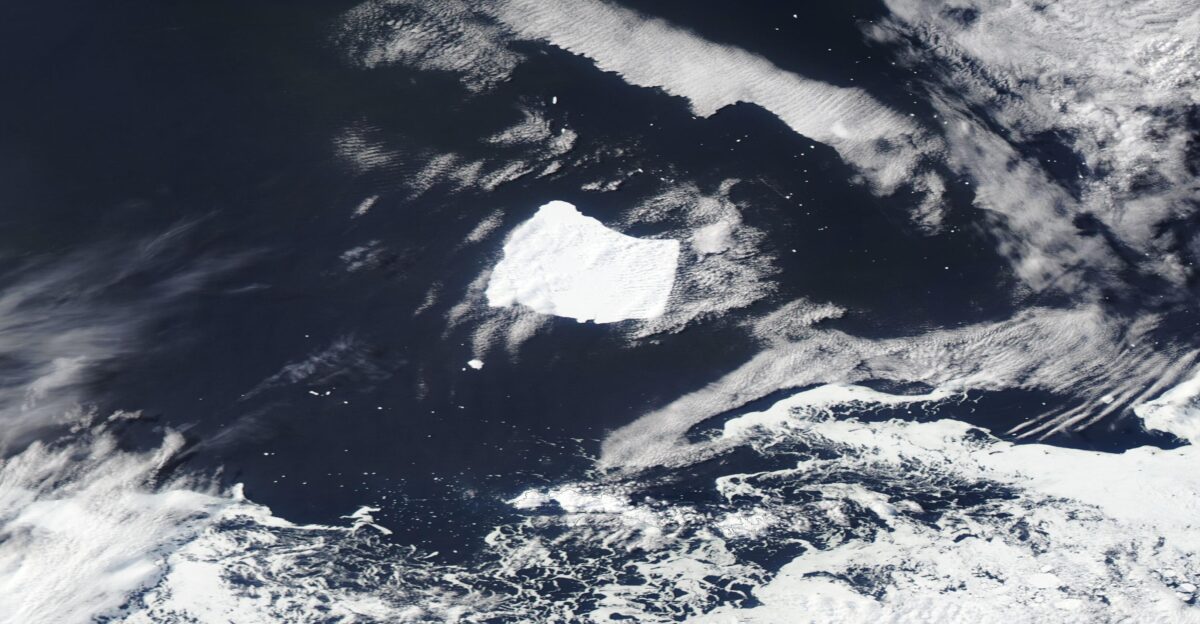
Before its decline, A23a ranked among the largest icebergs ever tracked by scientists. At its peak, it spanned roughly 4,000 square kilometers—about 1,500 square miles—making it nearly three times the size of New York City.
This sheer scale earned it repeated recognition as the world’s largest iceberg across multiple decades. Few icebergs have combined such size with such longevity, placing A23a in a category of its own within polar records.
Born in the Cold War Era
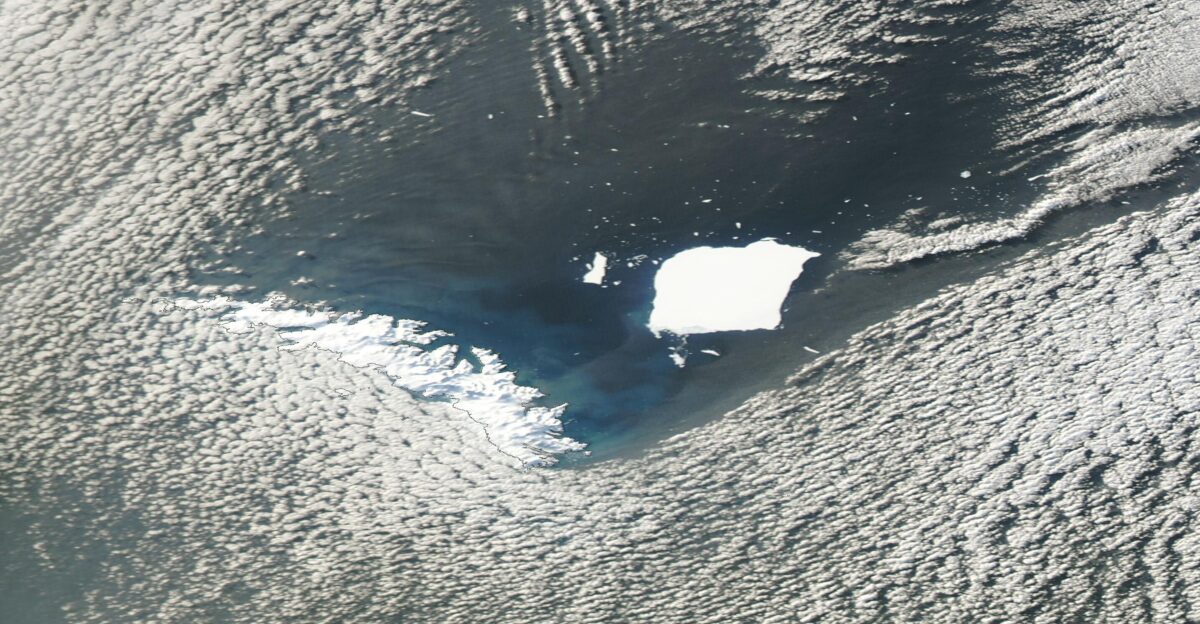
Iceberg A23a calved from Antarctica’s Filchner-Ronne Ice Shelf during the Antarctic summer of 1986. At the time, Ronald Reagan was U.S. president and “Top Gun” topped global box offices.
The iceberg immediately drew attention for its immense, tabular shape. While most icebergs fracture or melt within a few years, A23a embarked on an unusually long and complex journey that would challenge scientific assumptions for decades.
Grounded on the Seafloor

Shortly after calving, A23a became lodged in shallow waters of the Weddell Sea. For approximately 34 years, it remained grounded on the seafloor, largely immobile.
This grounding acted as a shield, protecting the iceberg from wave erosion and warmer ocean currents that typically destroy large bergs. Satellites tracked its static position year after year, making it one of the most persistently observed icebergs in Antarctic history.
A Longevity Mystery
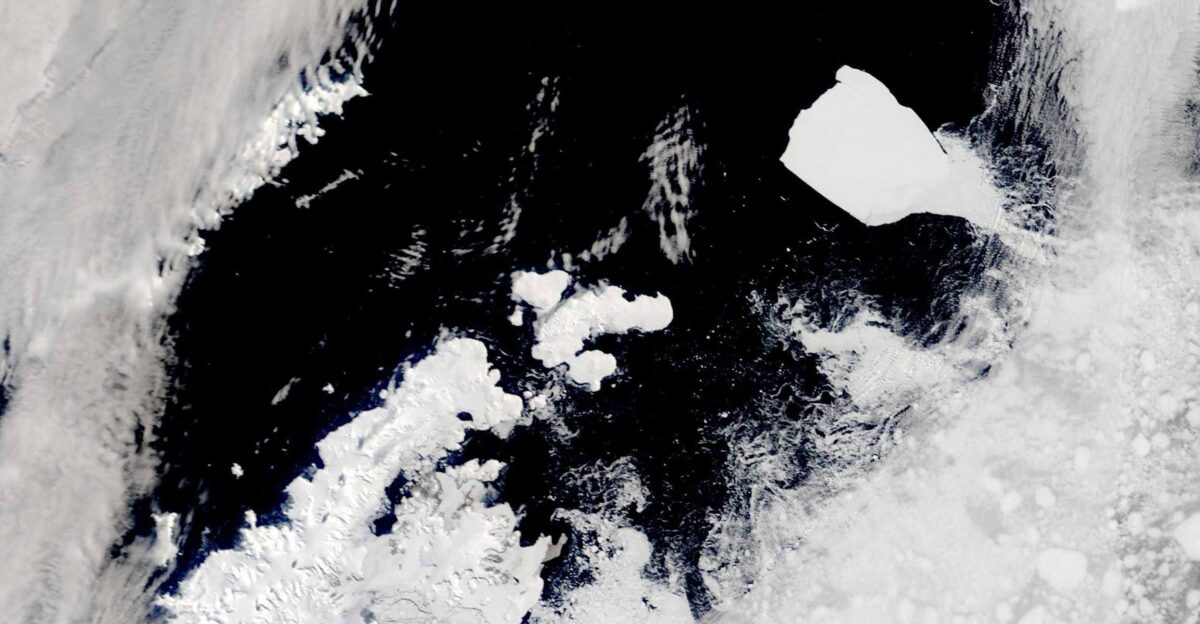
A23a’s decades-long survival puzzled scientists. Icebergs of comparable size usually fragment far sooner, yet this one remained intact through changing seasons and rising regional ice loss.
Its grounding limited mechanical stress and slowed basal melting. Researchers came to view A23a as a natural experiment—proof that under certain conditions, Antarctic icebergs can endure far longer than expected, even as the broader climate warms.
Breaking Free at Last

In 2020, satellite imagery revealed a change: A23a had finally loosened from the seafloor. Freed after more than three decades, it began drifting into open ocean.
This marked a turning point in its lifecycle. Once mobile, the iceberg became vulnerable to currents, collisions, and warmer waters—forces it had largely avoided while grounded. Its long period of stability was officially over.
Caught in a Spinning Ocean
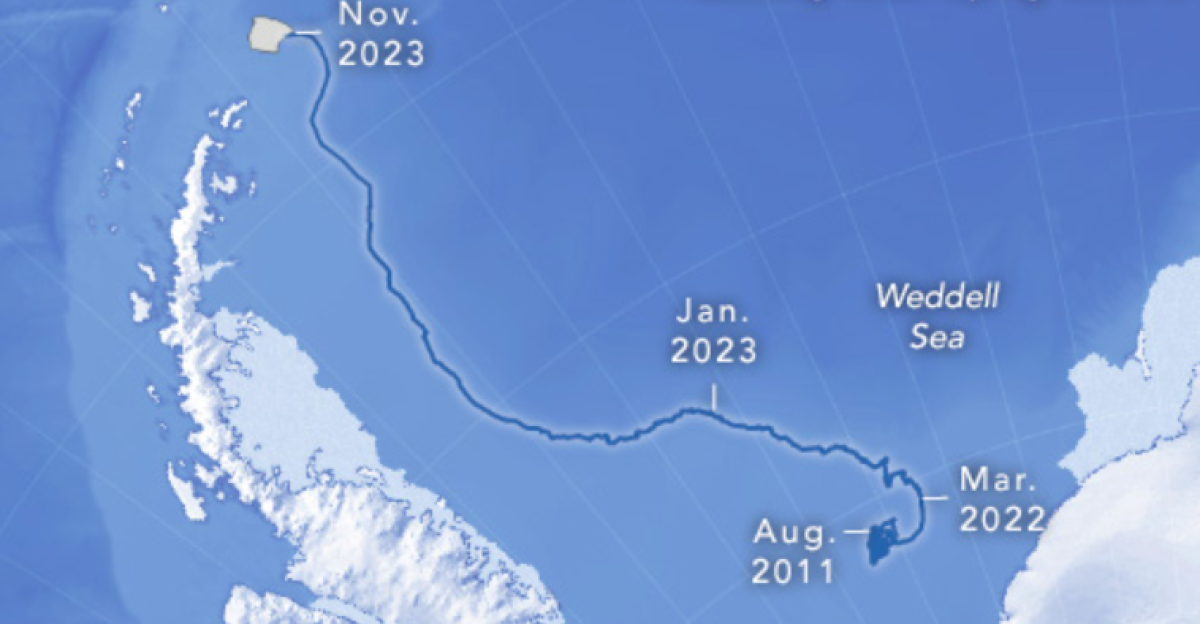
After breaking free, A23a entered a powerful ocean vortex known as a Taylor column. The massive ice slab rotated slowly within this gyre for months, effectively trapped in place despite being afloat.
This rare interaction between ocean physics and a megaberg highlighted how large icebergs can influence—and be influenced by—complex current systems in the Southern Ocean.
A Delayed Escape
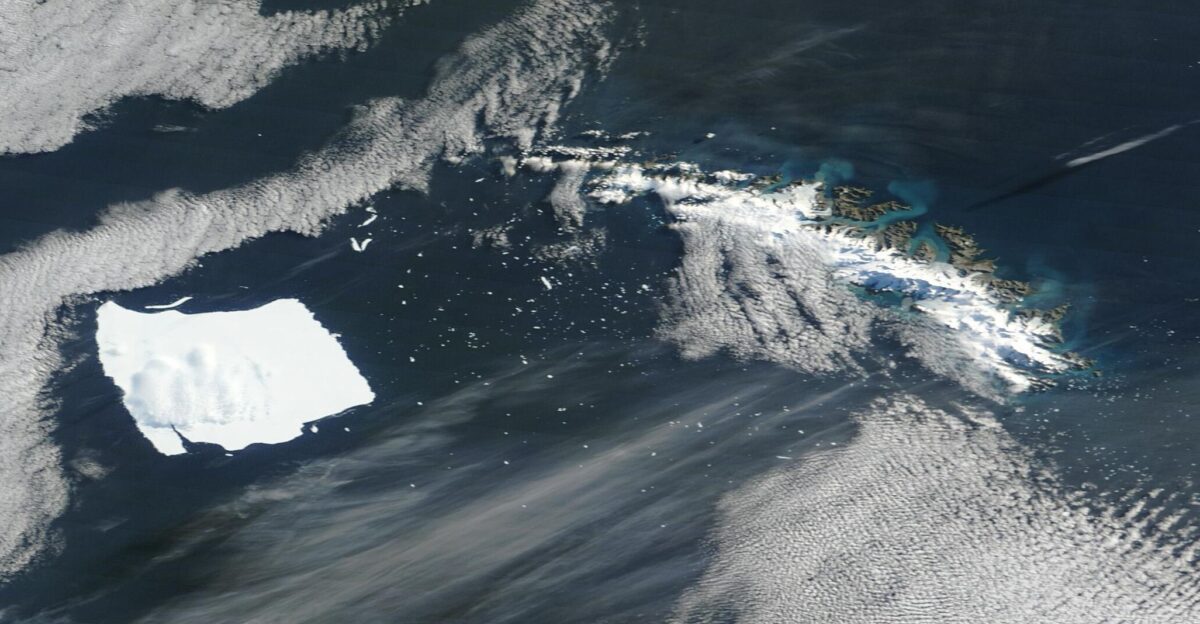
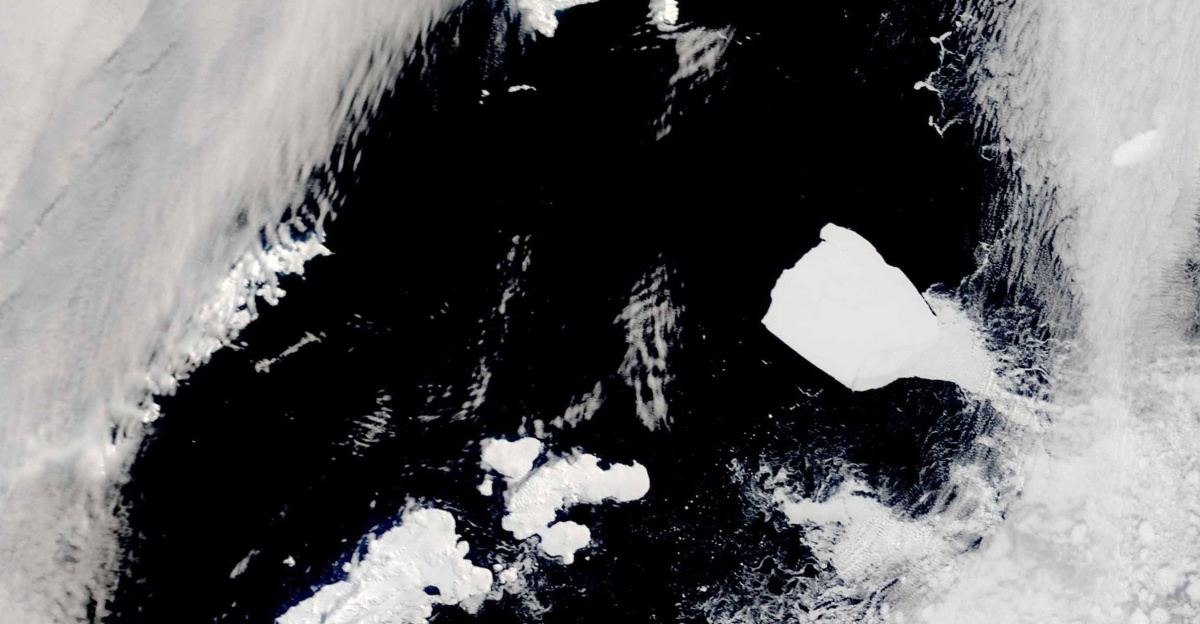
The iceberg eventually drifted northward but was again slowed when it became entangled in a larger South Atlantic gyre. Only in December 2024 did A23a fully escape this circulation pattern.
By then, it had spent years in comparatively warmer waters. Scientists watching its progress noted increasing surface melt, signaling that the iceberg was entering its final, most vulnerable phase.
A Near Ecological Disaster

As A23a approached South Georgia Island in 2025, concern mounted. Researchers feared the iceberg could ground near the island, blocking access to feeding grounds for millions of penguins and seals.
Such an obstruction could have caused mass starvation during breeding season. Shifting currents ultimately carried A23a away before impact, averting disaster—but the episode underscored how drifting megabergs threaten fragile sub-Antarctic ecosystems.
Warming Waters Take Hold
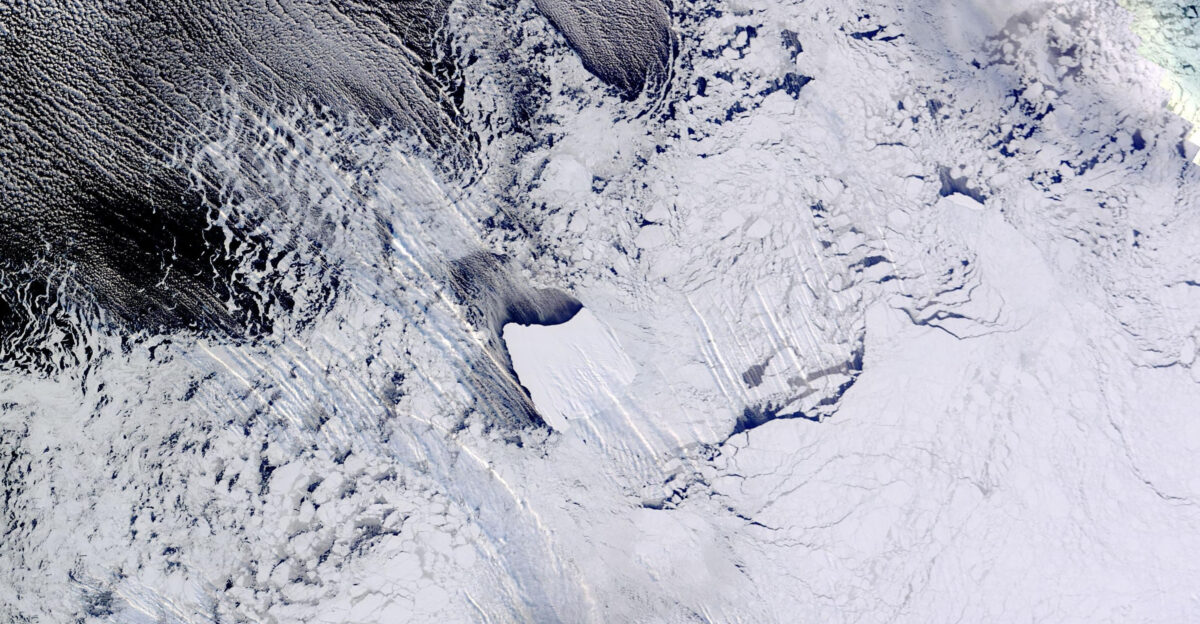
By late 2025, A23a encountered significantly warmer South Atlantic waters. Summer conditions intensified surface melting, producing vivid blue melt ponds across the iceberg’s surface.
These pools added weight and pressure, accelerating internal fracturing. NASA scientists observed freshwater “blowouts,” where pressurized meltwater burst through weak points, a hallmark of late-stage iceberg collapse.
Captured From Space
NASA’s Terra satellite documented A23a’s dramatic deterioration on December 26, 2025. The imagery showed the iceberg reduced to roughly one-third of its original area, surrounded by hundreds of fragments.
The following day, an Expedition 74 astronaut aboard the ISS captured close-up images of the same melt ponds. Together, the observations provided rare, real-time documentation of a megaberg’s final breakdown.
Ancient Ice, Modern Collapse
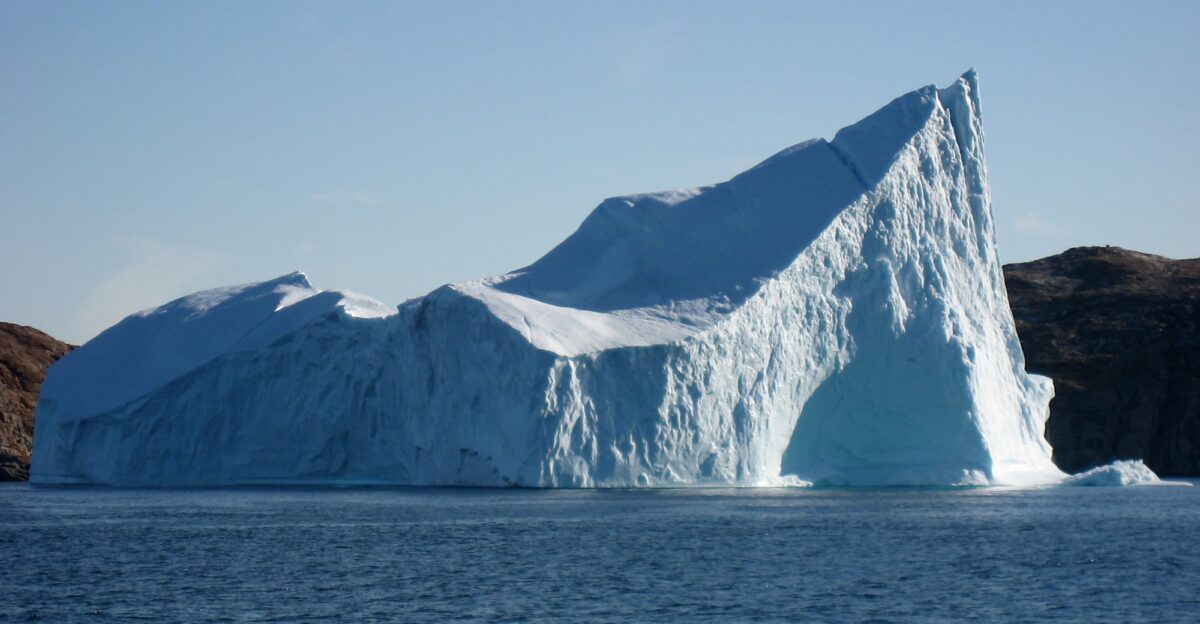
Despite the chaos, scientists noticed something remarkable: centuries-old glacial striations were still visible on A23a’s surface. These grooves, carved when the ice was part of the Antarctic ice shelf, survived decades of drifting.
“It’s impressive that these striations still show up after so much time has passed,” said glaciologist Chris Shuman, highlighting how the iceberg preserved a physical record of ancient ice movement.
The Throne Passes On

In September 2025, before its final breakup, A23a lost its title as the world’s largest iceberg. That distinction passed to D15A, which spans about 3,000 square kilometers, or roughly 1,200 square miles.
By early 2026, A23a’s area had dwindled to approximately 1,182 square kilometers—still massive, but no longer dominant. The revolving title reflects accelerating changes across polar regions.
Hundreds Become Thousands
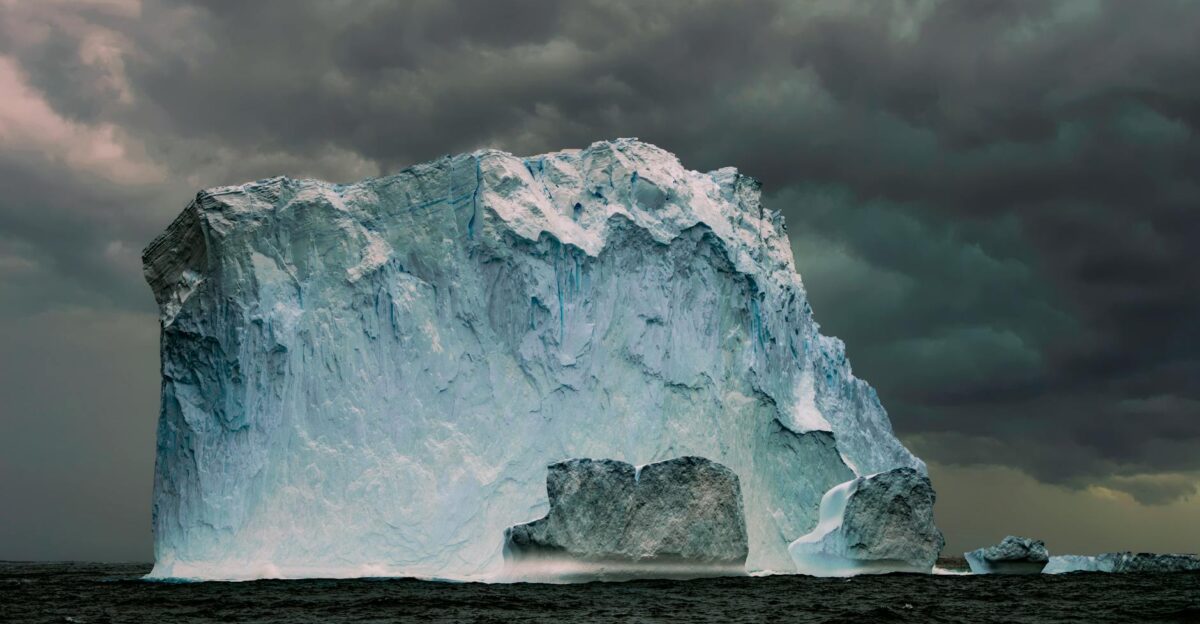
As A23a fragmented, it produced hundreds of smaller icebergs, many too small to track individually. These fragments spread across the South Atlantic, some drifting into shipping routes.
Satellites such as MODIS and Landsat monitor the largest pieces, but countless smaller bergs remain difficult to detect, posing navigational hazards that extend far beyond the original iceberg’s footprint.
What Comes After A23a
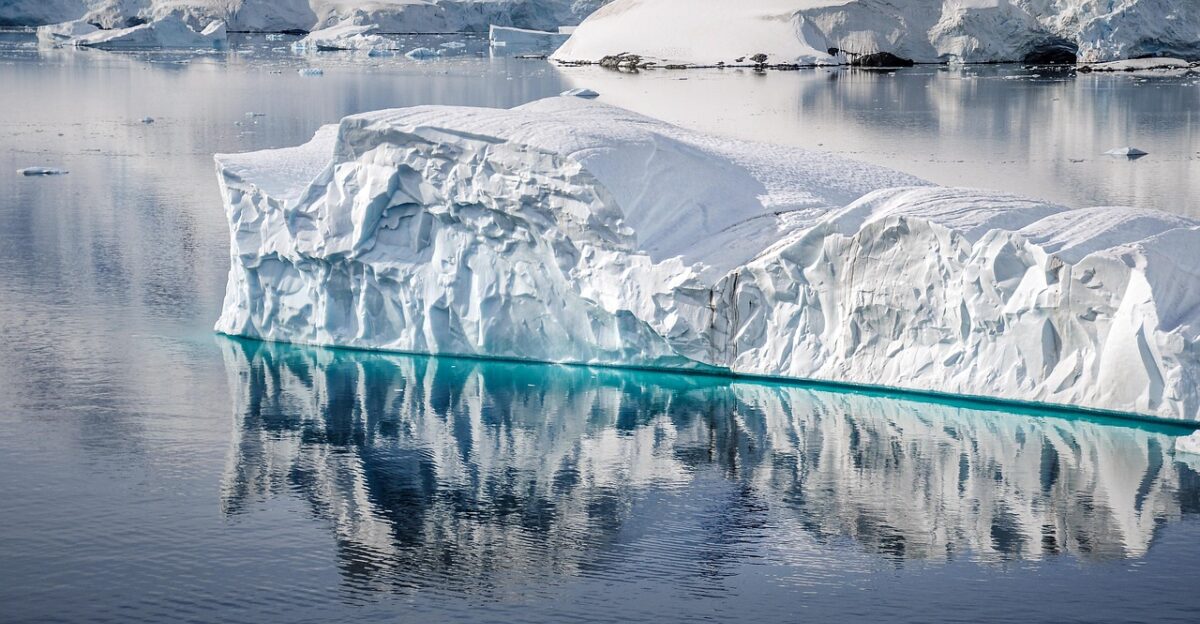
With A23a fading into fragments, researchers look ahead. Warming oceans may produce more drifting megabergs, testing ecosystems, shipping, and monitoring systems alike.
The Southern Ocean remains vast and under-observed. Whether the next great iceberg is documented in full—or disappears unnoticed into blue meltwater—depends on how quickly science can adapt to a changing polar world.
Sources:
NASA Earth Observatory | Meltwater Turns Iceberg A-23A Blue | January 7, 2026
CNN | World’s biggest iceberg, A23a, has broken up | September 3, 2025
BBC | A23a: Giant iceberg on collision course with island | January 22, 2025
British Antarctic Survey | World’s largest iceberg A23a breaks free | December 12, 2024
PetaPixel | Astronaut Photographs Iceberg From Space Just ‘Days or Weeks Before It Disintegrates’ | January 8, 2026
Live Science | Mega-iceberg A23a, formerly the world’s largest, turns into bright blue mush as scientists watch it fall apart | January 12, 2026