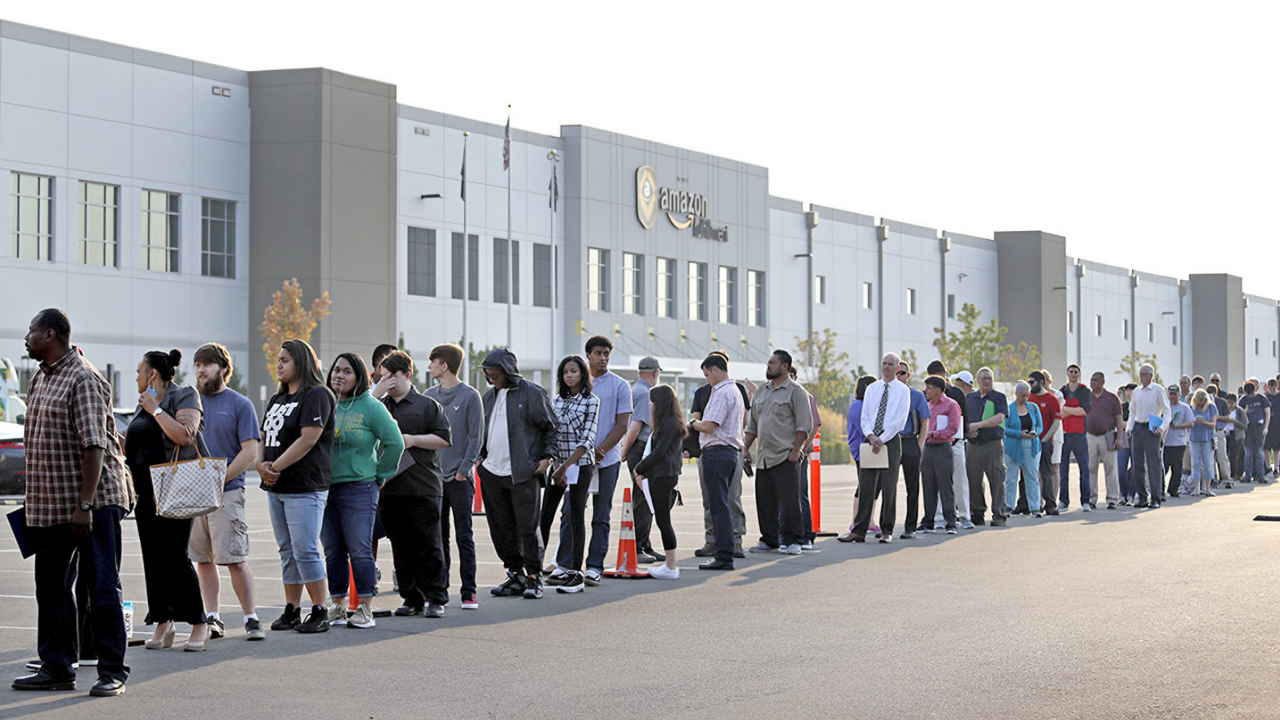
The announcement came in waves—1.17 million job cuts in 2025, the highest total since the pandemic’s peak. Technology companies, telecom giants, and manufacturers all slashed their workforces. Even as these layoffs hit, the official unemployment rate rose to 4.6% in November, the highest level since 2021, creating a turbulent job market with millions of workers wondering: who’s next?
It’s a twist that demands explanation—companies announcing massive cuts while jobless claims recently dropped to their lowest in three years. The scenario unfolding raises critical questions: why are we seeing the highest layoff numbers since 2020, and how is the job market reacting to this crisis?
Layoffs Surge 54% from 2024

As of November 2025, the number of layoffs has surged by 54% compared to the previous year. Technology companies, which have already axed over 153,000 workers, are driving much of this spike.
Meanwhile, hiring intentions have plummeted by 35%, suggesting that the job market is growing increasingly unstable as the year closes. Will this trend continue into 2026?
2025: The Worst Year Since COVID

2025 is on track to be the worst year for layoffs since the COVID-19 pandemic. While job cuts during the 2020 lockdown were driven by immediate crisis, today’s massive layoffs reflect deeper, structural changes.
Automation, AI, and corporate restructuring are rapidly reshaping the workforce. Could this be the new normal?
A Perfect Storm for Employers
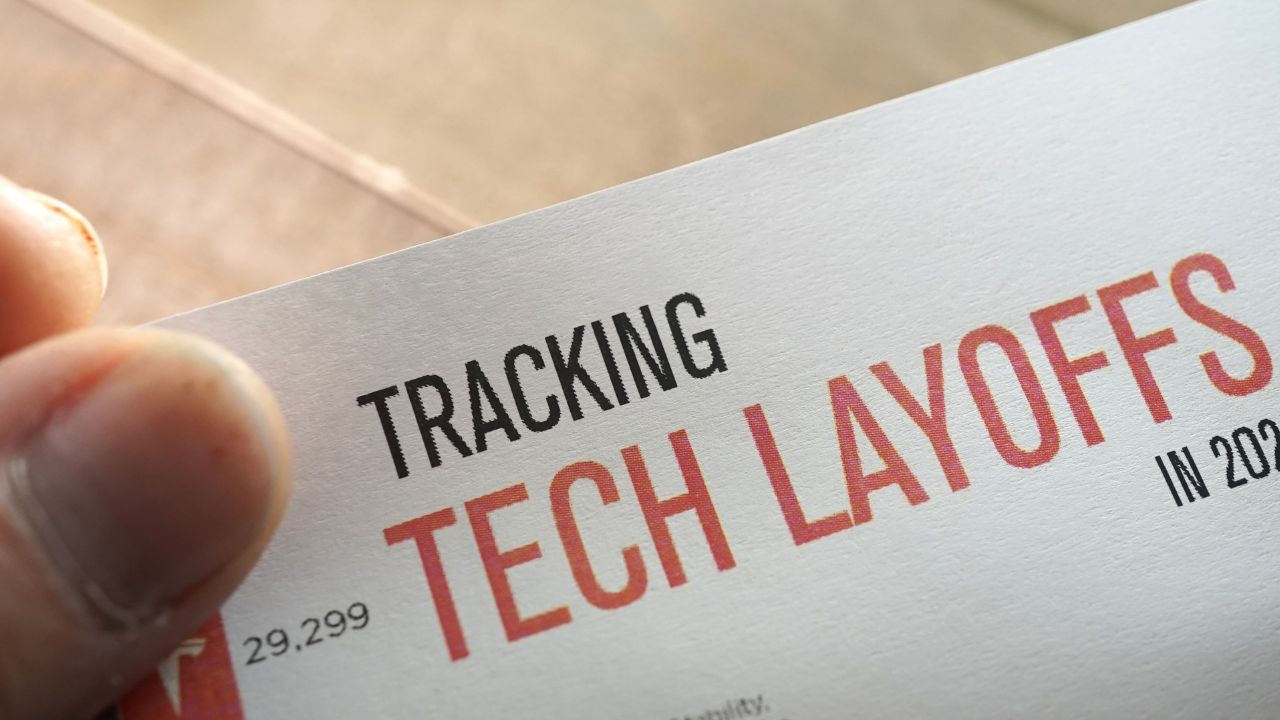
Employers are facing multiple pressures—slowing revenue, high borrowing costs, and shareholder demands for greater efficiency. This trifecta of stress has led to large-scale restructuring.
Meanwhile, private-sector payrolls fell by 32,000 jobs in November, marking weakness in the labor market. Jobless claims have dropped to their lowest levels in over three years, even as the unemployment rate climbed to 4.6%.
AI’s Growing Role in Job Cuts

In 2025, AI has become a documented factor in approximately 54,700 job cuts. What was once a futuristic concern is now an immediate threat to U.S. workers.
AI’s impact is especially felt in sectors like tech, finance, telecom, and customer service, where automation can take over routine tasks faster than ever before. Are we ready for this change?
Nationwide Impact of Layoffs

This wave of layoffs is not confined to Silicon Valley. From manufacturing hubs in the Midwest to telecom giant Verizon, which announced 13,000 cuts in November, the job losses are hitting every corner of the U.S. Major metropolitan areas are also feeling the sting.
Many of these layoffs are affecting workers in the tech, service, and telecom industries, who are bearing the brunt of the cuts.
Human Cost of Automation
Behind the massive numbers are real people: customer service agents, data-entry clerks, and mid-career professionals who have seen their jobs replaced by chatbots and automation.
According to National University research, approximately 13.7% of U.S. workers report having lost their job to a robot or AI-driven automation, with younger and mid-career employees in tech and creative fields most vulnerable.
Tech Sector’s Destruction

Technology remains the hardest-hit sector, with over 153,000 layoffs by November 2025. Major players like Microsoft, Amazon, and Google have announced significant layoffs since 2023.
AI-driven efficiency gains are the driving force behind these cuts, reshaping the tech landscape in ways few anticipated. Can tech survive this AI onslaught?
The Global Picture of AI Displacement

AI’s reach extends beyond the U.S. World Economic Forum research from 2020 projected that by 2025, up to 85 million jobs could be displaced by AI and automation, even as 97 million new roles are created.
Goldman Sachs predicts that approximately 300 million full-time jobs worldwide could be affected by AI. These cuts in the U.S. are just a part of this far-reaching transformation.
Lost Paychecks, Huge Impact

The economic ripple effect of these job cuts is staggering. With 1.17 million workers affected in 2025, estimates for lost wages range from $58.5 billion to $117 billion annually, depending on employment duration and average salary levels.
Some workers will quickly find new roles, but many face long gaps in employment. This lost income will further dampen consumer spending and hit local tax revenues.
Worker Anger Over AI

AI-related job cuts are fueling frustration among workers, especially as decisions feel increasingly opaque. According to research from National University, 49% of companies using ChatGPT report replacing workers, while many employees fear their jobs will be automated next.
Additionally, 30% of U.S. workers fear their jobs will be replaced by AI or similar technology by 2025, contributing to growing anxiety and calls for transparency.
Leadership’s Defense

Corporate leaders argue that adopting AI is crucial for staying competitive. But the reality for displaced workers in 2025 is that these future opportunities may seem distant.
According to the World Economic Forum’s 2025 Future of Jobs Report, nearly 41% of companies worldwide plan to reduce their workforce due to AI adoption in the next five years, while simultaneously creating new AI-related roles.
Reskilling Efforts Underway

To counter the AI displacement, the U.S. Department of Labor has allocated substantial funding in 2025 for reskilling workers for AI-related roles.
Companies investing in large-scale retraining programs see improvements in managing workforce transitions. Yet, access to these programs remains uneven, with rural and low-wage workers struggling to participate.
Experts Split Over AI’s Impact

Economists are divided over the long-term effects of AI layoffs. While some argue that AI’s impact on jobs is temporary, others warn that entry-level white-collar workers face immediate risks.
Despite the overall stability of the labor market, many experts believe that the full effects of AI on employment are still unfolding.
Will New Jobs Arrive in Time?

The key question looming over 2025 is whether AI-driven jobs will emerge quickly enough to replace the roles lost.
By 2030, up to 30% of current U.S. jobs could be fully automated, but will these new jobs require higher skills and education? The speed at which training systems can adapt will determine how workers navigate this transition.
Policymakers Face Critical Decisions

As AI reshapes the workforce, policymakers are stepping up efforts to regulate. The European Union’s proposed AI liability regulations were withdrawn in early 2025 due to a lack of stakeholder agreement, and the U.S. is considering mandatory impact assessments for AI rollouts.
The decisions made by governments in Washington, Brussels, and beyond will define the future of AI and worker protections.
Global Repercussions of AI Job Losses

AI’s impact on jobs is a global phenomenon. In 2025, significant numbers of jobs have already been affected in the U.S., with millions more at risk worldwide, particularly in Asia.
Countries like India, Japan, and Germany are facing significant job displacement, with manufacturing roles in Asia increasingly exposed to AI risks.
Legal Challenges to AI’s Rise

As AI increasingly influences hiring, firing, and scheduling, legal challenges are mounting. U.S. regulators warn that biased AI tools could violate anti-discrimination laws, while the EU’s AI regulations call for stricter documentation requirements.
Workers’ advocates are pushing for clearer rights to contest AI-driven decisions.
Public Opinion on AI Job Losses

Public opinion on AI’s role in the job market is mixed. According to recent surveys, the majority of Americans believe AI will eliminate more jobs than it creates, while a smaller minority believe it will create more jobs than it eliminates.
Younger workers, often in entry-level roles, face the brunt of automation, with those aged 18-24 being 129% more likely than those over 65 to worry AI will make their job obsolete. This generational paradox could reshape future career expectations and opportunities.
A Pivotal Moment for Work and AI

The 2025 layoff wave signals a monumental shift in the job market, with 1.17 million cuts, AI displacing tens of thousands, and up to $117 billion in potential lost wages.
The question remains: will this wave lead to a crisis, adaptation, or new opportunities? The choices made today will determine what future work looks like in a world dominated by AI.
Sources:
“Employers have cut 1.1 million jobs this year. Here’s what’s behind the wave of layoffs.” CBS News, December 2025.
“AI Job Losses in 2025: Over 54000 Impacted Amid Surging Layoffs.” ServnetUK, December 2025.
“The ‘Future of Jobs Report 2025’: AI Adoption and Workforce Displacement.” World Economic Forum, January 2025.
“Goldman Sachs Predicts 300 Million Jobs Will Be Lost Or Degraded By Artificial Intelligence.” Forbes, March 2023.